

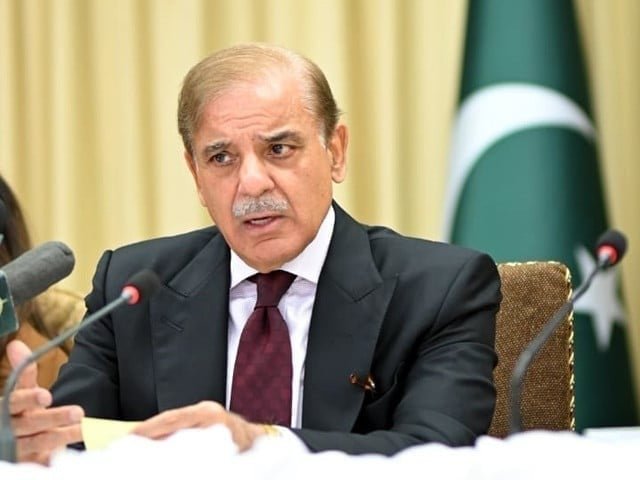

Prime Minister Shehbaz Sharif stated on Saturday that Pakistan’s armed forces delivered a powerful and coordinated response to Indian aggression, avenging the loss of innocent lives. He conveyed these remarks during calls with senior political leaders, where he provided an update on the national security situation and Pakistan’s military countermeasures.
According to the Prime Minister’s Office, Shehbaz Sharif held separate telephone briefings with leaders of major political parties, including Bilawal Bhutto Zardari (PPP), Barrister Gohar (PTI), Maulana Fazlur Rehman (JUI-F), Khalid Maqbool Siddiqui (MQM-P), Hafiz Naeem ur Rehman (JI), Khalid Hussain Magsi (BAP), and Chaudhry Salik Hussain (PML-Q).
During the calls, the Prime Minister took the political leadership into confidence regarding Operation Bunyan-un-Marsoos—Pakistan’s retaliatory military campaign launched in response to Indian missile and drone strikes. He said that Indian forces targeted civilian areas, including the Nur Khan Airbase, resulting in casualties and infrastructure damage.
Sharif noted that Pakistan initially responded with restraint after the Pahalgam incident, calling for an impartial international investigation, which India rejected. He emphasized that Pakistan’s armed forces precisely targeted Indian military installations identified as launch points for attacks.
“India launched another round of missile strikes on civilian sites this morning,” the Prime Minister said. “Our courageous armed forces have delivered a decisive response, and the nation takes pride in their discipline and resolve.”
He applauded the success of the military operation and expressed appreciation for the unified stance of the political leadership. Reaffirming Pakistan’s commitment to defend its sovereignty and territorial integrity, he said any future aggression would be met with similar resolve.
Political leaders echoed the Prime Minister’s sentiments, commending the professionalism and measured response of the military. Bilawal Bhutto Zardari praised Shehbaz Sharif’s leadership and emphasized national unity in the face of external threats.
On the Brink of War
Tensions between the two nuclear-armed neighbors have intensified since the April 22 attack in Pahalgam, located in Indian-administered Jammu and Kashmir, which left 26 people dead. India accused Pakistan-based groups of orchestrating the attack, but Islamabad categorically denied the allegations, demanding evidence and an impartial inquiry.
In retaliation, India closed the Wagah land border, revoked Pakistani visas, and suspended the Indus Waters Treaty on April 23. Pakistan called the treaty suspension an “act of war” and subsequently sealed the border from its side.
The situation escalated further on May 6 and 7, with explosions reported in Muzaffarabad, Kotli, Muridke, and Bahawalpur. Pakistan’s military confirmed that Indian airstrikes had hit multiple locations, prompting Pakistan to launch air and ground operations under Operation Bunyan-un-Marsoos.
During the initial phase of its counteroffensive, Pakistan reported the downing of five Indian fighter jets, including four Rafale aircraft. Officials stated that the military had the capacity to bring down more but exercised restraint. Indian coverage of these events remained limited, with some media reports later withdrawn.
International analysts highlighted the implications of the loss of Rafale jets, questioning India’s claims of regional air superiority. A French intelligence source also confirmed the downing of one Rafale aircraft—marking its first loss in combat.
Additionally, Pakistan’s armed forces reported intercepting and neutralizing 77 Israeli-made Harop drones allegedly used by India. The drones were brought down using a combination of electronic warfare systems and traditional air defense measures.
Military sources confirmed that Operation Bunyan-un-Marsoos is targeting bases identified as origins of attacks on civilian populations and places of worship. The campaign also featured the deployment of the Al-Fatah missile in memory of children killed during recent hostilities.
Defence officials clarified that there has been no meeting of the National Command Authority and no such gathering is currently planned.
Meanwhile, in a press briefing, Indian officials stated that they remained open to de-escalation provided Pakistan reciprocated. They acknowledged damage and injuries at five airbases—Udhampur, Pathankot, Adampur, Bhuj, and Bathinda—following Pakistani strikes on more than 26 sites.
