

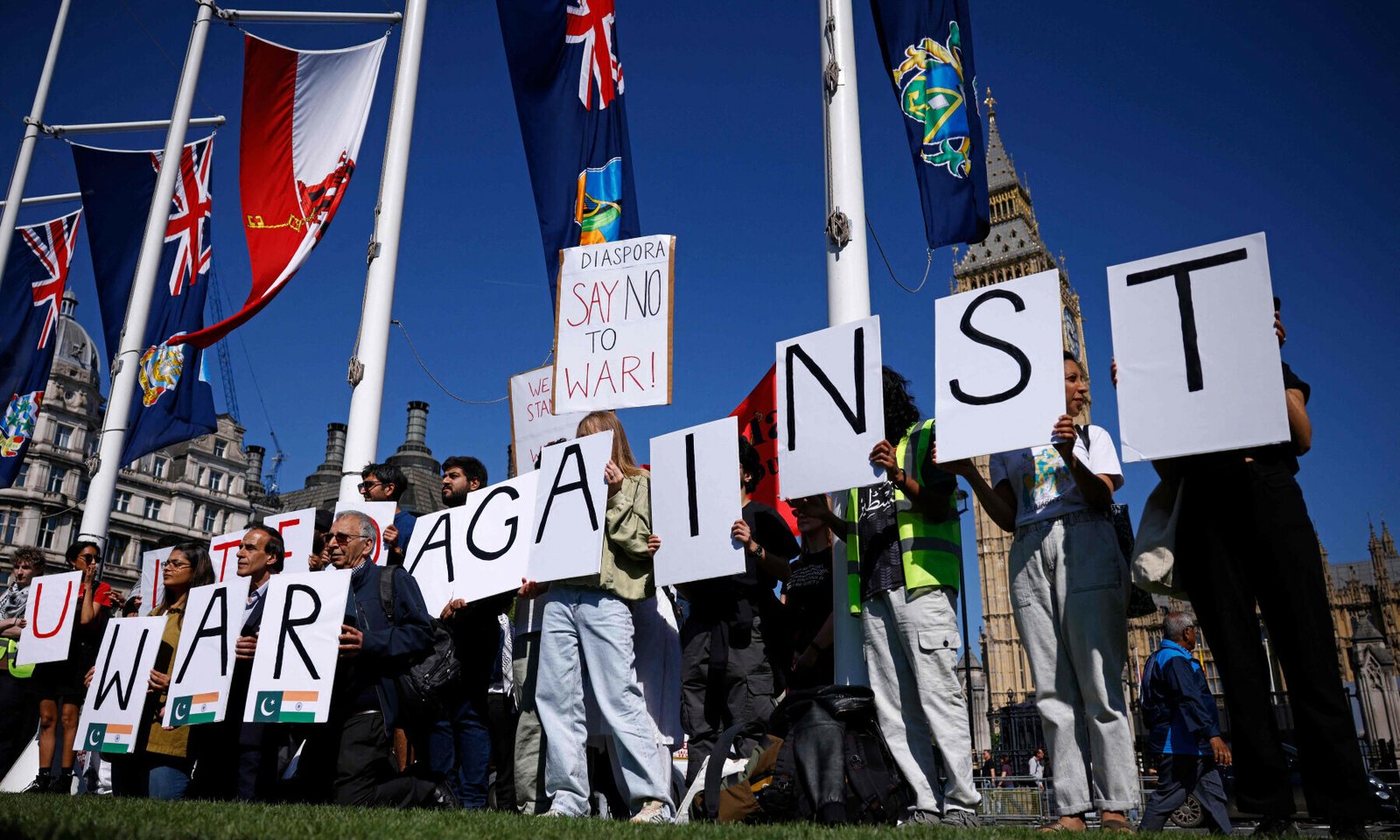

ISLAMABAD – Normalcy is beginning to return to the Subcontinent after days of intense military confrontation between nuclear-armed neighbors India and Pakistan. The two countries agreed to a full and immediate ceasefire on Saturday, following days of deadly drone, missile, and jet fighter exchanges that left at least 60 people dead and thousands displaced.
The announcement, surprisingly made first by former U.S. President Donald Trump on his Truth Social platform, was soon confirmed by both Islamabad and New Delhi. The sudden breakthrough came after what Trump described as “a long night of talks” mediated by the United States.
“India and Pakistan have agreed to a FULL AND IMMEDIATE CEASEFIRE. Congratulations to both countries on using common sense and great intelligence,” Trump posted.
Diplomatic Channels Reactivate
Pakistan’s Foreign Minister Ishaq Dar confirmed the ceasefire, stating on X (formerly Twitter), “Pakistan and India have agreed to a ceasefire with immediate effect. Pakistan has always strived for peace and regional stability without compromising sovereignty or territorial integrity.”
Indian Foreign Secretary Vikram Misri noted that the two countries’ Directors General of Military Operations (DGMOs) had spoken directly and agreed that all hostilities would cease at 5:00 p.m. IST (11:30 a.m. GMT). He avoided using the term “ceasefire,” while Indian ministries issued somewhat conflicting messages about the exact mechanism of the agreement.
Dar later told Geo News that military hotlines had been activated and over 30 countries played a role in mediating the truce, with the U.S. acting as the principal broker.
Prime Minister Shehbaz Sharif publicly thanked Donald Trump for his “leadership and proactive role” in securing the agreement. “Pakistan appreciates the U.S. for facilitating this outcome, which we have accepted in the interest of regional peace,” he said.
Four Days of Firepower
The ceasefire follows four days of escalating attacks and counter-attacks between India and Pakistan, which saw unprecedented use of drone warfare alongside conventional military strikes. Civilians in Azad and Indian-administered Kashmir bore the brunt of the violence, with entire communities forced to evacuate under heavy shelling.
The conflict began with a deadly attack last month in Pahalgam, Indian-held Kashmir, that killed 26 tourists. India quickly blamed Pakistan, sparking a rapid deterioration in relations.
In the days that followed:
- Pakistan claimed it downed five Indian warplanes, including three Rafale jets.
- Pakistan’s military said it had intercepted 77 Israeli-made drones used by India.
- India countered that it had destroyed hundreds of Pakistani drones, many reportedly Turkish-made.
This marks the first time both countries engaged in full-scale drone warfare, raising the stakes of future conflicts and expanding the battlefield beyond conventional weapons.
Tensions Persist
Despite the ceasefire, sporadic reports of continued hostilities surfaced within hours. Blasts were reported in Srinagar and Jammu, with flashes seen in the night sky. In Azad Kashmir’s Barnala, residents described the sound of ongoing exchanges. Drones were also reportedly seen hovering over Bahawalpur, prompting brief panic among residents.
Local officials and emergency services, however, downplayed the incidents, saying the situation was under control and that any drone activity was likely residual from earlier operations.
Political and Economic Fallout
While military action has ceased, diplomatic tensions persist. Indian sources told Reuters that punitive measures—including suspension of trade, visa bans, and the continued suspension of the 1960 Indus Waters Treaty—would remain in place.
On the Indian side, conflicting narratives emerged. While Foreign Secretary Misri implied continued dialogue between military officials, India’s Ministry of Information and Broadcasting dismissed any broader diplomatic engagement beyond the ceasefire itself.
Global Mediation and Political Reactions
U.S. Secretary of State Marco Rubio and Vice President JD Vance confirmed they had been in direct contact with senior leaders in both countries, including PMs Shehbaz Sharif and Narendra Modi.
Rubio praised the ceasefire, stating: “I commend both Prime Ministers for their wisdom, prudence, and statesmanship in choosing the path of peace.” He also hinted at future talks between the two nations at a neutral venue.
The State Department confirmed that Secretary Rubio offered continued U.S. support to help both countries “re-establish direct communication to avoid miscalculation and conflict in the future.”
PM Shehbaz: Dialogue is the Only Way
Addressing the nation, Prime Minister Shehbaz Sharif welcomed the ceasefire and expressed hope that it would pave the way for a broader dialogue—particularly on Kashmir and shared water resources.
“This ceasefire is a step towards regional peace. Pakistan responded positively to protect millions in the subcontinent,” he said, while also crediting world leaders for their efforts, including President Xi Jinping, Recep Tayyip Erdoğan, Mohammed bin Salman, Sheikh Tamim, and UN Secretary-General António Guterres.
He also thanked opposition parties and civil society for showing unity during a time of crisis. “This is a victory for Pakistan’s principles,” he stated.
“India Played a Shameful Role”
PM Shehbaz did not mince words regarding India’s actions: “India used the Pahalgam attack as a pretext to impose war and targeted civilians through drones and missiles. While we showed restraint, we responded with strength and resolve.”
Ceasefire Welcomed by Public, Experts
The ceasefire was met with widespread relief in both countries. “In war, it’s not just soldiers who die—it’s mostly civilians,” said Muzaffarabad resident Bilal Shabbir. Ehsan Malik of the Pakistan Business Council called the truce a chance for both countries to focus on “lifting large populations from poverty and underdevelopment.”
Shuja Nawaz, a South Asia analyst at the Atlantic Council, noted the Indus Waters Treaty would remain a contentious point, and might be revisited once political optics allow both sides to claim progress.
A Fragile Peace
Despite the agreement, the ceasefire remains fragile. Hours after its declaration, exchanges of fire and drone activity raised questions about the durability of the truce. Still, the hope is that diplomacy, rather than escalation, will now lead the way forward.
As the Subcontinent steps back from the brink, the challenge ahead lies not only in avoiding renewed conflict but in addressing the unresolved issues that continue to threaten peace.
