

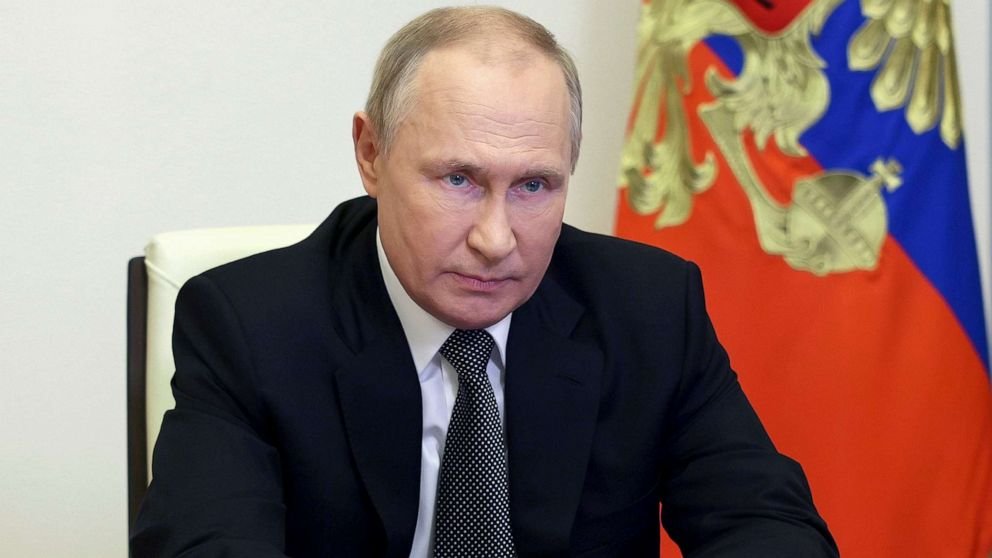

MOSCOW – In a rare late-night address from the Kremlin, Russian President Vladimir Putin on Saturday urged Ukraine to resume direct peace talks “without delay,” proposing Istanbul as a venue and suggesting negotiations could begin as early as May 15.
The call for renewed dialogue came just hours after a high-profile visit to Kyiv by European leaders, who had urged Moscow to accept an unconditional 30-day ceasefire and warned of severe new sanctions should Russia refuse.
“We are ready for serious negotiations to address the root causes of this conflict and to begin working toward a stable and lasting peace,” Putin said. He confirmed that he would be speaking with Turkish President Recep Tayyip Erdoğan on Sunday to discuss the structure of potential talks.
Western Pressure and Diplomatic Visits
Putin’s statement followed a strong display of Western unity in Kyiv, where British Prime Minister Sir Keir Starmer, French President Emmanuel Macron, German Chancellor Olaf Scholz, and Polish Prime Minister Donald Tusk joined Ukrainian President Volodymyr Zelensky. The leaders reiterated their support for Ukraine and jointly proposed a 30-day ceasefire as a prelude to formal peace talks.
Sir Keir later revealed that former U.S. President Donald Trump had also backed the proposal, calling the ceasefire a “demand that must be met.”
The timing of the European visit was widely seen as a symbolic counter to Russia’s Victory Day celebrations in Moscow, and a demonstration of solidarity amid ongoing hostilities.
“Today is about building real, enforceable, and lasting security,” Zelensky said at a joint press conference. “We are not interested in symbolic pauses. We need concrete commitments and international guarantees.”
Kremlin Sends Mixed Signals
While Putin adopted a more conciliatory tone than in past statements, tensions surfaced elsewhere in Moscow’s response. Kremlin spokesman Dmitry Peskov criticized the Western ceasefire proposal as “pressure-driven” and “confrontational,” warning that it would not help restart negotiations.
Putin, however, framed the proposal for talks as a genuine opportunity for peace. “This must not be a pause for the Ukrainian armed forces to rearm. It should be the beginning of real progress toward peace,” he said.
The Russian president also accused Kyiv of rejecting multiple ceasefire initiatives in recent months, including a 30-day pause on strikes targeting energy infrastructure, a proposed Easter truce, and a three-day unilateral ceasefire during Russia’s World War II commemorations. That truce expired at midnight Saturday.
Ukraine, meanwhile, accused Russian forces of violating the ceasefire almost immediately. Ukrainian authorities reported over 730 breaches during the truce window, while Russia claimed 488 violations by Ukrainian forces.
Zelensky dismissed Moscow’s overtures as “a theatrical performance,” emphasizing the need for international oversight and enforceable conditions in any future ceasefire agreement.
“No Preconditions” for Talks
Despite Ukraine’s silence on the new offer, Putin insisted that Russia remains open to dialogue and would not set any preconditions for negotiations.
“In spite of the ongoing provocations, we propose to resume direct talks with the Kyiv authorities,” Putin said. “Our goal is to prevent further military escalation and restore stability.”
Direct peace talks between Russia and Ukraine have been largely dormant since the early months of Moscow’s full-scale invasion, now in its fourth year. Sporadic backchannel communications have occurred since, but have produced little tangible progress.
Global Reactions Cautiously Optimistic
European officials offered a cautious welcome to Putin’s remarks but emphasized that renewed negotiations must be backed by a verifiable cessation of hostilities on the ground — a condition that past ceasefire attempts have repeatedly failed to meet.
Analysts warn that with trust between the two sides at a historic low, any return to diplomacy will require intensive international coordination and monitoring mechanisms.
As both sides weigh their next moves, the coming days may prove pivotal in determining whether a new round of talks can begin — or whether the fighting will continue to escalate.
