

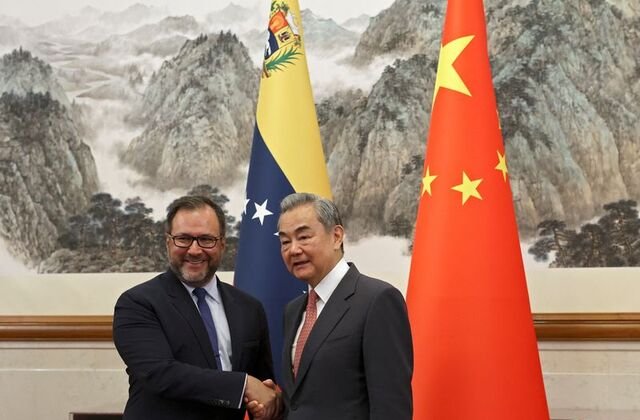

China is set to host a major summit this week with key Latin American and Caribbean nations, aiming to deepen trade and diplomatic ties as it continues to navigate a tense trade standoff with the United States.
Leaders from Brazil, Colombia, and Chile are among the attendees at the China-CELAC Forum ministerial meeting scheduled for Tuesday in Beijing. Bilateral trade between China and the CELAC bloc reached $427 billion between January and September 2024, according to official Chinese figures.
President Xi Jinping will address the summit, marking his first appearance at the forum since its inaugural session a decade ago.
The gathering represents China’s strategic push to expand its influence in Latin America, directly challenging long-standing U.S. dominance in the region. The forum comes shortly after high-level China-U.S. trade talks concluded with both sides claiming progress—Washington citing a deal to narrow the trade deficit and Beijing noting a consensus to initiate a new round of economic dialogue.
Both countries are expected to issue a joint statement on Monday. Meanwhile, China has continued efforts to rally global opposition to what it terms U.S. “tariff abuse” and “unilateral bullying.” The recent tit-for-tat imposition of tariffs exceeding 100% on each other’s goods has escalated tensions between the two economic giants.
China has also engaged with trade partners across Southeast and Central Asia, advocating for a multilateral approach to global commerce.
Simultaneously, Beijing has made headway in negotiations with the European Union, agreeing to begin discussions on setting minimum pricing for Chinese-made electric vehicles.
The China-CELAC Forum, part of Beijing’s Belt and Road Initiative (BRI), has become a key platform for fostering cooperation on trade, investment, and infrastructure with Latin American and Caribbean nations.
The summit also reflects growing friction over strategic assets in the region, particularly the Panama Canal. U.S. President Donald Trump recently vowed to “take back” control of the canal, a move that coincided with a $23-billion acquisition of nearby port operations by a U.S.-based BlackRock-led consortium. The deal triggered alarm in Beijing and led to a regulatory review.
On the economic front, China is Latin America’s largest buyer of commodities such as copper, iron ore, and agricultural products. Brazil, in particular, is a major partner, with President Luiz Inácio Lula da Silva arriving in Beijing this week for a state visit expected to result in over a dozen bilateral agreements.
China last year imported $37 billion worth of soybeans from Brazil, making Brazil its largest supplier as it shifts away from relying on U.S. sources. Beijing recently resumed imports from five Brazilian firms previously halted over health-related concerns.
Chilean President Gabriel Boric confirmed via social media that he would attend the summit and meet with Xi Jinping, with discussions likely to include China’s investment interests in Chile’s lithium sector—the country is the world’s second-largest producer.
Infrastructure development is also expected to feature prominently, as the summit lays groundwork for the upcoming BRICS Summit in Rio de Janeiro in July.
While Panama withdrew from the BRI earlier this year, Colombia has expressed interest in joining the initiative. Peru has already advanced its cooperation, with the BRI-backed Port of Chancay inaugurated six months ago to enhance maritime trade links between South America and China.
