

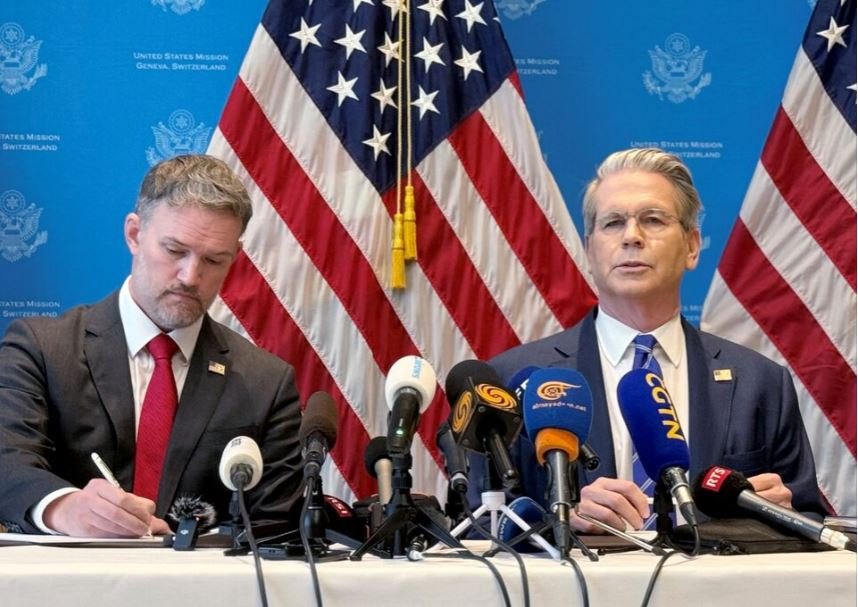

The United States and China announced on Monday that they have reached an agreement to significantly reduce tariffs on each other’s goods, marking a step toward resolving a prolonged trade war that has rattled global markets and disrupted international trade flows.
Following high-level discussions in Geneva, U.S. Treasury Secretary Scott Bessent stated that both nations had agreed to a 90-day pause on additional trade measures. As part of the agreement, tariffs on each side’s goods—previously exceeding 100%—will be reduced to 10%.
“Both sides stood firm on their national interests,” Bessent noted, emphasizing that the United States remains committed to achieving balanced trade. He appeared at a joint press briefing with U.S. Trade Representative Jamieson Greer, who also underscored the progress made during the weekend negotiations.
These talks marked the first formal economic dialogue between U.S. and Chinese officials since President Donald Trump’s return to office, which was followed by a wave of steep tariffs targeting Chinese imports.
Since January, U.S. tariffs on Chinese products had soared to 145%, building upon earlier duties from Trump’s first term and additional measures introduced during the Biden administration. In retaliation, China imposed its own countermeasures, including export restrictions on key rare earth elements crucial for U.S. technology and defense industries, along with tariffs of up to 125% on American goods.
The tariff conflict had brought nearly $600 billion in bilateral trade to a near halt, disrupting supply chains, prompting fears of economic stagnation, and causing some job losses.
Markets responded positively to news of the breakthrough. U.S. stock futures rose and the dollar strengthened against traditional safe-haven currencies, as hopes mounted that a global recession might be averted.
