

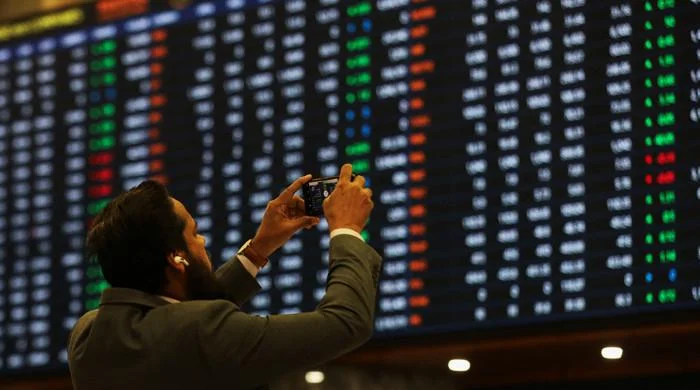

PSX
The Pakistan Stock Exchange (PSX) continued its historic upward trajectory on Tuesday, with the benchmark KSE-100 Index crossing the 120,000-point mark once again. This remarkable rally was largely fuelled by a recent ceasefire agreement between Pakistan and India, the release of crucial funding from the International Monetary Fund (IMF), and expectations of tax relief in the upcoming federal budget.
Building on Monday’s record-breaking session—where the index recorded its biggest single-day gain ever—investor sentiment remained buoyant. The market opened strong, extending the momentum as investors digested multiple positive economic and geopolitical developments.
The benchmark KSE-100 Index surged to an intraday high of 120,067.12 points, registering a gain of 2,769.39 points or 2.36% compared to Monday’s close of 117,297.73. This is the second time the index has breached the 120,000 mark, the first being in early April.
Ahfaz Mustafa, CEO of Ismail Iqbal Securities, attributed the surge to renewed confidence among institutional investors. “Monday’s rally was eye-watering, and early signs on Tuesday suggested strong follow-through.
Mutual funds were particularly active, and it seems the market is now pricing in positives that were previously overshadowed by regional tensions,” he noted. Mustafa added that the government’s decision to peg the next budget at Rs290 to the dollar reflects confidence in stable inflation going forward.
Finance Minister Mohammad Aurangzeb added further clarity in an interview with Reuters. He confirmed that Pakistan would receive a $1 billion tranche from the IMF on Tuesday, as part of the $7 billion Extended Fund Facility (EFF).
Additionally, the IMF approved $1.4 billion under the Resilience and Sustainability Facility (RSF) to aid Pakistan’s climate initiatives. Aurangzeb dismissed concerns about the economic impact of military escalation with India, stating that it could be absorbed without altering Pakistan’s macroeconomic outlook.
Budget negotiations with the IMF are scheduled for May 14 to 23, and the fiscal plan for 2025–26 is expected to be finalised within a month. The government is reportedly preparing tax relief measures worth Rs50 billion for the salaried class, who have already contributed Rs450 billion in the first ten months of FY25—more than the combined tax contributions from exporters and retailers.
Further fuelling investor enthusiasm was a notable drop in inflation. April’s year-on-year inflation stood at just 0.3%, the lowest in decades. In response, the State Bank of Pakistan cut the policy rate by 100 basis points to 11%, signalling a shift toward growth-oriented monetary policy.
The unexpected ceasefire between India and Pakistan, brokered with U.S. support, has significantly calmed geopolitical nerves and encouraged aggressive buying across various sectors. These factors combined—macroeconomic stability, diplomatic breakthroughs, and fresh external financing—have set the stage for a bullish market outlook.
