

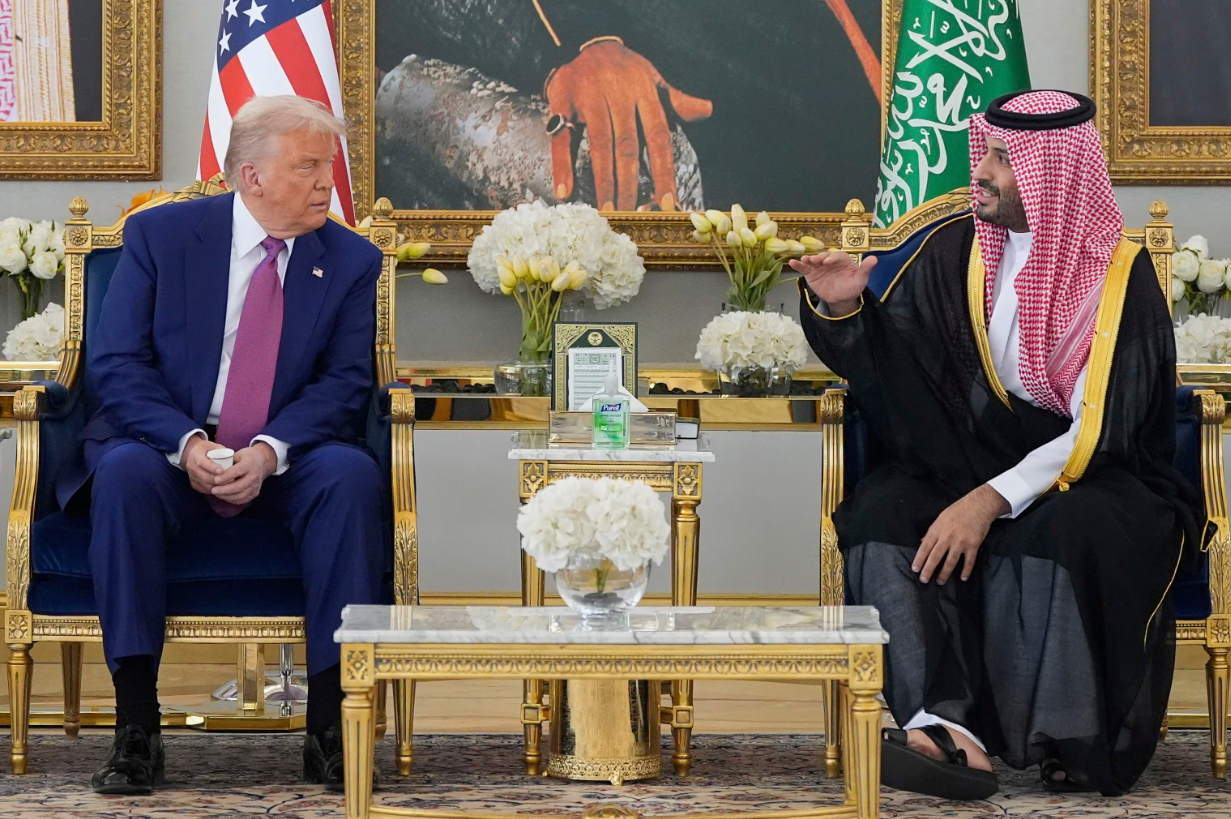

During the start of his Gulf tour, U.S. President Donald Trump secured a significant $600 billion investment pledge from Saudi Arabia to support American industries. The agreement, formalized during a signing ceremony in Riyadh with Crown Prince and Prime Minister Mohammed bin Salman, covers sectors such as energy, defense, mining, and technology.
A key highlight of the investment package includes what the U.S. has described as the largest-ever defense sales agreement between the two nations, amounting to nearly $142 billion. This follows earlier reports suggesting the U.S. was preparing a major arms package for the kingdom, potentially exceeding $100 billion. Discussions have included Saudi interest in acquiring advanced Lockheed F-35 fighter jets, though it remains unclear if those aircraft are part of this specific deal.
Trump, joined by top U.S. business leaders including Elon Musk and Sam Altman, emphasized the strong personal and diplomatic relationship he shares with Prince Mohammed. Business executives such as BlackRock CEO Larry Fink and Blackstone CEO Stephen A. Schwarzman also participated in the U.S.-Saudi investment forum.
Saudi Investment Minister Khalid al-Falih praised the expanding scope of Saudi-American business collaboration, stating that the relationship has moved far beyond energy and now includes diverse economic sectors.
The investment pledge aligns with Saudi Arabia’s Vision 2030 initiative, aimed at diversifying the kingdom’s economy away from oil dependency. However, recent fiscal pressures, such as rising project costs and declining oil revenues, have caused the kingdom to moderate some of its goals.
Trump’s visit, notably, does not include a stop in Israel. This omission has raised questions about the current state of U.S.-Israel relations, especially amid ongoing Israeli military operations in Gaza and Lebanon. Trump is reportedly pressuring Israeli Prime Minister Benjamin Netanyahu to agree to a new ceasefire, but Israeli resistance to ending the war or accepting a Palestinian state remains a barrier to further regional normalization talks.
Meanwhile, U.S. and Iranian negotiators recently met in Oman to explore the possibility of a nuclear agreement. Trump has warned of potential military action against Iran should diplomatic efforts fail. His administration is also expected to finalize a major arms deal with Saudi Arabia, Iran’s regional rival.
Trump’s Middle East envoy recently hinted at progress on expanding the Abraham Accords—previously brokered by Trump—which normalized relations between Israel and several Arab nations. However, sources suggest that Saudi Arabia is unlikely to join without substantial concessions on the Palestinian issue, which Netanyahu currently opposes.
