

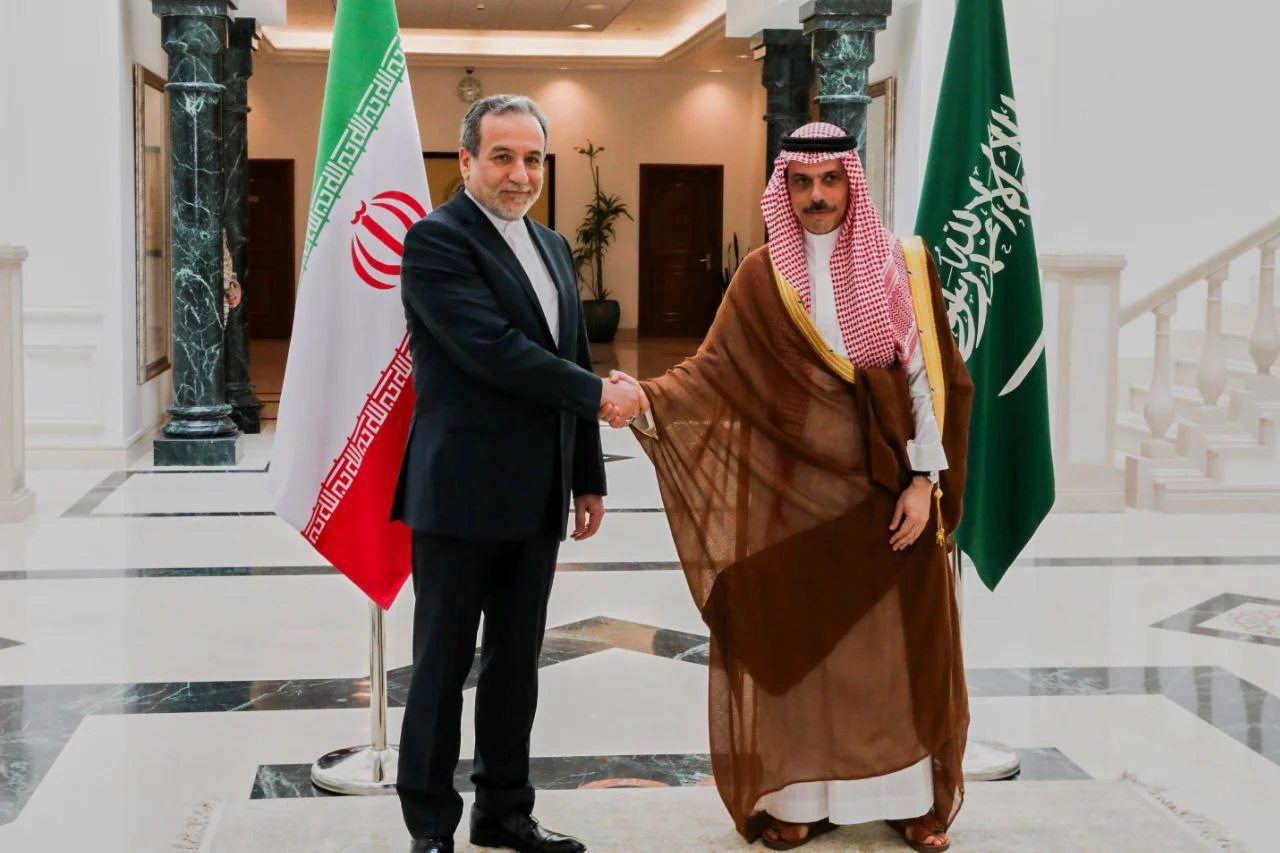

Iran has proposed forming a regional consortium with Saudi Arabia and the United Arab Emirates (UAE) to jointly enrich uranium, aiming to ease U.S. concerns over its nuclear programme and involve key Gulf states as stakeholders.
The initiative, floated by Tehran, would create a shared enrichment programme based at Iranian facilities. In a potential concession, Iran would grant its Gulf neighbours access to its nuclear technology and include them in the decision-making process—an effort to build trust and present its enrichment activities as peaceful.
The plan is seen as a strategic move to gain regional support and counter long-standing Western accusations that Iran’s nuclear ambitions have military dimensions. The consortium would operate under the enrichment cap of 3.67% set by the 2015 nuclear deal—well below the 90% needed for weapons-grade uranium. Former U.S. President Donald Trump withdrew the U.S. from that agreement in 2018, prompting Iran to gradually exceed its enrichment limits, which now stand at 60%.
While it’s unclear whether Iranian Deputy Foreign Minister Abbas Araghchi formally presented the consortium proposal during recent three-hour talks with U.S. officials in Oman—part of a series of direct diplomatic engagements—it is reportedly under serious discussion in Tehran. After the talks, Araghchi visited Dubai to meet with UAE Foreign Minister Sheikh Abdullah bin Zayed Al Nahyan. Notably, the UAE does not currently enrich uranium, despite operating the fully functional Barakah nuclear power plant.
The consortium idea, first advanced in an October 2023 article by former Iranian nuclear negotiator Seyed Hossein Mousavian and Princeton physicist Frank von Hippel, envisions the Saudis and Emiratis as financial contributors and shareholders. Their involvement would serve as an additional safeguard, reinforcing the civilian nature of Iran’s nuclear efforts and increasing transparency through the presence of Gulf engineers on-site—complementing oversight by the International Atomic Energy Agency (IAEA).
Iran sees this regional partnership as a constructive compromise. Deputy Foreign Minister Majid Takht-Ravanchi said Tehran could accept temporary restrictions on enrichment levels and stockpiles under a broader agreement. Meanwhile, the U.S. has demanded Iran halt all enrichment and dismantle key nuclear infrastructure, though internal divisions in Washington have prevented a definitive stance.
U.S. Secretary of State Marco Rubio recently criticized Iran’s current enrichment levels, arguing they far exceed what is necessary for civilian purposes. However, no final U.S. position has been announced. Oman’s foreign minister, Badr Al Busaidi, referenced “useful and original ideas” emerging from the talks, possibly alluding to Iran’s proposal.
The Barakah nuclear plant, west of Abu Dhabi, is the Arab world’s first fully operational nuclear power facility, now meeting about 25% of the UAE’s electricity needs.
With the complexity of negotiations increasing, initial hopes of reaching a deal within two months appear optimistic. Talks are now expected to continue into the summer.
