

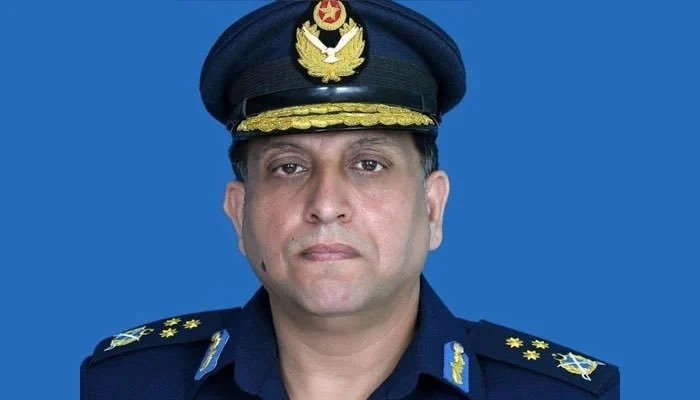

ISLAMABAD – In a dramatic escalation between two nuclear-armed nations, Pakistan Air Force (PAF) Chief, Air Chief Marshal Zaheer Ahmed Baber Sidhu, took personal command during a high-stakes aerial engagement with the Indian Air Force (IAF) in the early hours of May 7. Speaking directly over radio to the pilots of the elite 15 Squadron — a unit he once led — Sidhu issued a clear and urgent command: “Kill them. Don’t let them cross even an inch into Pakistan.”
The directive came amid a full-scale military alert, following the April 22 Pahalgam terror attack in Indian-administered Kashmir, which India attributed to Pakistan. With tensions rising, PAF remained on heightened readiness.
According to senior sources, the Air Chief operated from PAF’s most secure command center, sleeping only intermittently over four days as intelligence signaled an imminent Indian strike. On May 6, he summoned top military leaders and shifted PAF from surveillance to an active defense posture.
That night, nearly 80 Indian aircraft — including Rafales, Su-30s armed with BrahMos missiles, and MiG variants — launched from a dozen airbases near the Pakistan border, Pakistani defense sources reported. In response, PAF scrambled around 40 Chinese-made J-10s and other fighters integral to its modern air fleet.
“Our pilots were already in the air,” a PAF official stated, “We had intelligence. We were ready to welcome them.”
While Indian fighters attempted multiple incursions, they were reportedly unable to breach Pakistani airspace. However, missile strikes targeting civilian areas in Azad Jammu and Kashmir and Sheikhupura triggered what Pakistan termed “Offensive Counter Air Operations.”
It was only after a hostile projectile entered Pakistani airspace that Air Chief Marshal Sidhu authorized full engagement. In the aerial clash that followed, PAF reportedly shot down five Indian aircraft: three Rafales, one MiG-29, and one Su-30. Inside the command center, confirmation of these downings was met with cheers and chants of “Allahu Akbar.”
The confrontation escalated further on May 9 and 10, when Pakistan launched Operation Bunyan-um-Marsoos — meaning “Wall of Steel” in Arabic. The operation adhered to a doctrine of “de-escalation through escalation,” aiming to strike decisively at Indian military infrastructure without targeting civilians.
Under tight national command, Pakistan retaliated against earlier Indian strikes on three PAF bases by launching coordinated attacks on 26 Indian military targets, including 15 airfields. Each mission — from launch to impact and return — was personally overseen by Air Chief Marshal Sidhu.
The operation spanned multiple domains, with cyber, space, and electronic warfare assets deployed to disrupt Indian communications, targeting systems, and early-warning networks. Pakistani officials described the coordination as “highly synchronized,” highlighting unprecedented joint-service integration.
Despite the intensity of the response, Pakistani leadership maintained strict controls to avoid uncontrolled escalation. Surveillance of India’s Defensive Counter Air (DCA) activity continued until both sides agreed to a ceasefire.
India has yet to confirm the reported losses or the full extent of damage from the Pakistani operation. However, international diplomatic pressure has since mounted, with key global powers urging both sides to exercise restraint and return to dialogue.
The operation offers rare insight into Pakistan’s strategic command architecture and highlights the evolving dynamics of airpower in South Asia. For the Pakistan Air Force, the confrontation not only demonstrated high-level coordination and operational readiness but also showcased the combat effectiveness of Chinese-made fighter jets — challenging longstanding assumptions about Western dominance in aerial warfare.
