

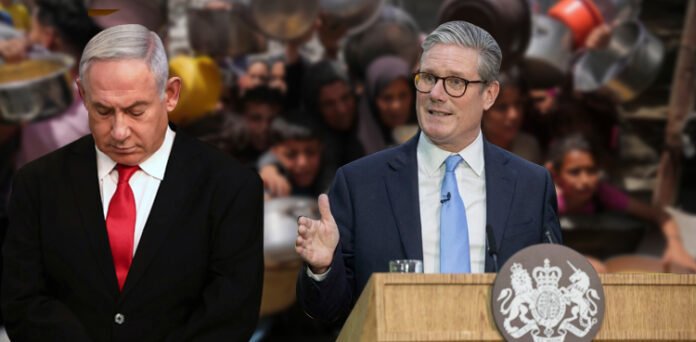

The United Kingdom has suspended its free trade negotiations with Israel in response to growing concerns over the ongoing blockade of humanitarian aid to Gaza.
UK Foreign Secretary David Lammy conveyed the decision directly to Israel’s ambassador, describing the widespread hunger facing millions in Gaza as an “appalling act.”
Lammy denounced the 11-week-long aid blockade as “cruel” and urged Israeli Prime Minister Benjamin Netanyahu to lift the restrictions immediately. He also warned that the UK is prepared to take further action should the blockade continue. “Britain demands the immediate end to the aid blockade from Netanyahu,” Lammy emphasized, stressing the critical nature of the humanitarian crisis.
The UK’s move signals mounting international pressure on Israel to address the worsening humanitarian conditions in Gaza. Numerous global organizations and governments have condemned the restrictions, citing severe shortages of food, clean water, medical supplies, and other essentials.
Lammy’s statement underscores a shift in British foreign policy, linking economic engagement to humanitarian standards. The halt in trade negotiations reflects a broader frustration among Western nations regarding Israel’s blockade and its impact on civilians.
The UK and Israel share a significant trade relationship, with annual goods and services exchanged worth billions of pounds. However, the suspension marks a growing willingness by the UK to reassess these ties in light of humanitarian concerns.
The United Nations and numerous aid organizations have consistently called for uninterrupted humanitarian access to Gaza, urging both a ceasefire and an end to restrictions that prevent vital supplies from reaching the population.
This recent development highlights an evolving diplomatic stance in the West, as countries like Britain, Canada, and France consider broader measures, including potential sanctions, to pressure Israel into compliance with international humanitarian expectations.
