

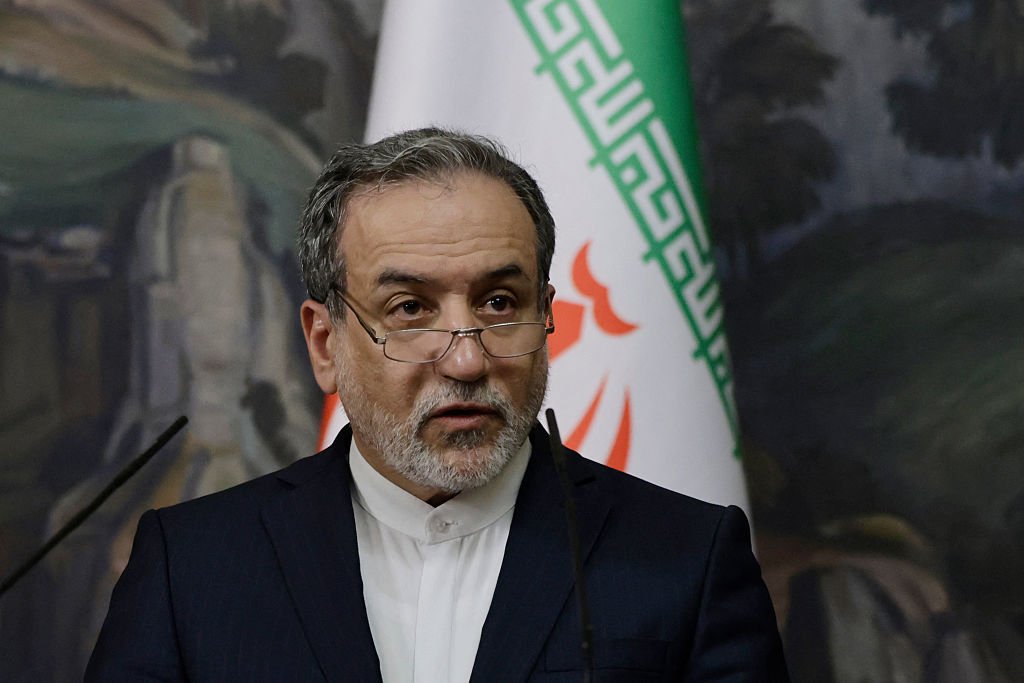

On the eve of renewed nuclear negotiations between Iran and the United States, Tehran issued a stern warning that it would hold Washington legally responsible for any Israeli attack on its nuclear facilities.
The caution followed a report suggesting Israel was preparing to target Iranian nuclear infrastructure, despite ongoing diplomatic efforts. The report, attributed to unnamed U.S. officials, indicated potential Israeli military action even as the two adversaries prepare for a new round of nuclear talks.
Iranian Foreign Minister Abbas Araghchi, in a letter addressed to the United Nations, stated, “If the Zionist regime attacks Iran’s nuclear facilities, the United States will be considered complicit and bear legal responsibility.”
He further warned, “Iran will firmly respond to any aggression or unlawful act by the Zionist regime,” emphasizing Tehran’s resolve to defend its sovereignty.
The upcoming fifth round of nuclear negotiations, facilitated by Oman, is scheduled to take place in Rome on Friday. These talks, which commenced on April 12, mark the highest-level dialogue between the two nations since the U.S. withdrew from the 2015 nuclear accord under President Donald Trump in 2018.
The American delegation is expected to include Trump confidant Steve Witkoff and Michael Anton, the State Department’s head of policy planning, who has been actively involved in technical discussions, according to sources familiar with the matter.
Key Issues in the Talks
One of the central disagreements in the negotiations is Iran’s uranium enrichment levels. Under the 2015 agreement, Iran was allowed to enrich uranium only up to 3.67% for peaceful energy purposes. However, the country is currently enriching uranium to 60%—still below the 90% required for weaponization, but far above the agreed limit.
Trump, seeking to renegotiate the deal, has claimed that Iran is willing to meet crucial conditions, thereby avoiding military escalation. U.S. Secretary of State Marco Rubio, addressing Congress, reiterated that Iran must not retain any uranium enrichment capabilities, warning it would otherwise become a “threshold nuclear power.”
Sanctions and Military Tensions
Iran is pressing for relief from U.S. sanctions reinstated in 2018, which particularly target its crucial petroleum exports. Rubio noted that even if a new agreement is reached, sanctions tied to terrorism and Iran’s missile program will remain in force.
Though Rubio did not directly respond to the reported Israeli plans, he acknowledged that Israel has been evaluating military options.
Iran’s Military Posture and Public Sentiment
In response to Israeli threats, a senior spokesperson for Iran’s Islamic Revolutionary Guard Corps (IRGC), Ali Mohammad Naini, cautioned that any Israeli aggression would provoke a powerful retaliation.
“If the Zionist regime dares to strike, it will face a crushing response targeting its fragile geography,” Naini declared.
In a show of military preparedness, Iran’s army unveiled three new drones—including two for reconnaissance and one kamikaze model—according to state media.
Public demonstrations also took place outside the Fordow nuclear facility, with participants waving Iranian flags and chanting slogans in favor of the country’s nuclear program, including: “Nuclear energy is our inalienable right” and “No compromise, no surrender, only resistance against America.”
Iran, which does not recognize Israel, refers to it as the “Zionist regime.” The two have been engaged in a long-running covert conflict involving cyber, intelligence, and proxy operations.
