

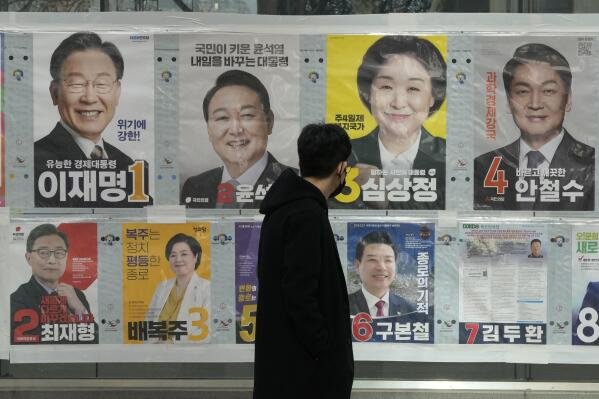

Seoul: Voters across South Korea turned out in large numbers on Thursday morning as early voting began for the nation’s snap presidential election. The vote comes amid a turbulent political backdrop following the ouster of President Yoon Suk-yeol late last year.
According to reports, long queues formed at polling stations in Seoul and other major cities, reflecting strong early interest in the high-stakes election. A total of 3,568 polling stations have been opened nationwide for the two-day early voting period, which will run through 6:00 p.m. local time on Friday (0900 GMT), the National Election Commission (NEC) confirmed.
This year’s early voting is notable for being held entirely on weekdays, a departure from previous elections where voting included weekends, potentially affecting turnout patterns.
Election Follows Political Upheaval
The snap election was triggered by the dramatic removal of former President Yoon Suk-yeol, who was ousted in December following an unsuccessful attempt to invoke martial law, a move that sparked widespread public outrage and led to his impeachment and removal from office.
Yoon’s departure has opened the door for a fiercely contested presidential race, with six candidates officially registered. However, the race has largely become a two-way contest between Lee Jae-myung of the opposition Democratic Party (DP) and Kim Moon-soo of the ruling People Power Party (PPP).
Polls Show Tight Race
The latest public opinion survey released on Wednesday showed Lee Jae-myung holding a significant lead with 49.2% support, followed by Kim Moon-soo with 36.8%. Lee Jun-seok, representing the New Reform Party, is polling in third place with 10.3%.
Lee Jae-myung, who previously lost the 2022 presidential election to Yoon, is widely viewed as the frontrunner. He cast his early vote Thursday in the Sinchon district of western Seoul. Meanwhile, Kim Moon-soo is expected to vote during a campaign stop in Incheon’s Gyeyang district later in the day.
Main Election Set for June 3
The official election day is scheduled for June 3, when South Korean citizens will elect a new president to serve a five-year term. The outcome of the vote is expected to have a profound impact on the country’s political trajectory, economic policies, and regional diplomacy, particularly amid ongoing tensions with North Korea and evolving relations with China and the United States.
Observers say the high early turnout indicates strong public engagement despite political fatigue and recent turmoil. The NEC has called on all eligible voters to participate and emphasized the importance of maintaining order and transparency throughout the electoral process.
As South Korea prepares for a pivotal transition in leadership, all eyes will be on how the electorate responds at the ballot box in what is shaping up to be one of the most consequential elections in the country’s recent history.
