


Fighter Jets
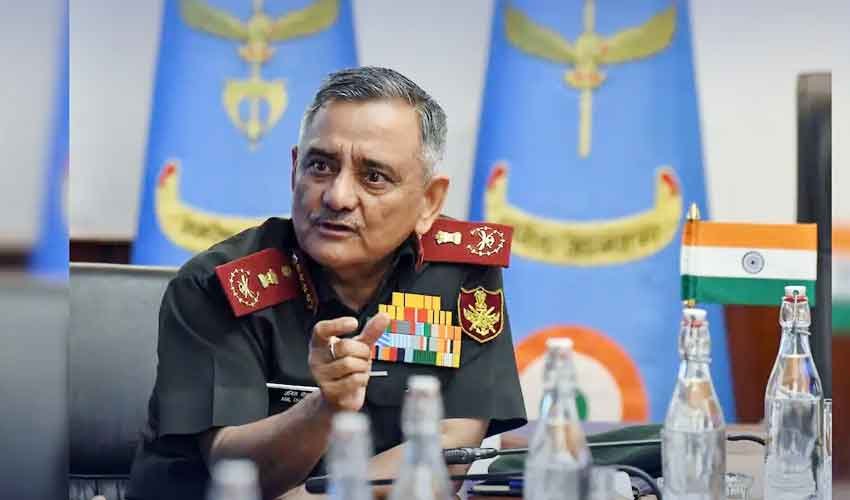
In a significant development, India has publicly acknowledged the loss of its aircraft during a recent military confrontation with Pakistan, marking the first time a senior Indian military official has confirmed such losses. General Anil Chauhan, India’s Chief of Defence Staff, made the admission during an exclusive interview with Bloomberg while attending the Shangri-La Dialogue in Singapore.
General Chauhan stated, “Warplanes were lost” during the aerial exchange with Pakistan and acknowledged that tactical errors had occurred. “We made mistakes during the air battle, which we have since realized and corrected,” he added. However, he refrained from specifying the exact number of jets downed, dismissing Pakistan’s claim of shooting down six Indian fighter jets as “absolutely incorrect” but providing no alternate figure.
This admission provides indirect validation to Pakistan’s assertion that it successfully downed multiple Indian aircraft in the early phase of the conflict. Pakistan had claimed it shot down six Indian jets, including three French-made Rafales, during retaliatory operations launched after Indian airstrikes on May 7. The Pakistani military has consistently maintained that Indian jets did not re-enter its airspace following their initial losses.
General Chauhan emphasized that the crucial takeaway was not the number of aircraft lost but the lessons learned. “What is important is not the jet being down, but why it was down,” he said, stressing the need to analyze tactical shortcomings rather than focus solely on numbers.
Chauhan revealed that India swiftly revised its strategy following the initial setbacks and launched deeper airstrikes inside Pakistan on May 7, 8, and 10. He claimed Indian forces penetrated Pakistani air defences and conducted precision strikes on multiple air bases. However, Pakistan insists that Indian jets did not conduct any successful deep-penetration missions after May 7, asserting only limited drone and missile strikes occurred.
In a related development, senior BJP leader Subramanian Swamy added fuel to the fire by claiming that five Indian Air Force (IAF) jets were indeed downed by Pakistan during the conflict. Swamy criticized India’s defence readiness, labeling it a “serious failure” and highlighting the underperformance of the Rafale jets. He went so far as to state that Chinese aircraft, used by Pakistan, showed superior performance in the engagement.
The intense fighting, sparked by an April 22 attack in Indian-occupied Kashmir that killed 26 people—mostly tourists—led to an escalation unseen in decades between the two nuclear-armed rivals. India accused Pakistan of backing the attackers, a claim strongly denied by Islamabad.
Despite fears of a broader war, both countries announced a ceasefire on May 10. During the ten-day standoff, both sides employed a wide array of military assets, including fighter jets, drones, missiles, and heavy artillery. Reports suggest some Indian airstrikes targeted areas near Pakistani nuclear sites, though there were no direct hits on any nuclear facility.
Chauhan downplayed concerns that the conflict came close to crossing the nuclear threshold. “There is a lot of space between conventional operations and the nuclear threshold,” he said, noting that both militaries behaved rationally. He also dismissed speculation that China assisted Pakistan during the confrontation, stating there was no unusual activity along India’s northern borders.
Although the immediate conflict has subsided, Chauhan made it clear that India would remain vigilant and respond “precisely and decisively” to any future cross-border incidents. The Indian military, he stated, remains on high alert.
This public admission by General Chauhan, combined with revelations from senior Indian political figures, is being viewed as a diplomatic win for Pakistan, bolstering its claims on the international stage about the effectiveness of its military response and the credibility of its defence posture.
