

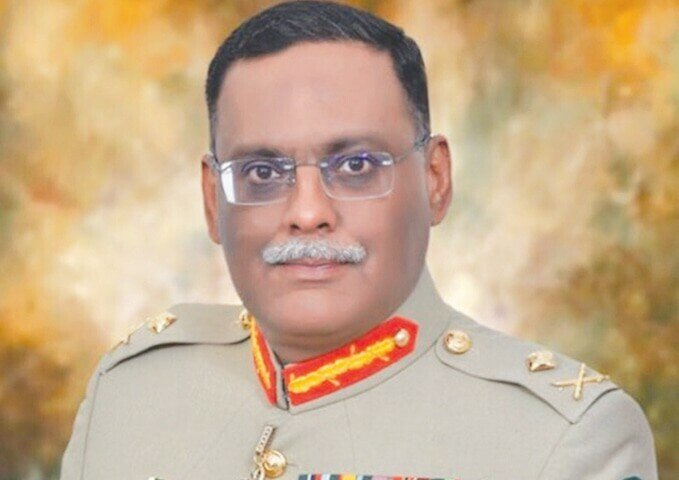

General Sahir Shamshad Mirza, Chairman of Pakistan’s Joint Chiefs of Staff Committee, has confirmed that Pakistan employed a full spectrum of national power—including air, space, and cyber capabilities—in its recent military engagement with India. He emphasized that the operational success was significantly bolstered by Pakistan’s advanced fighter jets, particularly the China-assisted JF-17 Thunder and J-10C aircraft.
In an interview with Chinese media, General Mirza described the Pakistan-China relationship as “higher than mountains, deeper than oceans, and stronger than steel,” underscoring the strategic partnership between the two nations. He noted that the conflict involved a multi-domain operation, with the JF-17, J-10C, and PL-15 fighter jets and missiles playing a critical role in achieving operational success.
The recent conflict between Pakistan and India was triggered by a terrorist attack in Pahalgam, Indian-administered Kashmir, on April 22, which resulted in the deaths of 26 civilians, including tourists. India launched missile strikes on Pakistan on May 7, targeting what it described as “terrorist infrastructure.” Pakistan responded with its own attacks, leading to a significant escalation in hostilities.
General Mirza stated that both militaries have begun the process of reducing troop levels along the border to pre-conflict positions. He cautioned that while nuclear weapons were not used during this conflict, the situation remained dangerous, and strategic miscalculations could occur in future crises.
Addressing the Shangri-La Dialogue in Singapore, General Mirza highlighted the need for a comprehensive and institutionalized crisis management framework in South Asia. He warned against India’s pursuit of regional hegemony, stating that it undermines efforts to resolve conflicts and threatens regional peace. He emphasized that regional stability should be based on principles of trust, patience, and mutual respect, rather than solely on military strength.
General Mirza’s remarks underscore Pakistan’s commitment to employing a comprehensive approach to national defense and its emphasis on strategic partnerships and regional stability.
