

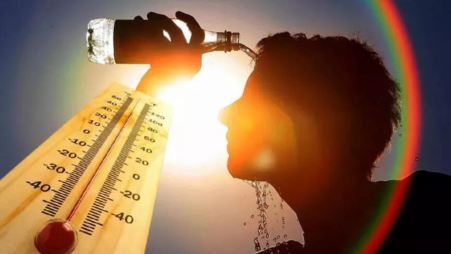

ISLAMABAD: A punishing heatwave continues to grip Pakistan, with temperatures soaring to dangerous levels across the country, severely impacting daily life and raising serious public health concerns.
Over the past 24 hours, large swathes of the country experienced intense heat and dry conditions, with the mercury reaching record highs in several regions. The most extreme temperatures were recorded in Bhakkar and Jacobabad, where the thermometer hit a blistering 49°C.
Close behind were Sibi, Noor Pur Thal, Sargodha, Gujranwala, and Hafizabad, all logging highs of 48°C. A wide belt of other cities, including Attock, Sheikhupura, Mandi Bahauddin, Jhelum, Joharabad, Bahawalnagar, Kasur, Mangla, Sialkot, Layyah, Bannu, and Dera Ismail Khan, sweltered at 47°C.
Major urban centers were also affected. Islamabad and Peshawar recorded 45°C, while Lahore, Faisalabad, Multan, and D.G. Khan each endured 46°C. Sahiwal and Rawalpindi experienced 45°C and 44°C respectively. In southern Pakistan, cities like Sukkur, Mohenjo-Daro, Dadu, and Nawabshah reported temperatures between 44°C and 46°C. Turbat and Nokundi registered 44°C and 42°C respectively.
Even the usually temperate northern areas were not spared. Chitral reached 37°C, Dir hit 38°C, Gilgit climbed to 36°C, and Skardu recorded an unusually high 34°C. In Azad Jammu and Kashmir, Muzaffarabad hit 43°C, Garhi Dupatta 42°C, and Rawalakot 32°C.
In Sindh, Karachi remained relatively cooler at 34°C, while Hyderabad recorded 41°C. The provincial capital of Balochistan, Quetta, registered 36°C, significantly above its seasonal average.
The ongoing heatwave is taking a toll on public health. Hospitals across the country are reporting a sharp uptick in heatstroke and dehydration cases, particularly among outdoor laborers, children, and the elderly. Power outages in various regions have compounded the crisis, limiting access to cooling appliances and drinking water.
Climate experts warn that such extreme weather events are becoming increasingly frequent due to global climate change. They are calling on authorities to prioritize heat-resilient infrastructure, emergency response systems, and public education campaigns to mitigate the impacts of future heatwaves.
In the meantime, the Pakistan Meteorological Department has urged citizens to avoid outdoor activities during peak daylight hours, remain well-hydrated, and take appropriate precautions to protect themselves from heat-related illnesses.
