


Global financial markets witnessed sharp declines on Friday as Israel launched military strikes against Iran, triggering a surge in oil prices and prompting investors to shift towards traditional safe-haven assets like gold and the US dollar.
US President Donald Trump, addressing the heightened tensions, urged Iran to engage in negotiations over its nuclear program, stating that there was still a chance to avoid further escalation. Despite his appeal, Iran responded later in the day with missile attacks on Israeli territory, with explosions reported in Tel Aviv and Jerusalem. Air raid sirens echoed across Israeli cities as the situation deteriorated.
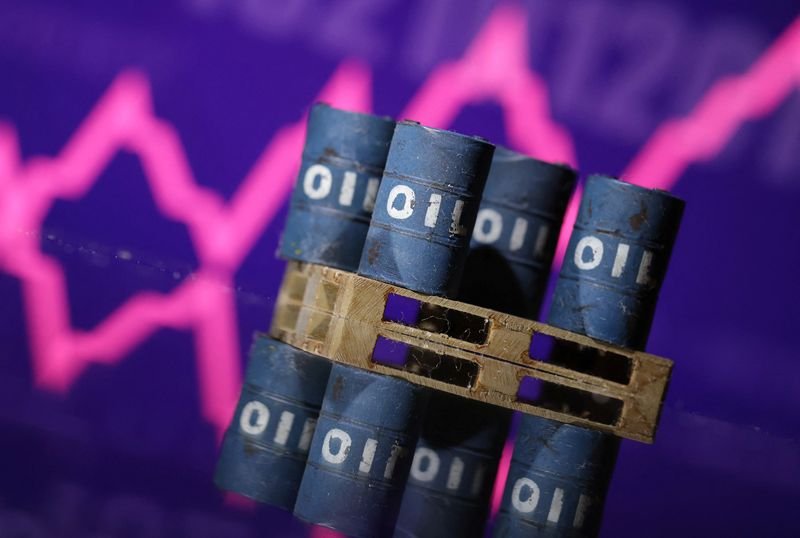
The conflict raises significant concerns about potential disruptions to oil and gas supplies from the Middle East—a region critical to global energy markets. Brent crude, the international benchmark, jumped 7% to settle at $74.23 per barrel after spiking over 13% earlier in the day. US crude rose 7.62% to $72.98 per barrel. Meanwhile, natural gas prices also reacted strongly, with US gas climbing approximately 3% and European gas prices rising over 5% to their highest intraday levels in ten weeks.
Gold, a classic hedge in times of geopolitical turmoil, gained 1.4% to $3,431 per ounce, nearing its record high of $3,500.05 reached in April. Investors also turned to the US dollar, pushing the dollar index up by 0.5% to 98.16, erasing most of the previous day’s decline.
Equity markets experienced a broad sell-off. On Wall Street, the Dow Jones Industrial Average fell 1.8%, the S&P 500 dropped 1.1%, and the Nasdaq Composite lost 1.3%. In Europe, the STOXX index declined 0.9%, briefly touching a three-week low. Asian markets mirrored the downturn, with key indexes in Japan, South Korea, and Hong Kong all falling more than 1%.
The conflict has introduced fresh uncertainty to financial markets, already under strain from unpredictable global trade dynamics. “The resurgence of a major conflict in the Middle East will likely heighten geopolitical stress and lead to sharply rising oil prices,” noted Sameer Samana, head of global equities and real assets at Wells Fargo Investment Institute. He added, however, that the market volatility could offer buying opportunities in large-cap US stocks and commodities for long-term investors.
Meanwhile, investors are also closely monitoring planned protests in major US cities on Saturday amid growing unrest, especially after immigration raids in Los Angeles raised domestic tensions.
In the bond market, reactions were mixed. Yields on 10-year US Treasury notes rose 5.6 basis points to 4.413% as markets reacted to the shock from rising oil prices and falling stocks. James Rossiter, head of global macro strategy at TD Securities, described it as a “flight-to-safety” event complicated by inflationary concerns due to the oil shock. “You have one force pushing yields down, and another pushing them up,” he said.
The Swiss franc briefly touched its strongest level against the dollar since April 21, before easing slightly to 0.811 per dollar. The Japanese yen, another safe haven, fell 0.34% to around 144 per dollar, reversing earlier gains. The euro declined 0.3% to $1.15, slipping from its Thursday peak—the highest since October 2021.
Commenting on the foreign exchange landscape, Arun Bharath, Chief Investment Officer at Bel Air Investment Advisors, said, “If the Middle East conflict proves short-lived, the dollar’s recent weakness may continue. If not, geopolitical tensions could create a premium that offsets those fundamental trends.”
