

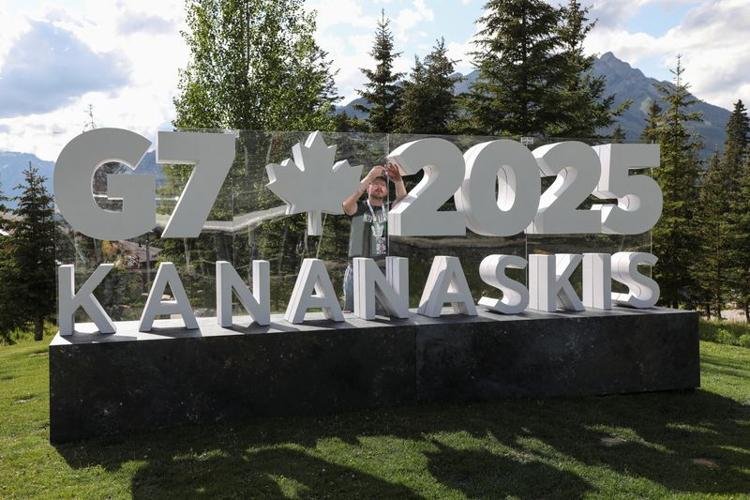

Leaders of the Group of Seven (G7) have gathered in the Canadian Rockies this Sunday, with Canada aiming to prevent tensions from escalating with U.S. President Donald Trump amid growing discord over global trade and foreign policy. The summit is being held in the scenic mountain resort of Kananaskis, Alberta, and will run through Tuesday.
Canadian Prime Minister Mark Carney has outlined key priorities for the summit: promoting global peace and security, advancing critical mineral supply chains, and job creation. However, ongoing conflicts in the Middle East and Ukraine, along with U.S. tariffs, are expected to dominate discussions.
Recent Israeli airstrikes on Iran have further complicated the summit’s agenda, undermining Trump’s diplomatic efforts to avert conflict. Tensions are high as past incidents still resonate—particularly the 2018 summit, when Trump exited early and criticized then-Prime Minister Justin Trudeau.
Commentators suggest success at this year’s summit may simply be avoiding another outburst from Trump. Carney’s government is taking no chances; Canada has abandoned the idea of a joint communique, instead opting for individual chair summaries to manage potential fallout.
Diplomats say the shift is aimed at keeping the U.S. engaged while minimizing risks. The summit is also expected to feature leaders from Ukraine, India, South Korea, Mexico, Brazil, Australia, and South Africa, each hoping to hold bilateral talks with Trump.
A U.S. official confirmed the summit will cover trade, critical minerals, AI, energy security, and migration. Despite strained relations, the event offers an early look at how Trump plans to engage globally. Discussions may also reinforce the need for cooperation on sanctions against Russia ahead of the upcoming NATO summit.
President Emmanuel Macron noted the postponement of a planned UN conference on Israel-Palestine peace talks, originally set to follow the G7.
