

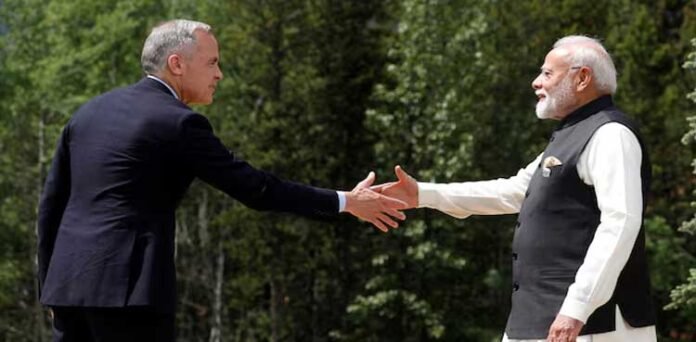

India has been identified as a perpetrator of foreign interference in Canada, according to a report released by the Canadian Security Intelligence Service (CSIS) on Wednesday. The report’s release comes just a day after Canadian Prime Minister Mark Carney and Indian Prime Minister Narendra Modi held constructive discussions at the G7 summit in Alberta, where both sides agreed to restore high-level diplomatic ties.
The two leaders described their talks as productive, signaling a thaw in relations after a period of heightened tensions. Diplomatic friction intensified in 2023 when former Canadian Prime Minister Justin Trudeau accused India of involvement in the assassination of Hardeep Singh Nijjar, a Sikh separatist leader, on Canadian soil.
India has consistently denied the allegation and has countered by accusing Canada of harboring Sikh separatist elements. The controversy surrounding Modi’s G7 visit sparked criticism from segments of Canada’s Sikh community, who were angered by the invitation extended to him.
In its report, CSIS stated that India engages in “transnational repression” in Canada and named it among several countries attempting to exert influence over Canadian domestic affairs. While the report emphasized that China remains the most significant counter-intelligence threat, it also highlighted interference activities by Russia, Iran, and Pakistan.
“Indian officials, including Canada-based proxy agents, participate in a variety of actions intended to influence Canadian communities and political discourse,” the report said. “These efforts are largely aimed at shaping Canada’s stance to align with New Delhi’s interests, especially concerning the activities of Canadian supporters of Khalistan — a proposed independent Sikh homeland.”
The Royal Canadian Mounted Police had earlier reported receiving more than a dozen threats directed at pro-Khalistan activists in Canada.
Neither the Indian High Commission nor the Chinese embassy in Ottawa issued a response to the report at the time of its release.
