

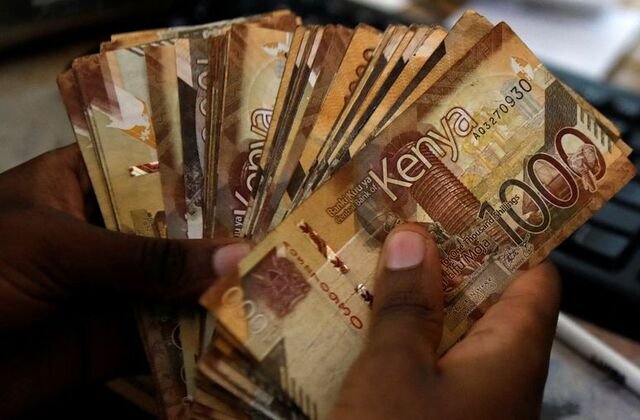

Africa’s ambition to establish domestic payment systems that bypass the U.S. dollar has begun to yield tangible results, promising reduced trade costs for a continent long burdened by expensive dollar-centric transactions.
However, these efforts face significant pressure from the U.S., where former President Donald Trump continues to vocally defend the dollar’s global dominance—and has warned of punitive tariffs against nations moving away from its use.
Africa is not alone in this endeavor. China has similarly promoted financial frameworks outside Western influence, and Russia—amid sanctions—has pursued alternatives to the dollar. Yet African leaders emphasize that their primary motivation is cost efficiency, not de-dollarization.
“Our aim is not de-dollarization,” remarked Mike Ogbalu, CEO of the Pan-African Payments and Settlements System (PAPSS). “African economies face challenges accessing global currencies to settle transactions.”
Presently, African banks depend heavily on correspondent banking relationships for international payments—a system that significantly inflates costs. Poor infrastructure and this reliance mean intra-African trade is about 50% more expensive than global averages, according to UNCTAD. Moreover, roughly 84% of intra-Africa trade is conducted with external partners, per Mauritius-based MCB Group.
Under the current model, a $200 million transaction between two African nations can incur costs equal to 10–30% of the transfer value. PAPSS aims to slash that to approximately 1%, allowing businesses in Zambia, Kenya, or Nigeria to trade directly in local currencies and reduce the continent’s reliance on hard currency—a shift that could save Africa around $5 billion annually.
Since launching in January 2022 with ten banks, PAPSS now operates in 15 countries and is supported by 150 commercial banks. The IFC, the private sector arm of the World Bank, is also championing the cause by offering local-currency loans to African businesses—relieving borrowers from the volatility associated with dollar-denominated debt.
At the G20, South Africa, this year’s president, prioritized the development of regional payment systems. Central banker Lesetja Kganyago highlighted the importance of enabling Africa to trade and settle in its own currencies. The next G20 finance ministers’ meeting is scheduled for mid-July, where follow-up measures are expected.
Still, the transition is not without geopolitical risk. Trump has publicly threatened “100% tariffs” against countries that lessen their dependence on the dollar—and since January, he has demonstrated his readiness to use tariffs as leverage. Analysts say that any move away from the dollar—even for cost-saving reasons—may be viewed through a geopolitical lens, complicating Africa’s efforts to create an independent financial infrastructure.
