


Battlefield and Diplomatic Front
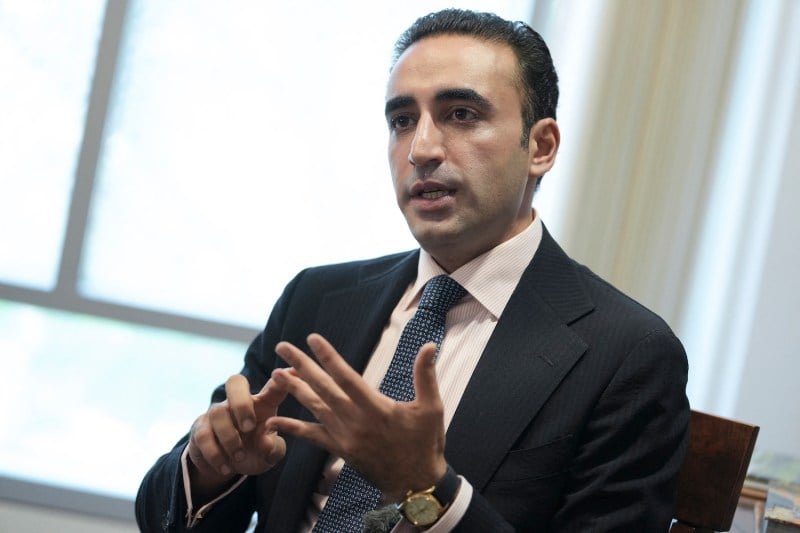
After concluding an extensive diplomatic mission across Europe and the United States, Pakistan Peoples Party (PPP) Chairman and former foreign minister Bilawal Bhutto-Zardari declared on Friday that Pakistan had defeated India both militarily and diplomatically in the aftermath of their latest confrontation.
Speaking upon his return to Karachi, Bilawal was warmly received by PPP leaders and party workers, who gathered to welcome him back following an 11-day foreign tour. The high-level parliamentary delegation he led visited major capitals across the US, UK, and Europe, tasked with presenting Pakistan’s position and countering what it described as Indian aggression and provocations.
The mission, conducted under the direction of Prime Minister Shehbaz Sharif and President Asif Ali Zardari, aimed to raise awareness in the international community about India’s increasingly hostile posture, particularly in relation to the Kashmir issue and recent border clashes.
The delegation included prominent figures such as Hina Rabbani Khar, Sherry Rehman, Dr. Musadik Malik, Khurram Dastgir Khan, Jalil Abbas Jilani, Tehmina Janjua, Bushra Anjum Butt, and Syed Faisal Subzwari.
During his address to the party workers, Bilawal emphasized that the delegation had effectively conveyed Pakistan’s message of peace and highlighted key issues such as the Kashmir dispute, the Indus Waters Treaty, and Pakistan’s counterterrorism efforts. He credited the country’s diplomats stationed around the world for their tireless work, stating that their efforts played a crucial role in Pakistan’s success on the diplomatic front.
Bilawal contrasted the recent response with that of the 2019 conflict during Imran Khan’s tenure, accusing the former prime minister of failing to adequately respond to Indian aggression at the time. He asserted that under the current leadership, Pakistan had responded forcefully—both on the battlefield and diplomatically—especially after India allegedly used the Kashmir issue to justify military action.
He cited international validation of Pakistan’s narrative as a major victory, pointing specifically to US President Donald Trump’s offer to mediate the Kashmir dispute, which, according to Bilawal, signified a shift in how the world views the longstanding conflict—not as a bilateral issue but as an international one.
Bilawal also pointed to recent remarks by the US military leadership praising Pakistan’s role in counterterrorism efforts and referring to the country as a “phenomenal partner in the war on terror,” calling it further evidence of the diplomatic mission’s success.
He noted that shortly after the conclusion of the delegation’s visit to the US, President Trump extended a personal invitation to Pakistan’s Chief of Army Staff, Field Marshal Syed Asim Munir, for a lunch meeting at the White House—an event he said symbolized the renewed strength of Pakistan-US relations.
Bilawal concluded by stating that Pakistan’s coordinated response to India—culminating in Operation Bunyan-um-Marsoos—had delivered a decisive message.
The conflict, which lasted nearly four days following the Pahalgam attack in Indian Illegally Occupied Jammu and Kashmir, ended on May 10 after a US-brokered ceasefire. The PPP chairman asserted that this outcome marked a historic moment in Pakistan’s diplomatic and military history.
