

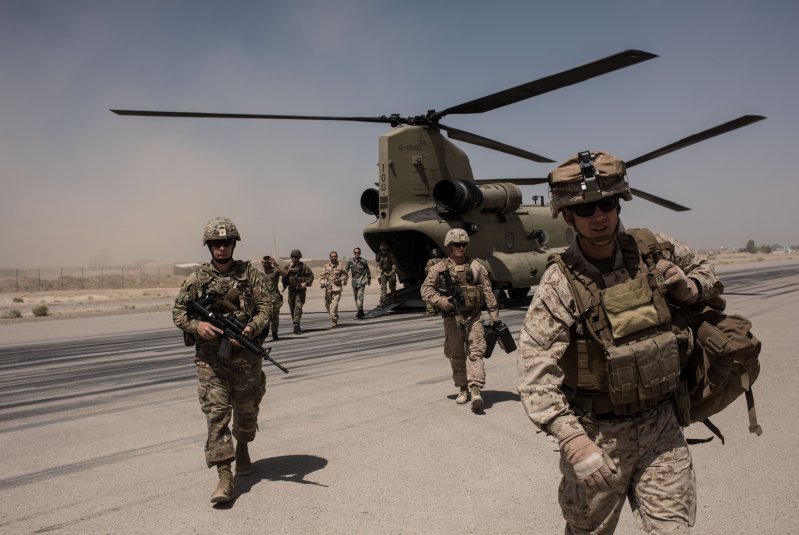

WASHINGTON — More than two decades of United States military involvement in the Middle East and Afghanistan have come at a staggering cost — both financially and in human lives. According to recent data from the Costs of War Project, U.S. wars in the region have cost taxpayers over $8 trillion and resulted in nearly 940,000 direct deaths.
The report, compiled by Brown University researchers, includes the costs of military operations in Afghanistan, Iraq, Pakistan, Syria, and Yemen, as well as long-term care for veterans, interest on war-related debt, and reconstruction efforts. The U.S. campaigns in these regions began shortly after the September 11, 2001 attacks and have continued through successive administrations.
In terms of human cost, the wars have directly killed between 905,000 and 940,000 people, including combatants and civilians. The total death toll, including indirect causes such as disease, displacement, and destruction of infrastructure, is estimated to be in the millions.
Additionally, at least 30,000 U.S. military personnel, contractors, and allied troops have died in these conflicts. This includes approximately 7,052 American soldiers, 8,189 private contractors, and 14,874 allied military personnel, highlighting the global scope and human toll of the U.S. engagements.
The financial burden continues to mount. The 2024 U.S. defense budget reached $997 billion, making up 37% of global military spending, according to the Stockholm International Peace Research Institute (SIPRI). This is more than the combined military expenditures of China and Russia.
The recent escalation involving U.S. airstrikes on Iran’s nuclear facilities — using advanced B-2 stealth bombers and bunker-buster bombs — further underscores the high cost of maintaining global military dominance. A single B-2 bomber costs roughly $2.1 billion, and over 125 aircraft were deployed in the operation, costing hundreds of millions of dollars.
Despite these expenses, officials argue that the missions are necessary for global security. Critics, however, question the sustainability of such investments and call for a reevaluation of long-term military commitments.
With rising geopolitical tensions and no clear end to many of these conflicts, the U.S. faces difficult questions about its military strategy, economic priorities, and the true cost of its global engagements.
