


Scheduled Meeting
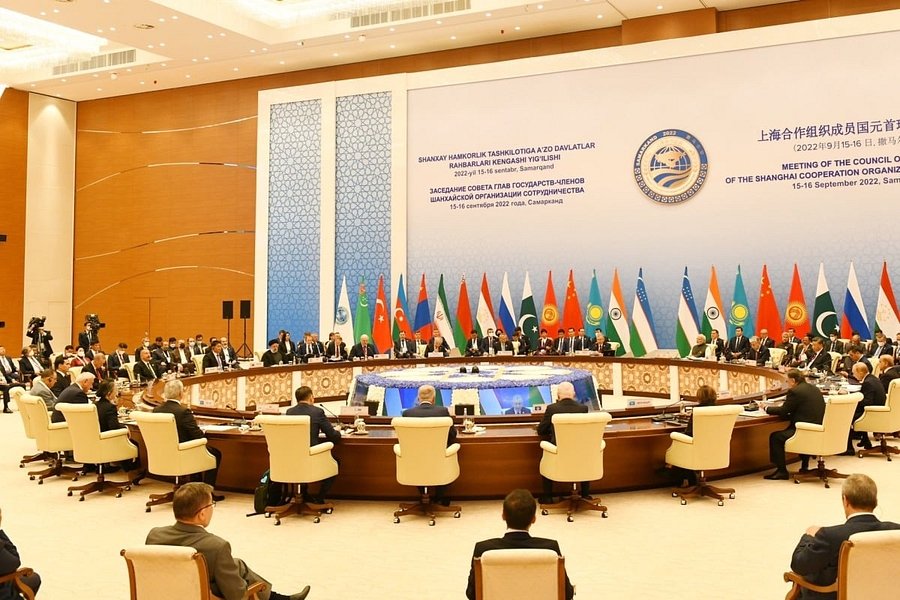
ISLAMABAD: Addressing the swirl of speculation circulating in local and international media, Pakistan’s Foreign Office has officially clarified that no bilateral meeting is scheduled between Defence Minister Khawaja Asif and his Indian counterpart Rajnath Singh during the upcoming Shanghai Cooperation Organisation (SCO) Defence Ministers’ Meeting in Qingdao, China.
In a statement released on Wednesday, the Foreign Office confirmed that Khawaja Asif would represent Pakistan at the high-profile regional gathering, but firmly denied any plans for a sideline engagement with the Indian delegation. The clarification comes amid reports suggesting a possible thaw in strained relations between the two South Asian nuclear powers.
Despite Pakistan’s clear stance, Turkish media outlets have reported that the Qingdao meeting could witness the first face-to-face interaction between the defence ministers of Pakistan and India since the recent military confrontation earlier this year.
According to these reports, Defence Minister Khawaja Asif will head a high-level Pakistani delegation for the two-day event, which will also be attended by Rajnath Singh, leading a top-tier Indian delegation. Singh is reportedly scheduled to hold meetings with several key counterparts from China, Russia, and other member states.
Government sources confirmed that both Khawaja Asif and Rajnath Singh have already arrived in China for the SCO deliberations, which are expected to focus on pressing issues such as regional and global security dynamics, counter-terrorism cooperation, and enhancing multilateral military collaboration.
Meanwhile, National Security Advisor (NSA) Lieutenant General Asim Malik also participated in the SCO framework earlier this week. He attended the 20th meeting of the Secretaries of Security Councils of SCO Member States in Beijing, where he met with senior Chinese leadership and delivered a keynote speech.
In his address, Malik reaffirmed Pakistan’s consistent position on regional peace, its commitment to global stability, and its constructive role within the SCO framework. The NSA also emphasized Islamabad’s pursuit of a peaceful and stable neighborhood and Pakistan’s vision of acting as a net stabilizer in the region.
Tensions between Pakistan and India remain high following a deadly April incident in Indian Illegally Occupied Jammu and Kashmir’s (IIOJK) Pahalgam, where 26 tourists were killed. India promptly accused Pakistan of orchestrating the attack, a claim strongly denied by Islamabad.
In the aftermath, India launched a series of unprovoked cross-border strikes that targeted civilian areas inside Pakistan. The Pakistan Armed Forces responded with precision in a defensive campaign dubbed Operation Bunyan-um-Marsoos, during which they reportedly downed six Indian Air Force (IAF) jets, including three Rafale aircraft, and neutralized dozens of drones.
The short but intense conflict lasted nearly 87 hours before a ceasefire was brokered by the United States on May 10. In the post-ceasefire period, both nations have engaged in active diplomatic outreach to present their narratives to the international community. Despite the ongoing tensions, Pakistan continues to advocate for regional peace through structured diplomacy and multilateral platforms such as the SCO.
