

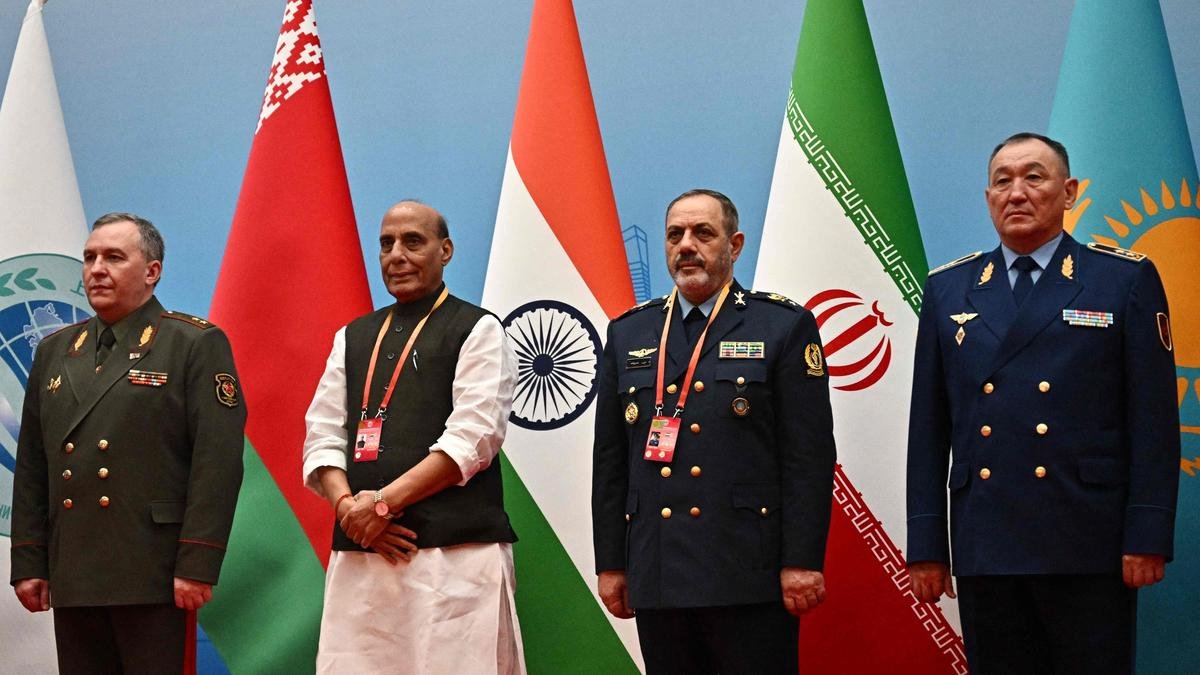

India refused to sign the joint communique at the Shanghai Cooperation Organisation (SCO) Defence Ministers’ meeting held in Qingdao, China, on Thursday, citing the absence of any mention of the recent attack in Pahalgam, located in Indian Illegally Occupied Jammu and Kashmir (IIOJK).
The summit brought together defence leaders from SCO member states, including China, Russia, Pakistan, and India. Pakistan was represented by Defence Minister Khawaja Asif. This marked the first high-level engagement between Indian and Pakistani defence officials at an SCO platform since the Marka-e-Haq incident.
Indian Defence Minister Rajnath Singh reportedly objected to the final draft of the joint statement, which condemned the Jaffar Express bombing in Pakistan—a move indirectly pointing toward Indian involvement in Balochistan-based terrorism—while omitting the Pahalgam incident.
Due to India’s refusal, the SCO bloc was unable to issue a final communique, highlighting growing divisions within the alliance. According to Indian media sources, New Delhi saw the language of the draft as unbalanced and politically motivated.
Diplomatic analysts view this development as another setback for India’s international narrative, as SCO members did not support India’s efforts to attribute the Pahalgam attack to Pakistan.
In an earlier related move, the SCO issued a strongly worded joint statement condemning Israeli airstrikes inside Iran and affirming its support for Iranian sovereignty. India, however, opted out of endorsing that declaration as well, citing its strategic alignment with Israel.
The 10-member SCO alliance reaffirmed its commitment to the principles of the United Nations Charter and rejected unilateral or unlawful acts against any member nation. India, while expressing concern over rising tensions in the Middle East, chose to distance itself from the bloc’s unified stance.
