

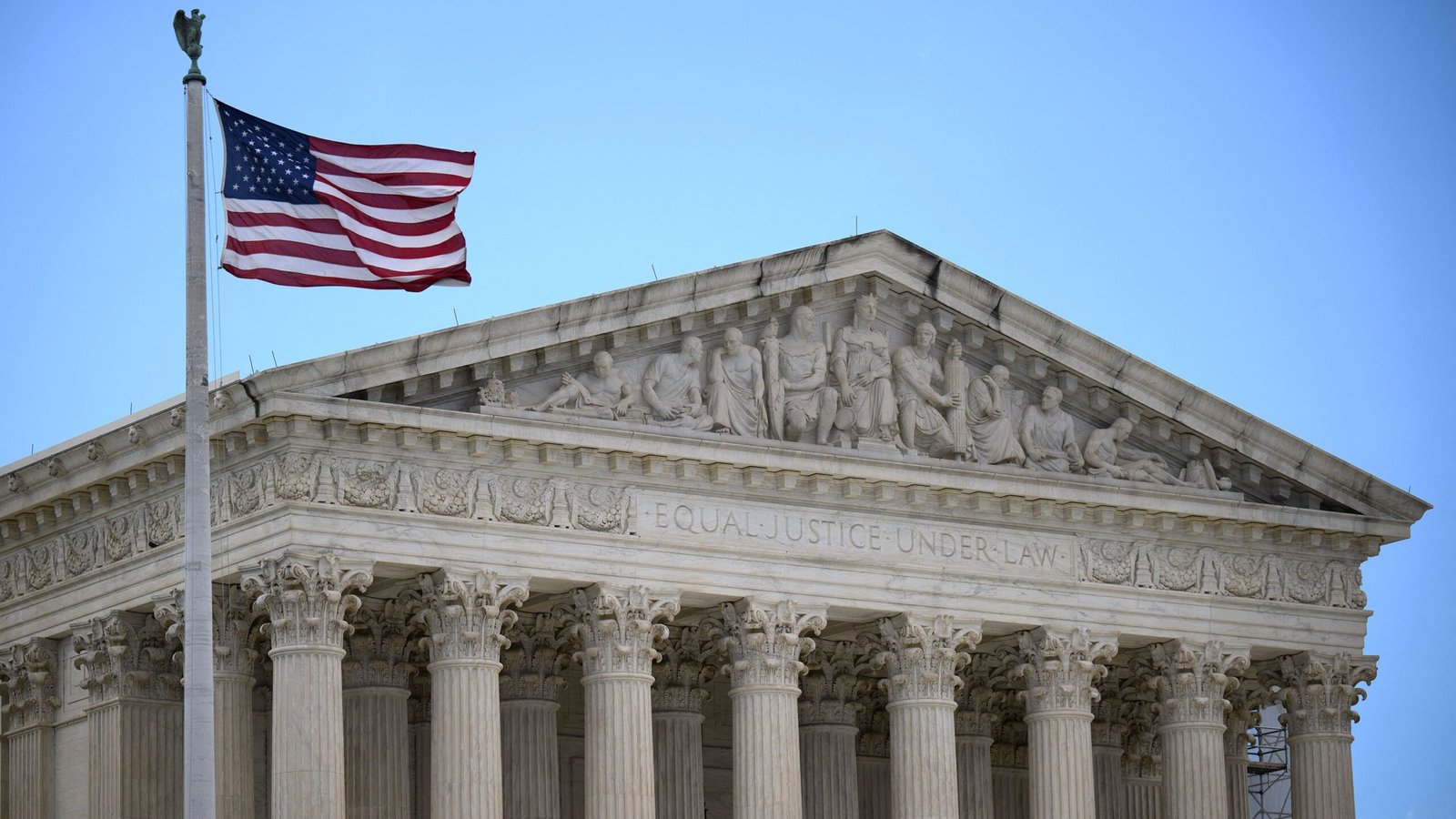

In a closely divided decision on Friday, the US Supreme Court handed President Donald Trump a significant legal victory by limiting the ability of individual federal judges to issue nationwide injunctions against presidential directives.
The court ruled 6-3 that district court judges likely overstep the authority granted by Congress when they impose universal injunctions that block executive actions across the entire country. This ruling came in the context of Trump’s attempt to end birthright citizenship, though the court did not directly address whether the executive order itself was constitutional.
This decision represents a major boost for Trump’s policy agenda, removing a powerful legal tool that has repeatedly been used to block or delay his controversial orders. Speaking to reporters afterward, Trump celebrated the outcome, saying he had “a whole list” of policies he could now advance without fear of immediate nationwide court opposition.
Since taking office, Trump has faced legal challenges that stalled measures like his immigration crackdown, attempts to dismantle diversity programs, dismiss federal employees, and penalize institutions critical of his administration. While national injunctions have been used against various presidents, the frequency increased under Trump, who faced more in his first two months than President Joe Biden encountered in his first three years.
Writing for the majority, Justice Amy Coney Barrett — a Trump appointee — noted that historically, nationwide injunctions were rare or nonexistent. “Federal courts do not exercise general oversight of the Executive Branch,” she wrote, adding, “When a court concludes that the Executive Branch has acted unlawfully, the answer is not for the court to exceed its power, too.”
The court’s three liberal justices dissented strongly. Justice Sonia Sotomayor warned the ruling could erode constitutional protections, describing it as “an open invitation for the Government to bypass the Constitution.” She argued it would now be harder for courts to fully stop policies that violate Americans’ rights.
On Truth Social, Trump hailed the decision as a “GIANT WIN.”
While the case arose from Trump’s executive order to end birthright citizenship — which lower courts ruled violated the 14th Amendment, it focused on whether a single district judge can issue a nationwide block.
Legal analysts said the ruling could lead to uneven application of rights across the US. Steven Schwinn, a law professor at the University of Illinois Chicago, said it “sharply undermines the power of federal courts to rein-in lawless actions by the government,” possibly creating a patchwork of where rights apply.
Trump’s executive order sought to deny automatic citizenship to children born in the US to parents who are undocumented immigrants or on temporary visas. Lower courts had blocked this, citing the 14th Amendment’s clear guarantee that “all persons born or naturalized in the United States… are citizens.”
Trump and his Republican allies have long argued that national injunctions unfairly block policies supported by voters. The Supreme Court ruling now restricts such injunctions to the specific plaintiffs and districts involved.
