

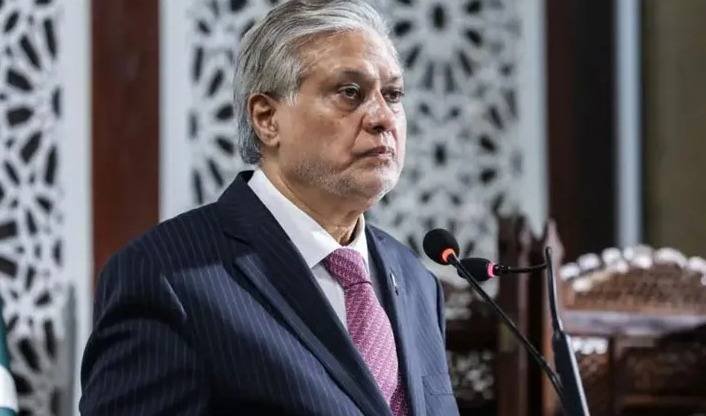

At the Shanghai Cooperation Organisation (SCO) Council of Foreign Ministers meeting in Tianjin, China, Pakistan’s Deputy Prime Minister and Foreign Minister Ishaq Dar reaffirmed Pakistan’s commitment to the regional ceasefire while warning India against the normalization of arbitrary use of force. His remarks come weeks after the worst Pakistan-India conflict in decades and underline Islamabad’s stance that disputes must be addressed through dialogue, not aggression.
In his speech, Dar emphasized that “Pakistan remains steadfast in its commitment to the ceasefire and the cultivation of a stable regional equilibrium,” but cautioned that sustainable peace is impossible if coercion and force become routine state policy. This statement directly referenced tensions following the deadly April 22 attack in Indian Illegally Occupied Jammu and Kashmir (IIOJK), which killed 26 people, mainly tourists. India blamed Pakistan for the attack, a charge Islamabad firmly denied.
Following India’s cross-border strikes, Pakistan retaliated with Operation Bunyan-um-Marsoos, downing six Indian Air Force jets, including three Rafales. The two nuclear-armed neighbors ended the four-day conflict by agreeing to a US-brokered ceasefire on May 10.
Dar reiterated that Pakistan prefers resolution through diplomatic engagement and that bilateral agreements must be respected to restore trust and prevent future escalations. Highlighting recent provocations, he noted that Pakistan had maintained a restrained approach despite aggressive rhetoric from India. “The peaceful settlement of longstanding unresolved disputes is imperative for enduring peace in the region,” Dar stressed.
The foreign minister also urged the SCO to remain a platform for stability built on sovereign equality and mutual respect, instead of rivalry. “Pakistan is ready to work with all regional partners under the SCO framework to advance peace, development, and connectivity,” he added.
Dar called the SCO a “stabilising force” in a world facing complex geopolitical challenges and praised its inclusive model that rejects confrontation and zero-sum politics. He reaffirmed Pakistan’s dedication to the SCO Charter and international norms, advocating non-aggression, non-interference, and peaceful conflict resolution.
Addressing terrorism, Dar condemned all its forms, including state terrorism, and warned against using it for political ends. He urged a cooperative global response that tackles root causes. On Afghanistan, he noted that peace there remains central to regional security and suggested reviving the SCO-Afghanistan Contact Group for practical cooperation.
Dar also advocated economic integration within the SCO, proposing concrete measures to strengthen trade, increase the use of national currencies to reduce external shocks, and support alternative development funding to revive stalled projects.
By reaffirming the ceasefire and cautioning against unilateral aggression, Pakistan used the SCO platform to underline that stability in South Asia requires commitment to dialogue, diplomacy, and mutual respect rather than force.
