

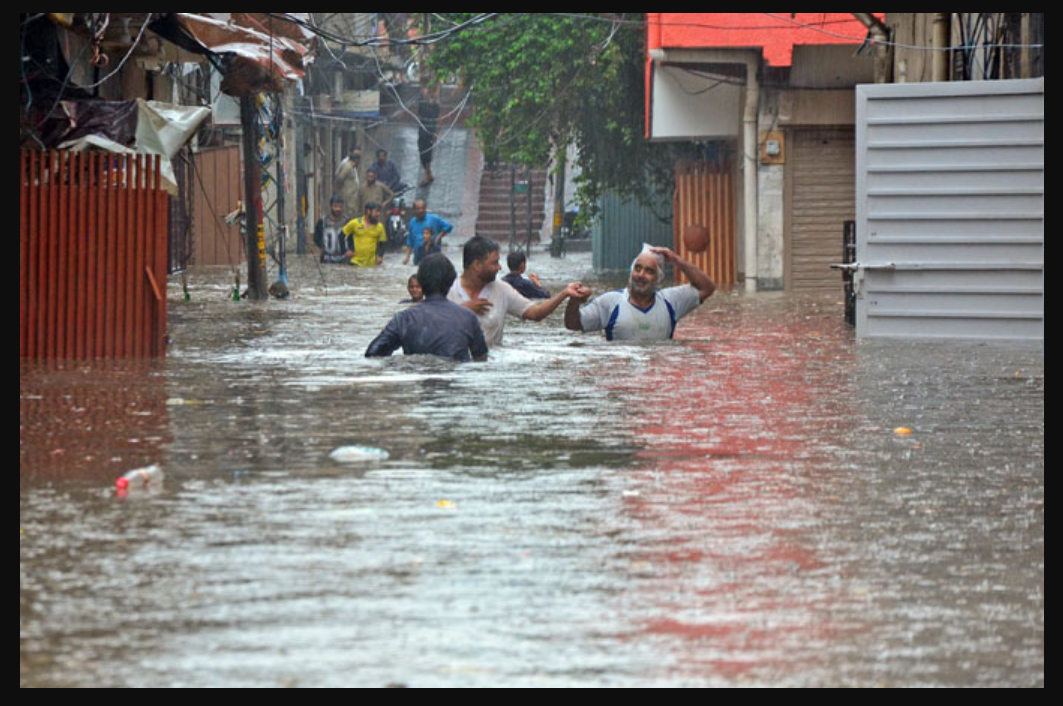

Monsoon havoc continues to take a deadly toll across Pakistan, with the National Disaster Management Authority (NDMA) reporting 21 additional deaths in the past 24 hours alone. This brings the total number of lives lost due to monsoon havoc since June 26 to a staggering 242. Monsoon havoc has also injured at least 598 individuals so far, according to the NDMA.
In its latest update, the NDMA’s National Emergencies Operation Centre (NEOC) warned that monsoon havoc may escalate further due to continued rainfall predicted across the country until July 25. The monsoon havoc warning highlights the threat of flash floods, landslides, and riverine flooding, especially in the country’s northern and mountainous areas.
Among the key areas flagged, the risk of Glacial Lake Outburst Floods (GLOFs) remains a major concern in Gilgit-Baltistan and its surrounding valleys. The NDMA said monsoon havoc could impact sensitive zones such as Reshwan, Breep, Boni, Sardar Gol, Thalo, Hanarchi, and others. These areas are especially vulnerable to flash floods caused by rapidly melting glaciers and ongoing downpours.
In addition to glacial threats, monsoon havoc may bring increased flooding along Pakistan’s major rivers. The Indus, Chenab, Jhelum, and Kabul rivers are all expected to see elevated water levels. The NDMA noted low to medium-level flooding is particularly likely at River Chenab’s key points, including Marala, Khanki, and Qadirabad. Meanwhile, River Jhelum may swell near Mangla, and River Kabul’s water levels could rise near Nowshera. Monsoon havoc also looms over River Indus sections like Tarbela, Chashma, Kalabagh, Taunsa, and Guddu Barrage.
Provincial reports confirm that monsoon havoc has placed areas in Khyber Pakhtunkhwa at high risk, particularly around the Swat and Panjkora rivers. Gilgit-Baltistan’s Hunza and Shigar rivers are also under close watch. In Balochistan, districts such as Sherani, Musakhel, Zhob, and Sibi may experience flash floods, while mountainous zones across northern Pakistan remain highly vulnerable to landslides.
Infrastructural impact from monsoon havoc has been severe. Key travel routes like the Karakoram Highway and Babusar Top have become inaccessible due to landslides and flood damage. Authorities have strongly advised tourists and travelers to avoid these regions until at least July 25 to prevent further casualties or emergencies.
In light of ongoing monsoon havoc, the NDMA has reiterated its call for public caution. Residents are urged to avoid crossing flooded bridges, rivers, and roads, and to follow official guidance during rainstorms. The NDMA emphasized reliance on verified news sources, radio alerts, or government communication channels for weather and safety information.
Local administrations have been tasked with preparing emergency equipment, including drainage pumps and heavy machinery. The NDMA also recommends the public use its Disaster Alert mobile app to receive timely updates and actionable safety tips related to the monsoon havoc.
