

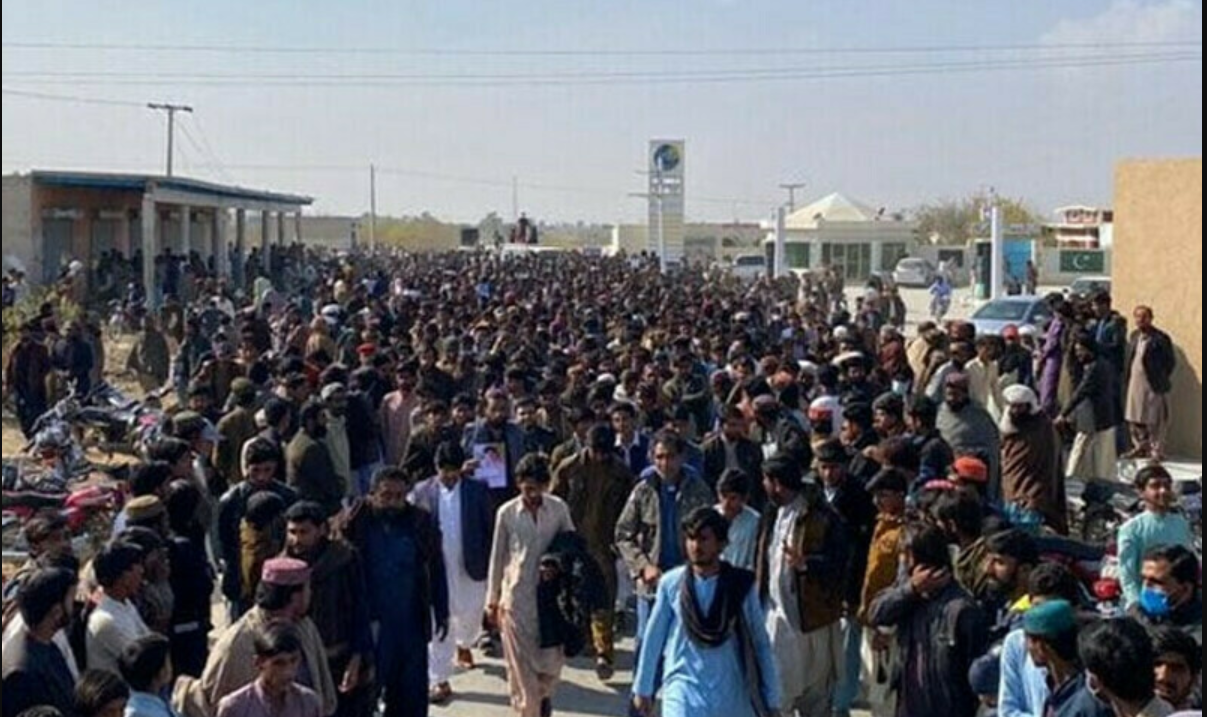

The Punjab government on Tuesday intervened to halt the Balochistan long march as it reached Lahore, preventing participants from proceeding towards Islamabad.
Led by Maulana Hidayat ur-Rehman Baloch, the march arrived in Lahore on Monday night after a five-day journey from Quetta. The procession, initiated to highlight the ongoing issues in Balochistan and demand fundamental rights for its residents, was organized by Jamaat-e-Islami.
Upon arrival in Lahore, the participants stationed themselves at Mansura, a key location from which they planned to continue their journey. However, on Tuesday, a large contingent of Punjab police was deployed around the area, effectively sealing off all entry and exit points. Authorities stationed prisoner transport vehicles and water cannons near Mansura, signaling potential use of force to deter movement.
Protesters reported being stopped by law enforcement, with roads leading to and from Mansura cordoned off. The heavy police presence sparked criticism from political leaders and civil society, particularly due to the peaceful nature of the demonstration.
Jamaat-e-Islami’s Secretary-General Amirul Azim strongly criticized the Punjab government’s move, labeling it a repressive measure aimed at silencing lawful dissent. He called for the immediate removal of the blockade and urged authorities to permit the peaceful protesters to resume their march to the federal capital.
Azim further alleged that the government had deliberately created hurdles throughout the journey, especially after the Fort Munro checkpoint, in clear violation of constitutional and human rights.
Participants of the march echoed these sentiments, emphasizing that their movement was non-violent and aimed solely at drawing attention to the neglect faced by Balochistan. They reiterated their commitment to continue the march peacefully and underscored the urgency of addressing the socio-economic grievances of the province’s population.
This protest reflects a broader demand for equitable resource distribution, representation, and attention to the issues plaguing one of the country’s most underdeveloped regions. Despite attempts to stifle their movement, marchers expressed determination to have their voices heard at the national level.
