

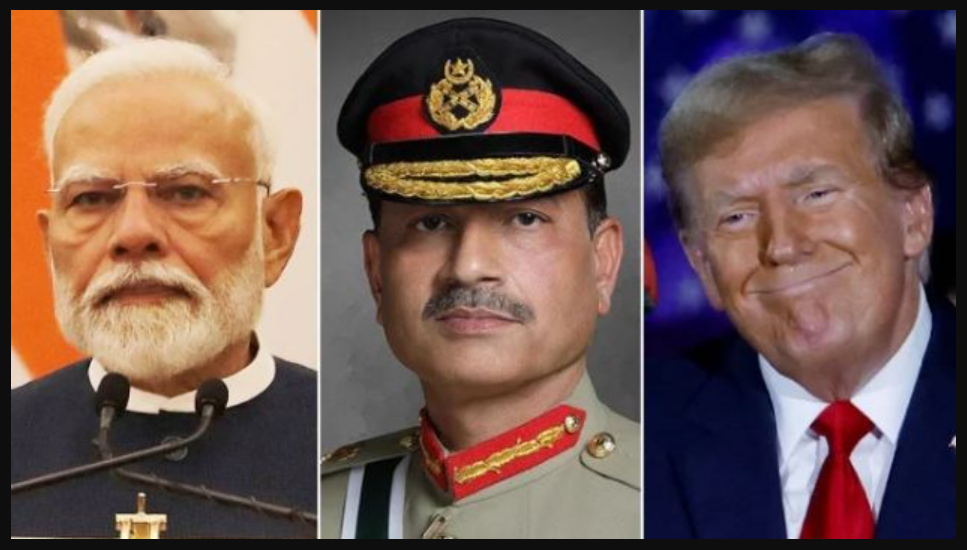

Indian Prime Minister Narendra Modi declined a scheduled meeting with former US President Donald Trump in June, reportedly due to concerns about a possible encounter with Pakistan’s Army Chief, Field Marshal Asim Munir.
According to officials familiar with the matter, Modi was apprehensive that Trump might arrange an unplanned interaction between him and the Pakistani military chief if both were present at the White House at the same time.
While India had no objection to Trump engaging with Pakistan’s civilian leadership, the idea of hosting Field Marshal Munir was perceived in New Delhi as undermining its diplomatic stance.
Backdrop of the Incident
The decision came shortly after India and Pakistan agreed to a ceasefire in May following a four-day military confrontation. The agreement, however, became a source of dispute between New Delhi and Washington after Trump publicly claimed that US intervention had prevented a potential nuclear escalation.
Indian officials rejected the claim, maintaining that the ceasefire was the result of direct bilateral negotiations initiated after Pakistan requested talks in the wake of Indian bombardments.
The June 17 Phone Call
The tensions escalated during a 35-minute phone call on June 17 between Modi and Trump. Modi reportedly told Trump that India “does not and will never accept mediation” and reaffirmed that the ceasefire was negotiated directly between the two nations.
This conversation took place shortly after Indian aides discovered that Trump had scheduled a White House lunch with Field Marshal Munir for the following day. Concerned about an unplanned meeting, Modi declined the White House invitation and instead proceeded with his scheduled visit to Croatia.
Strained US–India Relations
Following the incident, diplomatic relations between Washington and New Delhi cooled significantly. Trump began publicly criticising India, targeting its trade policies and threatening to impose a 50% tariff on Indian exports—a threat he later fulfilled. Modi and Trump have not spoken since the June phone call.
Field Marshal Munir’s US Visits
The developments coincided with Field Marshal Munir’s increased diplomatic engagements in the United States. His upcoming trip this week marks his second visit in under two months.
He is scheduled to attend the retirement ceremony of US Central Command chief General Michael Kurilla, who recently received the Nishan-e-Imtiaz (Military) during his visit to Pakistan. No official confirmation has been provided regarding other planned meetings during this trip.
Munir’s previous visit to the US in June included a rare one-on-one meeting with Trump in the White House Cabinet Room, attended by senior American and Pakistani officials. Discussions lasted over two hours and covered a range of issues, including the then-rising tensions with Iran, and potential collaboration in trade, energy, artificial intelligence, cryptocurrency, minerals, and emerging technologies.
The June meeting also came against the backdrop of a short but intense armed conflict between India and Pakistan, involving cross-border airstrikes and resulting in both military and civilian casualties. During that meeting, Munir praised Trump’s “constructive and result-oriented” efforts in facilitating the ceasefire, while Trump commended the Pakistani military chief’s leadership.
Economic Agreements Following Diplomatic Talks
Following Munir’s June visit, Pakistan and the US reached a trade agreement after discussions between Pakistan’s finance minister and the US Secretary of Commerce. The deal introduced a 19% reciprocal tariff on Pakistani exports to the US and signaled a renewed phase of economic cooperation between the two countries.
