


Lavrov rejects direct talks amid US-led mediation push, Trump warns of “important decision” in two weeks
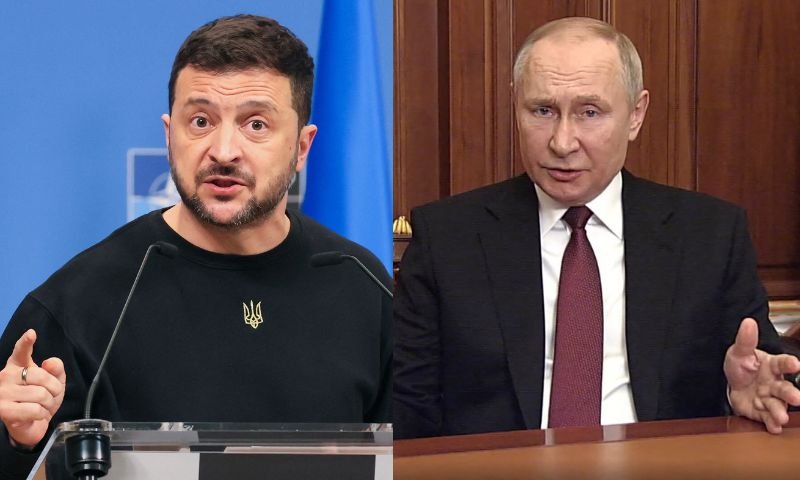
Amid growing international efforts to mediate an end to the war in Ukraine, Russia on Friday ruled out a direct meeting between President Vladimir Putin and Ukrainian President Volodymyr Zelensky. The announcement comes as diplomatic tensions rise and hopes of a negotiated peace remain elusive.
Russian Foreign Minister Sergei Lavrov stated clearly in an interview with NBC that “no meeting is planned” between the two leaders. He added that while Putin is “ready to meet,” an agenda for such talks “is not ready at all.” The remarks came as NATO Secretary-General Mark Rutte visited Kyiv to discuss potential security guarantees for Ukraine.
Conflicting Signals from Trump and the Kremlin
Earlier in the week, U.S. President Donald Trump had raised hopes of a potential summit between Putin and Zelensky, suggesting both sides had agreed in principle to meet. But by Friday, Trump appeared to walk back his optimism, comparing the leaders to “oil and vinegar,” suggesting their vast differences made progress unlikely.
“They don’t get along too well, for obvious reasons,” Trump told reporters in Washington, adding he was “not happy” about recent developments in the war, including a Russian missile strike on a U.S.-owned factory in Ukraine.
When pressed on his own role in mediation, Trump said he would wait two weeks before making a major decision on whether to impose massive sanctions, tariffs, or possibly do nothing if peace talks fail. “It takes two,” he said. “And then I’m going to make a decision… it’s going to be a very important decision.”
Ukraine Rejects Russian Narrative
Standing beside NATO’s Rutte in Kyiv, Zelensky reiterated that Ukraine had no agreement with Russia regarding a summit. “We’ve only agreed with President Trump on how to move forward diplomatically,” he said. A day earlier, Zelensky accused Moscow of trying to “wriggle out” of direct negotiations while continuing its offensive.
He also criticized Russia’s call for “security guarantees” as a deflection. “I don’t know who is threatening them,” Zelensky said, insisting that Ukraine needs guarantees in the form of foreign troops stationed on its soil to prevent future aggression from Moscow.
Lavrov, however, dismissed Ukraine’s requests and reiterated the Kremlin’s maximalist demands, including no NATO membership for Ukraine and territorial concessions — both of which Zelensky has firmly rejected. “Zelensky said no to everything,” Lavrov said.
Rutte Pushes for Firm Security Guarantees
During his visit, NATO’s Mark Rutte stressed the importance of binding security guarantees to prevent Russia from launching future invasions. An air raid alert sounded in Kyiv during his stay, underscoring the ongoing danger Ukrainians face daily.
“Russia must never again be allowed to take even one square kilometre of Ukraine,” Rutte said, referencing Russia’s violation of the 1994 Budapest Memorandum, which was meant to ensure Ukraine’s security in exchange for surrendering its Soviet-era nuclear arsenal. Russia breached the agreement first by annexing Crimea in 2014, and then with its full-scale invasion in 2022, which has resulted in tens of thousands of deaths and millions displaced.
Diplomatic Stalemate Deepens
The latest developments underscore the widening gap between Russia and Ukraine as well as the limitations of Western-led mediation efforts. With Trump offering an ambiguous two-week deadline and Lavrov dismissing Zelensky’s legitimacy, the prospects for a negotiated ceasefire or peace deal remain bleak.
Analysts warn that unless there’s a shift in diplomatic strategy, the conflict risks further escalation—both militarily and politically. Meanwhile, Ukraine continues to seek stronger support from NATO allies as the war enters its fourth year.
