


North Korea Claims ‘Superior’ Air Defence Technology Amid Rising Tensions
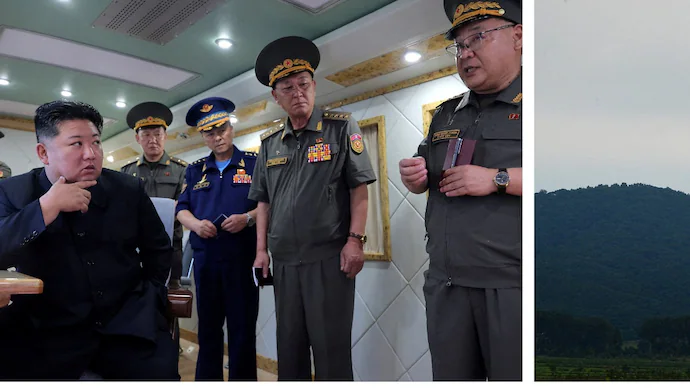
North Korean leader Kim Jong Un personally supervised the test-firing of two new air defence missiles on Saturday, according to state-run media, just one day before U.S. President Donald Trump is set to meet newly elected South Korean President Lee Jae-myung in Washington, DC. The Korean Central News Agency (KCNA) reported on Sunday that the weapons demonstrated “superior combat capability” and a “fast response” to aerial threats such as attack drones and cruise missiles.
While specific technical details and the location of the missile test were not disclosed, North Korean officials claimed the systems operate on “unique and special technology,” further asserting the country’s progress in developing advanced air defence systems. The test adds to a growing list of provocative military activities by Pyongyang, reflecting heightened tensions across the Korean Peninsula.
The timing of the launch is significant, taking place just ahead of a key diplomatic meeting and during ongoing U.S.-South Korea joint military exercises — an annual event that North Korea routinely criticizes as a rehearsal for invasion.
Border Incident Highlights Fragile Relations
Earlier in the week, tensions flared when approximately 30 North Korean soldiers briefly crossed the Demilitarized Zone (DMZ) into South Korean territory, prompting warning shots from the South Korean military. The United Nations Command confirmed the incursion and stated that the North Korean troops retreated without further incident.
In response, North Korean state media quoted Army Lieutenant General Ko Jong Chol as accusing South Korea of a “premeditated and deliberate provocation.” He warned that further incidents could push the situation into an “uncontrollable phase,” echoing the regime’s typical rhetoric during periods of military friction.
New South Korean President Faces Diplomatic Challenge
President Lee Jae-myung, who assumed office with promises of a more conciliatory approach toward Pyongyang and a focus on building “military trust,” now faces a significant early test of his strategy. Despite his outreach, North Korea has remained dismissive of potential dialogue with Seoul and continues to emphasize its commitment to expanding military capabilities.
The Trump-Lee summit in Washington is expected to address not only the growing North Korean threat but also regional security and trilateral cooperation with Japan. The recent missile test and border tensions are likely to dominate the agenda, as Washington and Seoul seek to present a united front.
