

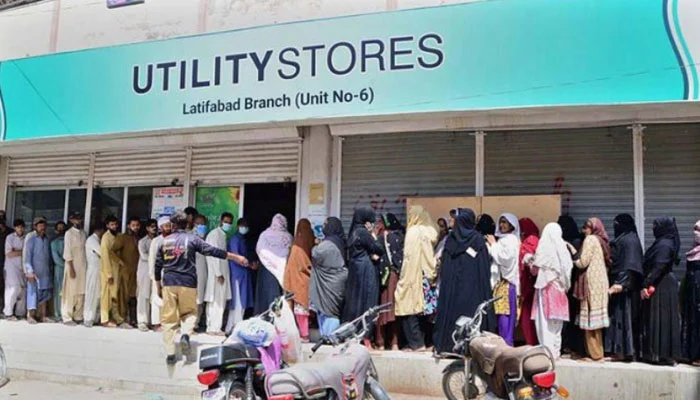

Federal Cabinet Green lights USC Shutdown, Prioritises Employee Compensation and Asset Liquidation
The Economic Coordination Committee (ECC) has approved a Rs30.216 billion grant for the complete closure of the Utility Stores Corporation (USC), marking the end of a decades-old state-run retail network that once provided subsidised goods to millions of low-income families across Pakistan.
The decision, made during a high-level meeting chaired by Finance Minister Muhammad Aurangzeb, comes amid growing concerns over the financial sustainability of the corporation. According to officials, approximately 12,000 employees are at risk of losing their jobs, making it one of the largest public-sector workforce displacements in recent years.
A summary presented by the Ministry of Industries and Production outlined a closure strategy aimed at ensuring transparency, asset liquidation, and the protection of employee rights. The ECC directed the immediate disbursement of dues, compensations, and arrears to affected staff and approved the sale of USC assets within the current financial year. Proceeds from these sales will cover the costs of the shutdown.
Only 300 key employees will remain temporarily during the transition period to assist in USC’s privatisation and settlement of liabilities, which are expected to be cleared in three phases. Currently, USC faces losses of Rs23 billion, while Rs14 billion in payments remain outstanding to private vendors.
Government Ends Decades of Subsidised Retail, Shifts Focus to Targeted Social Programs
The shutdown of USC, officially effective July 31, halts all sales and procurement activities at its outlets nationwide. A notification issued earlier instructed the relocation of inventory to central warehouses, the auctioning of IT systems and physical assets, and the vacation of rented properties beginning August 1.
Established in the 1970s, the Utility Stores Corporation once operated hundreds of outlets across Pakistan, offering subsidised items such as flour, sugar, and cooking oil. However, in recent years, the network had come under fire for inefficiency, corruption, and systemic flaws in the subsidy distribution process.
The federal government’s directive to permanently close USC follows years of mounting financial pressure. Officials stated that future subsidy disbursement will be streamlined through targeted platforms like the Benazir Income Support Programme (BISP), which is now being positioned as the country’s central social protection mechanism.
To cushion the impact on employees, Prime Minister Shehbaz Sharif has ordered the rollout of a Voluntary Separation Scheme (VSS), allowing affected workers to exit the organisation with financial support.
With the closure of USC, the government aims to restructure its approach to poverty alleviation, transitioning from state-run retail outlets to direct cash transfer mechanisms for greater efficiency and accountability.
