

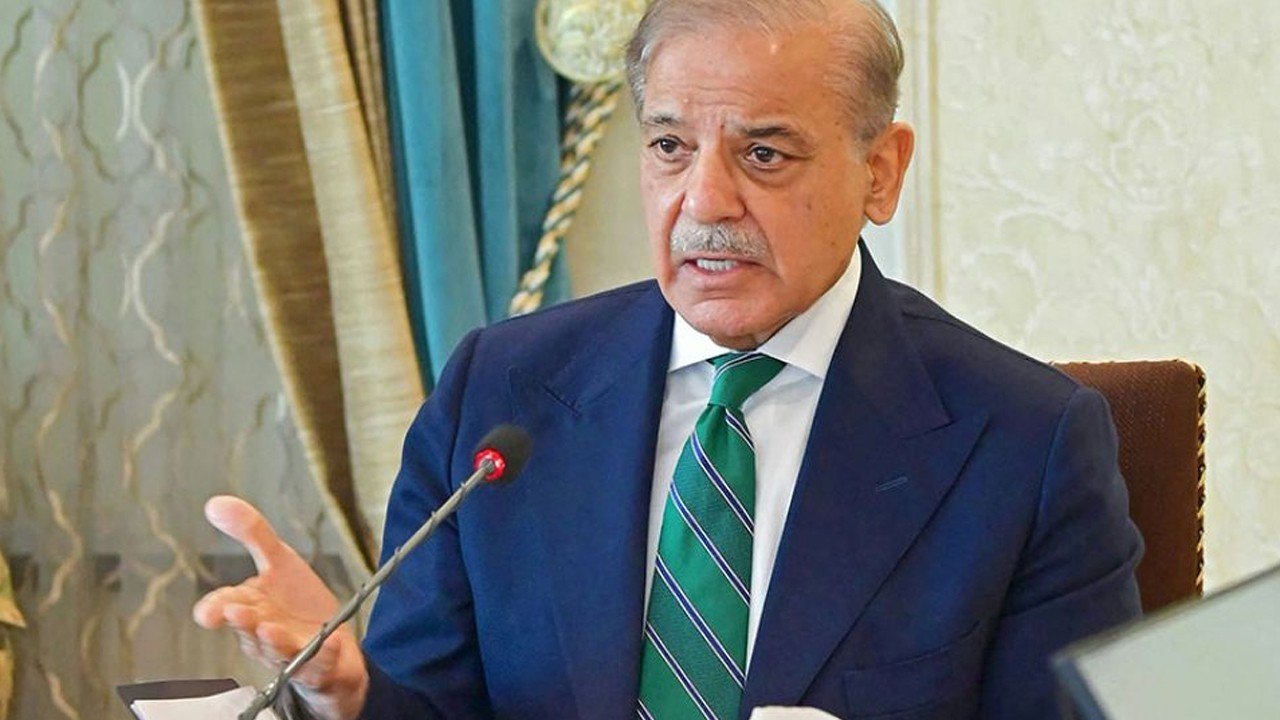

Prime Minister Shehbaz Sharif emphasized the need for enhanced cooperation between Pakistan and China in education, technology, and vocational training during his address at Tianjin University. He stressed that equipping Pakistan’s youth with modern skills, particularly in artificial intelligence (AI), is crucial for future development.
Youth Training in AI and Technology
Sharif highlighted that vocational training and AI education are the need of the hour. He urged Tianjin University to partner with Pakistan in creating programs that transform educational challenges into economic opportunities. “Our students are the real ambassadors of Pakistan in China,” he stated, encouraging them to actively promote the long-standing Pak-China friendship.
Currently, over 30,000 Pakistani students are enrolled in Chinese universities, with more than 200 studying at Tianjin University alone. Sharif also noted that 1,000 agriculture graduates were sent to China to gain expertise that will strengthen Pakistan’s agricultural sector. “These students will form the backbone of our agricultural transformation,” he added.
Strengthening Bilateral Ties
The prime minister reiterated Pakistan’s commitment to expanding partnerships with Chinese companies and aligning development objectives. “Pakistan and China will achieve the goal of development together. No one can separate us,” Sharif affirmed. He praised China’s development model, noting that the country rose to become a global economic power through action rather than speeches.
Sharif highlighted the importance of learning from China’s approach and applying it to Pakistan’s development path. He emphasized that the country values its historic ties with China, recalling that Pakistan was the first Muslim-majority nation to recognize Beijing and has continuously supported China’s rise as a global economic and military power.
Education, Agriculture, and Technology Cooperation
The premier stressed that student exchanges, technology transfers, and vocational education are central to enhancing bilateral ties. Through these collaborations, Pakistan aims to equip its workforce with the skills required to meet global technological and agricultural challenges.
Sharif concluded by underscoring the importance of sustained Pak-China collaboration, stating that partnerships in AI, vocational training, and higher education will open new opportunities for Pakistani youth while strengthening economic and technological progress in both nations.
