

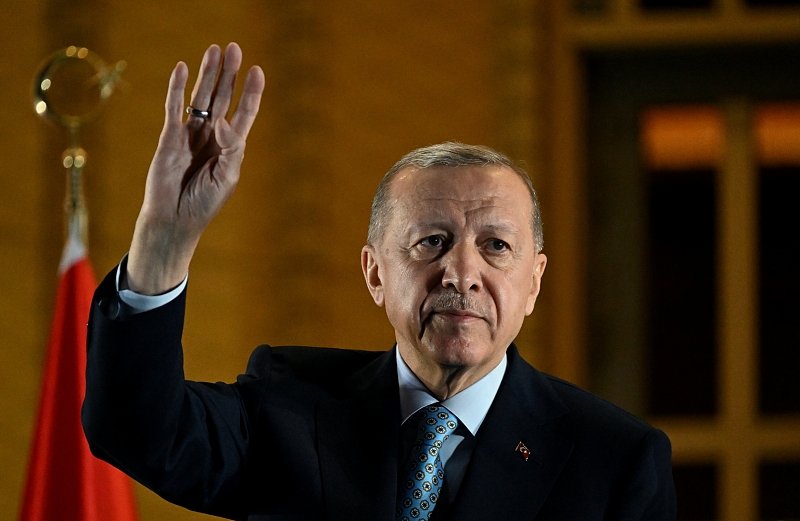

Turkish President Recep Tayyip Erdogan declared that Turkiye will never return the Silwan inscription to Israel. The ancient limestone tablet, dating back 2,700 years, was discovered in Jerusalem during Ottoman rule and has remained in Istanbul’s archaeology museum since the late 19th century.
Erdogan accused Israeli Prime Minister Benjamin Netanyahu of “spewing hatred” against Turkiye for refusing to hand over the artifact, calling it a sacred legacy of Ottoman ancestors.
“Jerusalem is the honour, dignity, and glory of all humanity and all Muslims. We won’t give you that inscription, let alone a single pebble from Jerusalem,” Erdogan declared.
Historical Importance of the Silwan Inscription
The inscription, also known as the Siloam Inscription, was discovered in 1880 inside the Siloam tunnel, an ancient aqueduct beneath Jerusalem. It describes the engineering of the tunnel and is considered one of the earliest Hebrew texts.
During that period, Jerusalem was part of the Ottoman Empire, and the artifact was transported to Constantinople, modern-day Istanbul. For Israel, the inscription serves as a crucial archaeological link to Jewish presence in Jerusalem, making it one of its most coveted historical relics after the Dead Sea Scrolls.
Netanyahu’s Failed Attempts to Secure the Inscription
Netanyahu recently recounted his unsuccessful efforts to reclaim the tablet during a 1998 discussion with then-Turkish Prime Minister Mesut Yilmaz. He offered to exchange thousands of Ottoman artifacts housed in Israeli museums in return for the inscription.
However, Yilmaz refused, reportedly warning that returning the tablet would spark outrage among the growing Islamist constituency led by Erdogan, then the mayor of Istanbul.
Netanyahu said: “This is our city. Mr Erdogan, it’s not your city, it’s our city. It will always be.”
Jerusalem at the Heart of the Conflict
Erdogan’s stance highlights Turkiye’s historical and cultural ties to Jerusalem, which was under Ottoman control for two centuries. In a 2020 speech, he even described Jerusalem as “our city,” a statement that continues to provoke debate.
Relations between Turkiye and Israel have deteriorated sharply in recent years, particularly due to the ongoing Gaza war. Erdogan dismissed Netanyahu’s recent comments as political “tantrums” and vowed: “We as Muslims will not step back from our rights over East Jerusalem.”
A City of Global Religious Significance
Jerusalem remains one of the most contested cities in the world. The Old City contains religious landmarks sacred to Jews, Muslims, and Christians, making it a flashpoint for both political and religious tensions.
The dispute over the Silwan inscription underscores how archaeology, history, and politics intertwine in the broader Israeli-Palestinian conflict. For Turkiye, retaining the artifact is about preserving an Ottoman legacy. For Israel, it is about strengthening historical claims over Jerusalem.
The Silwan inscription remains in Istanbul, with Erdogan making it clear that Turkiye will never hand it over. As tensions continue between Turkiye and Israel, the inscription stands as both a symbol of heritage and a point of diplomatic friction in the long-standing struggle over Jerusalem.
