


GCC Announces Joint Intelligence, Missile Defense Systems After Strike on Doha
DOHA – The Gulf Cooperation Council (GCC) has announced a major step forward in regional military integration, unveiling plans to establish a unified “regional shield” to counter growing security threats. The decision follows a deadly Israeli airstrike in Doha earlier this month that killed members of a Hamas delegation and a Qatari security officer, sparking widespread alarm across the Gulf.
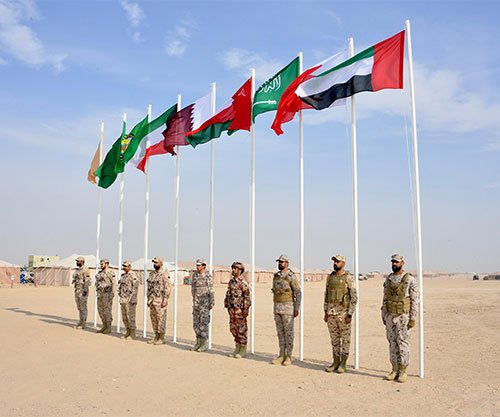
In the aftermath of an emergency Arab-Islamic summit, GCC defence officials gathered in Doha to discuss enhanced military coordination. According to UAE-based The National, the six-nation alliance — comprising Bahrain, Kuwait, Oman, Qatar, Saudi Arabia, and the United Arab Emirates — pledged to boost intelligence-sharing, create a joint early-warning missile detection system, and conduct joint military drills.
Officials confirmed that the GCC will accelerate the rollout of a shared ballistic missile warning system and integrate “air situation” data across all member states. The bloc also committed to conducting joint command-centre and troop exercises within three months, followed by live air defence drills to further unify regional capabilities.
Strike on Doha Catalyzes Long-Delayed Military Cooperation Among Gulf Nations
The Doha meeting was attended by high-level defence officials from all six member states, underlining the urgency of the response. Among the attendees were UAE Minister of State for Defence Affairs Mohammed Al Mazrouei, Saudi Arabia’s Deputy Defence Minister Prince Abdulrahman bin Mohammed, and Kuwait’s Defence Minister Sheikh Abdullah Ali Al Abdullah Al Sabah, alongside senior figures from Oman, Bahrain, and Qatar.
The unprecedented Israeli strike on Qatari soil, which reportedly occurred without any prior warning, is being seen as a major inflection point for the region. The GCC condemned the attack as a “dangerous and unacceptable provocation,” and emphasized that it threatens the stability of an already fragile Middle East.
“The priority is ensuring the security, stability, and safety of all GCC countries,” read the council’s joint statement, which added that future threats would be addressed through continuous military and intelligence collaboration.
While previous efforts at military unification have been hampered by political rivalries and divergent threat perceptions among member states, Thursday’s agreement marks what many officials describe as a critical turning point. With the region facing new levels of instability, the GCC appears more committed than ever to establishing a unified defence mechanism that can respond swiftly and effectively to regional crises.
