

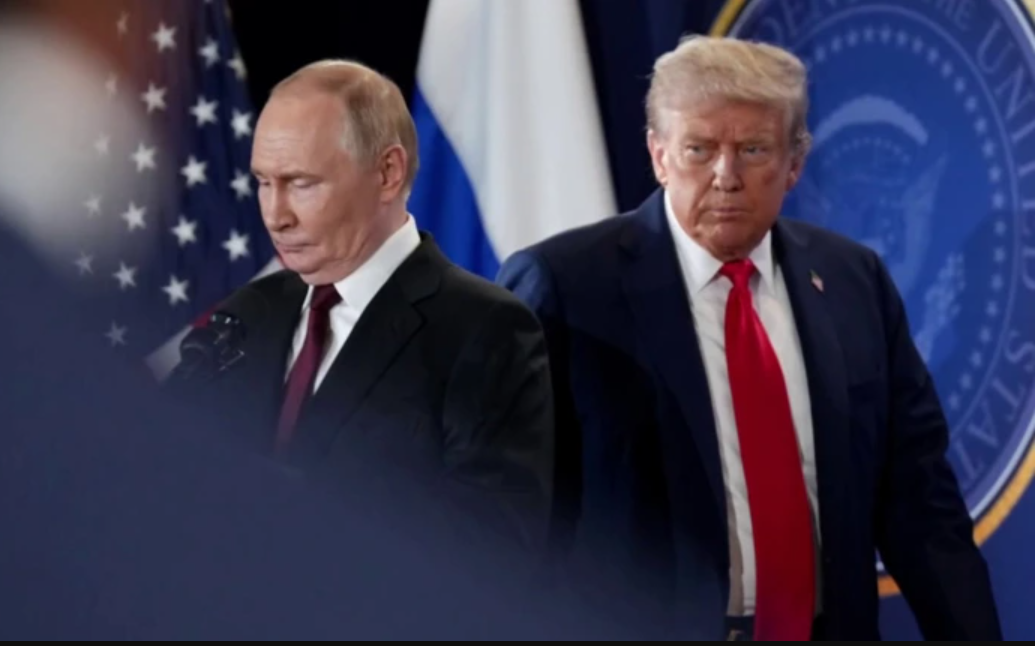

In a major diplomatic move, U.S. President Donald Trump announced that he will meet Russian President Vladimir Putin once again to continue discussions on ending the ongoing war in Ukraine. The announcement came after what Trump described as a “productive” phone call between the two leaders that lasted more than two hours.
The proposed summit, expected to take place in Budapest, marks a new phase in the U.S.-led peace initiative aimed at halting the three-year-long conflict between Russia and Ukraine. The Kremlin has not yet released an official statement regarding the meeting or its potential agenda.
The development came just a day before Ukrainian President Volodymyr Zelenskiy’s scheduled visit to the White House, where he is expected to push for increased U.S. military support, including long-range offensive missiles.
Positive Signs but Uncertain Military Support
While Trump’s tone following his conversation with Putin suggested optimism, it raised questions about whether Washington would continue supplying advanced weaponry to Kyiv in the near term. Ukraine has repeatedly requested U.S. Tomahawk long-range missiles that could reach deep into Russian territory, including Moscow.
Trump, who has long vowed to end the conflict initiated by Russia’s 2022 invasion of Ukraine, previously hinted that he would consider providing such weapons only if Moscow refuses to engage in meaningful negotiations.
“I believe great progress was made with today’s telephone conversation,” Trump said in a post on Truth Social. He added that he would brief Zelenskiy about the discussion during their upcoming meeting in the Oval Office.
War Intensifies as Energy Systems Targeted
Despite ongoing diplomatic efforts, the conflict on the ground continues to intensify. Both Kyiv and Moscow have launched heavy attacks targeting energy infrastructure, leaving millions vulnerable as winter approaches. According to Ukrainian officials, Russia recently fired more than 300 drones and 37 missiles in overnight strikes, damaging critical power facilities across the country.
In retaliation, Ukraine struck an oil refinery in Russia’s Saratov region, continuing its counterattacks on key energy sites. These tit-for-tat strikes have become a defining feature of the war, which has now entered its fourth year.
NATO forces remain on alert amid repeated Russian air incursions, while Washington and Moscow prepare for lower-level diplomatic meetings next week to set the stage for the leaders’ summit.
India and China Draw Into the Equation
Adding a new dimension to the geopolitical landscape, Trump recently claimed that Indian Prime Minister Narendra Modi had agreed to halt Russian oil imports. The move, if confirmed, could significantly tighten the economic pressure on Moscow.
However, New Delhi has yet to verify this claim. Reports indicate that some Indian refiners may be preparing to gradually reduce imports of Russian crude oil, according to industry sources.
Trump also stated that his administration would urge China to take similar steps, signaling a broader effort to isolate Russia economically until it commits to a full ceasefire.
Challenges Ahead for Peace Process
Despite the diplomatic momentum, analysts caution that the road to peace remains uncertain. Trump’s upcoming talks with both Putin and Zelenskiy could determine the trajectory of the conflict and the future of U.S. involvement in Europe’s most devastating war in decades.
U.S. Defense Secretary Pete Hegseth reaffirmed Washington’s position, saying the U.S. would “impose costs on Russia for its continued aggression” if the violence persists.
As Trump positions himself as the potential broker of a lasting peace, global attention now turns to Budapest — where his next meeting with Putin may either revive hope for an end to the war or deepen divisions across the international community.
