

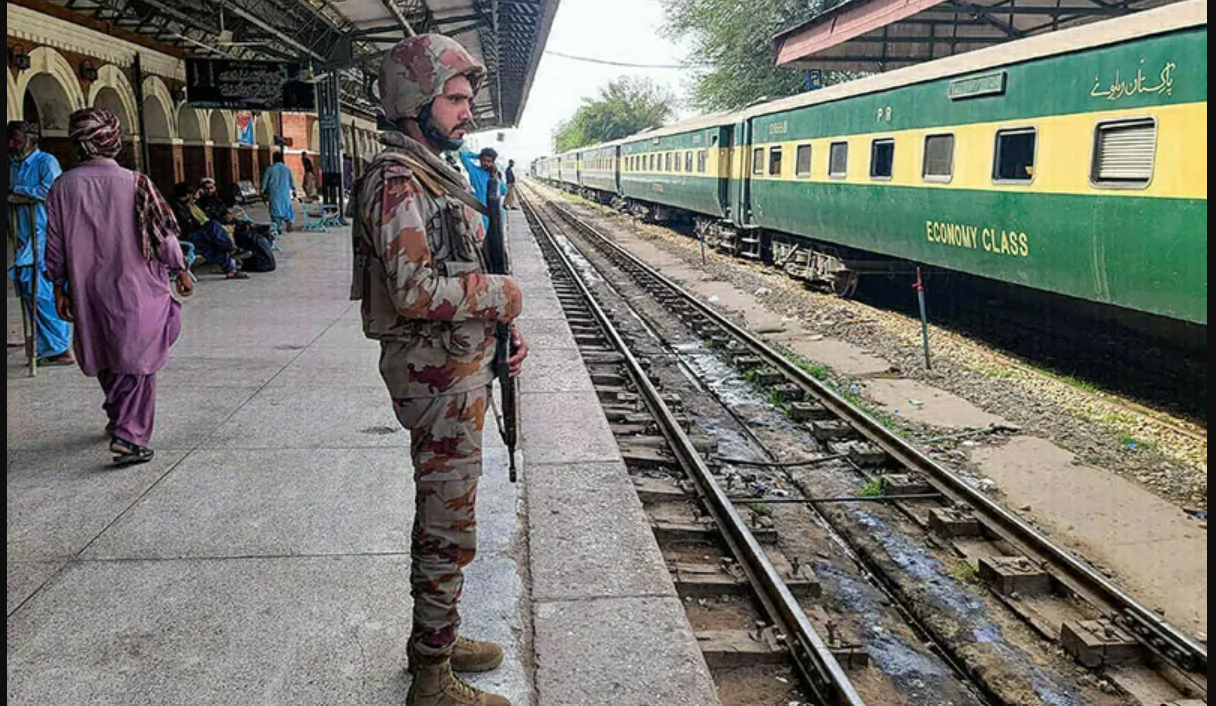

The National Assembly Standing Committee on Railways has instructed Pakistan Railways to install signal jammers on all passenger trains following rising security concerns. The directive aims to enhance passenger safety and prevent future incidents like the recent Jaffar Express explosion.
During a meeting chaired by MNA Ramesh Lal, the committee recommended that every train should be equipped with at least three jammers. These devices will help block remote-controlled signals used to detonate explosives. The committee also emphasized the importance of increased patrolling across sensitive railway sections nationwide.
Committee Issues New Security Directives
The standing committee’s decision follows the October 7 Jaffar Express attack near Sultan Kot Railway Station in Sindh. The explosion, caused by an improvised explosive device (IED), derailed five bogies and damaged the track. Seven passengers, including railway employees, sustained minor injuries and were swiftly taken to Civil Hospital, Shikarpur.
Law enforcement officials from Sukkur, Larkana, and Shikarpur reached the site immediately to conduct rescue and investigation operations. The Deputy Inspector General (DIG) of Railways Police revealed that the blast was executed using remote-controlled explosives. Sensitive agencies have since joined the investigation to trace those responsible.
Joint Patrolling and Coordination with Security Forces
According to officials, Pakistan Railways has intensified joint patrols in collaboration with the Frontier Corps (FC) and other security agencies. The committee directed railway authorities to ensure that every passenger route receives enhanced surveillance and rapid response capability.
Regular inspections are also being conducted to identify vulnerable points along major tracks. The committee underlined the need for strict compliance with safety standards to safeguard both passengers and cargo.
Past Security Incidents Prompt Urgent Action
The decision to install jammers and expand patrols is rooted in recurring security challenges faced by Pakistan Railways. Earlier this year, on March 11, the Jaffar Express was hijacked by militants belonging to the banned Balochistan Liberation Army (BLA). The attackers opened fire on the train in Balochistan, taking more than 400 passengers hostage.
A subsequent military operation successfully rescued the hostages, eliminating 33 militants. However, the tragic incident claimed the lives of 26 passengers and four security personnel, highlighting the urgency for stronger railway security protocols.
Focus on Passenger Protection and Infrastructure Safety
In addition to the jammer installation, the committee discussed measures to secure railway property and improve management of railway land. It also reviewed progress on the Karachi Freight Corridor Project, which aims to modernize freight operations and reduce congestion.
Officials reaffirmed that passenger safety remains the top priority. The introduction of jammers, combined with enhanced patrols and real-time coordination between railway police and intelligence units, is expected to significantly reduce security vulnerabilities across the network.
A Step Toward Safer Rail Travel
The new directives mark a turning point in Pakistan Railways’ security approach. By combining technological defenses with coordinated ground operations, authorities hope to restore public confidence in train travel.
As the railway network continues to serve millions across the country, these safety measures are crucial to preventing future attacks and ensuring that passengers can travel with greater peace of mind.
