

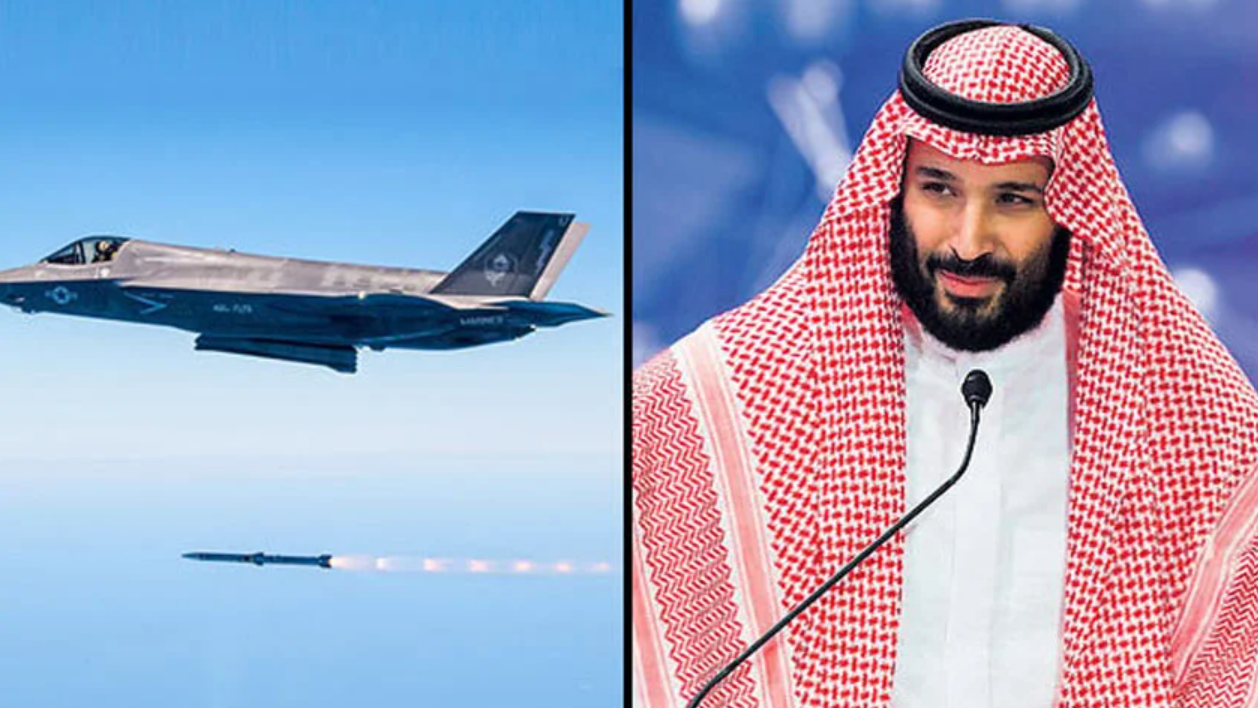

Saudi Arabia’s long-standing ambition to acquire F-35 stealth fighter jets has taken a major step forward. The Pentagon has reportedly cleared a crucial internal review, allowing the proposal to advance to the secretary level within the U.S. Defense Department.
If approved, the deal would mark a turning point in Riyadh’s defense modernization efforts and deepen its military cooperation with Washington. The proposed sale involves up to 48 of Lockheed Martin’s advanced F-35 jets, considered among the most sophisticated aircraft in the world.
Pentagon Clears Major Hurdle
Officials familiar with the development have confirmed that the Pentagon’s policy department has been evaluating the deal for several months. The project’s elevation to the secretary level signifies substantial progress, though the agreement still requires several approvals.
The sale will need Cabinet-level consent, presidential authorization, and formal notification to Congress before it can be finalized. Although no final decision has been made yet, the administration appears open to moving the process forward.
A Strategic Shift in U.S. Defense Policy
If the deal goes through, it would signal a significant shift in U.S. defense policy in the Middle East. Historically, Washington has ensured that Israel maintains a “qualitative military edge” — a strategy that limits advanced arms sales to neighboring Arab countries.
Israel remains the only regional power currently operating the F-35. However, recent developments suggest that the U.S. may be reassessing its approach to arms sales in light of changing regional dynamics and its evolving partnership with Riyadh.
Saudi Arabia’s Push for Military Modernization
Under Crown Prince Mohammed bin Salman’s Vision 2030 plan, Saudi Arabia has prioritized modernizing its defense forces. The kingdom’s current air fleet includes F-15s, Tornados, and Typhoons, but Riyadh views the F-35 as essential for its next phase of military advancement.
The acquisition would not only improve Saudi Arabia’s deterrence capabilities but also enhance interoperability with Western allies. Moreover, it reflects Riyadh’s determination to build a defense system capable of addressing regional threats, particularly those from Iran.
Political and Diplomatic Implications
The F-35 deal carries weight far beyond defense procurement. It has become a measure of the broader U.S.-Saudi strategic partnership. Under previous administrations, F-35 discussions were tied to normalization efforts between Saudi Arabia and Israel. Those negotiations, however, failed to reach an agreement.
The current U.S. administration’s renewed openness to arms cooperation with Riyadh represents a recalibration of earlier policies. Earlier this year, both countries finalized a $142 billion defense agreement, reinforcing their growing military and strategic ties.
Congressional Oversight and Concerns
Despite progress within the Pentagon, the deal still faces potential resistance in Congress. Lawmakers have frequently questioned major arms sales to Saudi Arabia, citing concerns over human rights issues and the kingdom’s role in regional conflicts.
Members of Congress are likely to examine whether such a sale aligns with U.S. principles and strategic objectives in the region. These deliberations could influence the timing and scale of the final decision.
For now, the F-35 proposal remains under internal review, with final approval dependent on multiple layers of authorization. If completed, it would mark a defining moment in U.S.-Saudi defense relations and a historic leap for the kingdom’s air force capabilities.
The outcome will not only reshape Saudi Arabia’s military balance but could also redefine the geopolitical dynamics of the Middle East in the years ahead.
