

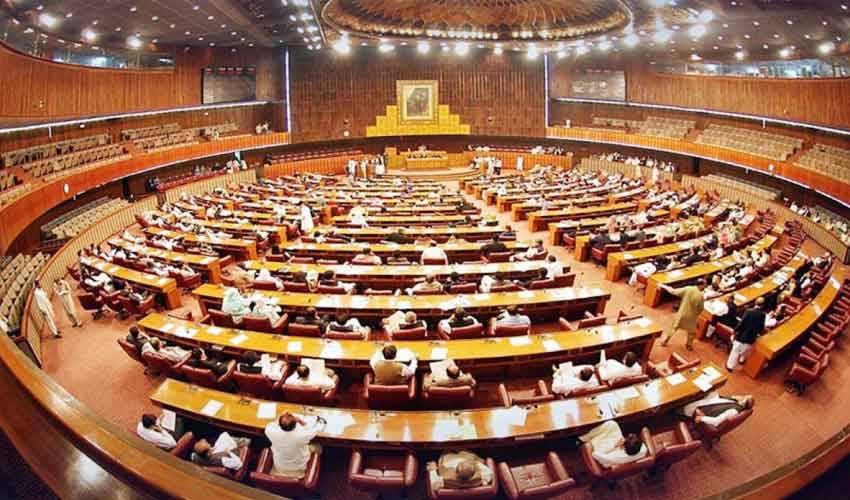

Government Expects Comfortable Margin in Upper House Vote
After successfully passing the 27th Constitutional Amendment Bill in the National Assembly, the government is confident it has secured enough support in the Senate to ensure final approval. Officials and parliamentary sources revealed that the government currently has the backing of 65 senators out of the 96-member Upper House — comfortably above the required majority threshold.
According to insiders, the government has already achieved the necessary numbers without relying on the Jamiat Ulema-e-Islam (JUI). However, negotiations with two JUI senators continue to secure additional votes if needed. Deputy Prime Minister and other key leaders are optimistic about gaining support from three Awami National Party (ANP) senators, while independent Senator Nasima Ehsan has already pledged her vote for the amendment.
Independent Senators to Strengthen Government Position
Parliamentary sources reported that six independent senators — Mohsin Naqvi, Abdul Karim, Faisal Vawda, Abdul Qadir, Anwarul Haq Kakar, and Asad Qasim — are expected to support the amendment. Government strategists believe these commitments will provide a comfortable margin for the bill’s passage, marking another legislative victory following success in the National Assembly.
Senate Composition and Party Strength
Currently, the Pakistan Peoples Party (PPP) holds the largest bloc in the Senate with 26 members, followed by the Pakistan Muslim League-Nawaz (PML-N) with 20 members. The Balochistan Awami Party (BAP) has four, the Muttahida Qaumi Movement (MQM) three, while the ANP holds three seats. One member each represents the National Party and PML-Q.
On the opposition benches, there are 29 members, including 14 from Pakistan Tehreek-e-Insaf (PTI) and seven from JUI. The opposition also includes six independents and one member each from the Majlis Wahdat-e-Muslimeen (MWM) and Sunni Ittehad Council. Opposition senators Murad Saeed and Khurram Zeeshan have yet to take oath, reducing their side’s effective strength.
National Assembly Secured with Two-Thirds Majority
The ruling coalition comfortably achieved the two-thirds majority in the National Assembly required for a constitutional amendment. The government commands the support of 237 lawmakers, exceeding the 224 votes needed for passage. The coalition includes 125 members from the PML-N, 74 from the PPP, 22 from the MQM, five from the PML, and four from the Istehkam-e-Pakistan Party (IPP).
PM Cancels Ministers’ Foreign Visits to Ensure Presence
Prime Minister Shehbaz Sharif has canceled all foreign visits of federal ministers, directing them to stay in Islamabad until the Senate vote is complete. According to official directives, all government MPs must remain in the capital to ensure full attendance during the legislative process. The move aims to guarantee the smooth passage of the 27th Constitutional Amendment when presented before the Upper House in the coming days.
Key Features of the 27th Constitutional Amendment
The proposed 27th Constitutional Amendment introduces major changes to Pakistan’s judicial, administrative, and military frameworks. It includes the establishment of a Constitutional Court to replace the current Constitutional Bench, granting it authority over constitutional interpretation and adjudication. The court’s chief justice would also head the Supreme Judicial Council (SJC) and the Judicial Commission, replacing the chief justice of Pakistan in those roles.
The amendment also proposes to remove the requirement for the consent of judges and chief justices in the transfer of high court judges under Article 200. Additionally, it seeks to bring structural reforms to the command hierarchy of the Pakistan Army, though details remain undisclosed.
Fiscal and Administrative Reforms Included
The government is also considering fiscal adjustments through potential revisions to the National Finance Commission (NFC) award, which could reduce provincial shares in federal revenue. Furthermore, it plans to restore federal control over population welfare and education — functions devolved to provinces under the 18th Amendment. Another major provision includes reinstating executive magistrates to strengthen administrative governance.
The 27th Amendment, once passed, would represent one of the most significant overhauls of Pakistan’s constitutional framework in over a decade.
