

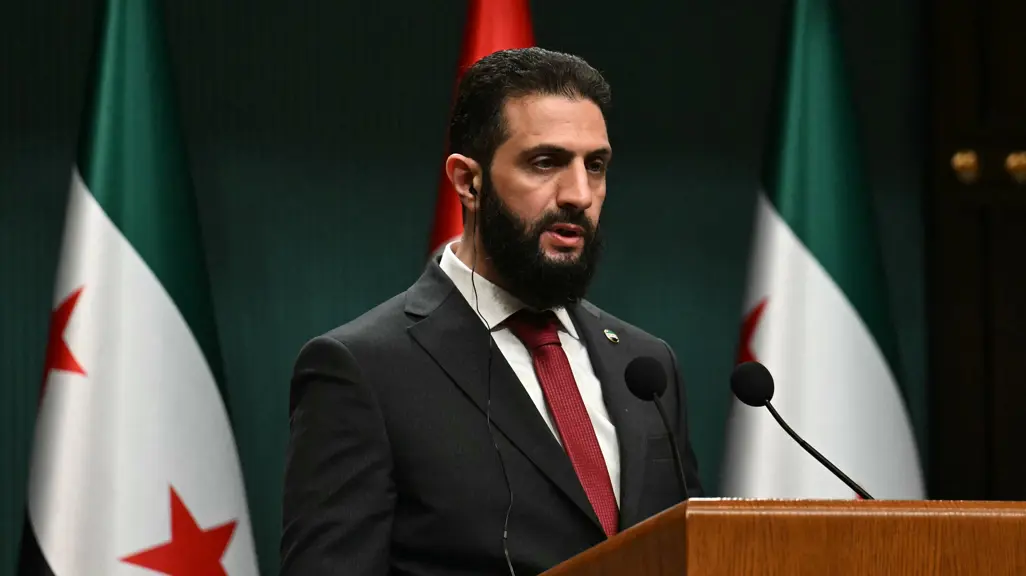

The United Nations Security Council (UNSC) has formally lifted sanctions on Syrian President Ahmed al-Sharaa and Interior Minister Anas Khattab, marking a significant diplomatic shift in global policy toward Damascus. The U.S.-drafted resolution passed on Thursday with 14 votes in favor and one abstention from China.
The decision follows months of lobbying by Washington, which urged the 15-member council to ease restrictions on Syria in an effort to encourage political stability and re-engagement with the international community.
U.S. President Donald Trump, who is set to meet President Sharaa at the White House on Monday, praised the move as part of a broader effort to give Syria “a fighting chance” after years of devastating conflict.
“I think he’s doing a very good job,” Trump said. “It’s a tough neighborhood, and he’s a tough guy, but I got along with him very well. And a lot of progress has been made with Syria.”
“We did take the sanctions off Syria in order to give them a fighting shot,” he added during a media briefing in Washington.
A New Chapter After Years of Conflict
The move comes nearly a year after Syria’s long-time leader Bashar al-Assad was ousted in December following a rapid offensive by insurgent forces led by Hayat Tahrir al-Sham (HTS), a group that had once served as al Qaeda’s official branch in Syria.
HTS, previously known as the Nusra Front, formally cut ties with al Qaeda in 2016. Since May 2014, however, the organization and several of its senior members have remained under UN sanctions, including travel bans, asset freezes, and arms embargoes.
The lifting of sanctions on Sharaa and Khattab represents the most significant international policy change toward Syria since the end of Assad’s rule.
UN Reports No Active Ties Between HTS and Al Qaeda
According to a UN report obtained by Reuters in July, sanctions monitors found no active connections this year between al Qaeda and HTS, signaling a shift in the group’s operational stance and regional objectives.
Analysts say the Security Council’s move could pave the way for renewed international engagement with Damascus, especially as Syria seeks reconstruction aid and regional reintegration after more than a decade of war.
The U.S. administration’s decision to back the resolution underscores Trump’s strategy of promoting selective diplomatic re-engagement in the Middle East — balancing security concerns with economic and political incentives.
