

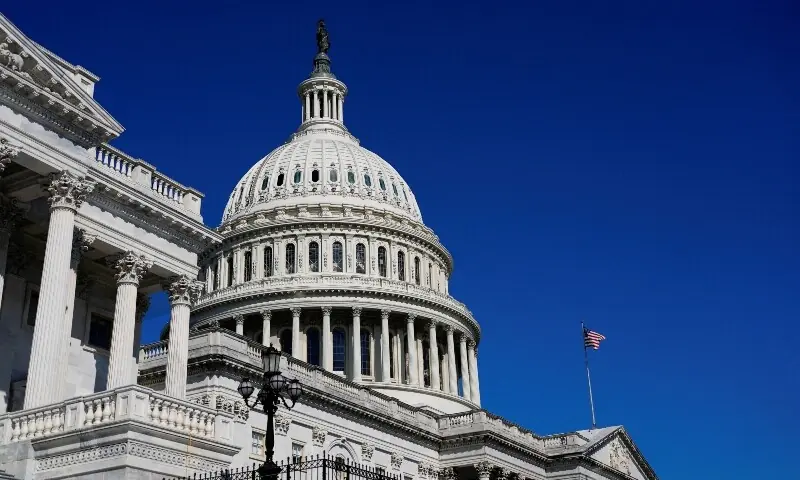

Senate Moves Toward Ending Longest Shutdown in Years
WASHINGTON: The US Senate on Sunday took a major step toward ending the 40-day federal government shutdown, which has disrupted essential services, delayed food aid, and crippled air travel nationwide. In a procedural vote, senators advanced a House-passed funding bill, which will be amended to finance the government until January 30, 2026, while also including three full-year appropriations bills.
Once the Senate finalizes the legislation, the package will return to the House of Representatives for approval before being sent to President Donald Trump for his signature—a process expected to take several days. The bipartisan measure was negotiated after intense discussions between Senate Republicans and a group of Democrats, who secured a December vote on extending Affordable Care Act (ACA) subsidies, a key Democratic priority.
The bill would also reverse certain mass layoffs initiated during the shutdown and fund the Supplemental Nutrition Assistance Program (SNAP) for a full year. Republican Senator Susan Collins, chair of the Senate Appropriations Committee, said the agreement ensures that all federal employees, including military personnel, Border Patrol agents, TSA officers, and air-traffic controllers, will receive full back pay once the government reopens.
The deal was brokered by Democratic Senators Maggie Hassan and Jeanne Shaheen of New Hampshire, alongside Independent Senator Angus King of Maine. However, Senate Minority Leader Chuck Schumer voted against the measure, citing unresolved issues regarding healthcare funding.
Healthcare Subsidies at the Heart of Political Standoff
The budget impasse remains intertwined with the Affordable Care Act’s insurance subsidies, which have helped double ACA enrollment to 24 million people since 2021. President Donald Trump renewed his opposition to these subsidies on Sunday, calling them a “windfall for health insurance companies” and a “disaster for the American people.” He urged replacing them with direct payments to individuals, allowing citizens to purchase their own coverage independently.
Despite Trump’s insistence, Treasury Secretary Scott Bessent and Senator Lindsey Graham, a close Trump ally, confirmed that the healthcare proposal would not be introduced until after government funding is restored. “We are not going to negotiate with Democrats until they reopen the government,” Bessent said on ABC’s This Week.
The ongoing shutdown—now the longest in recent US history—has severely affected air travel, food distribution, and public safety. Economists warn that a prolonged closure could drag fourth-quarter economic growth into negative territory, especially if air traffic control staffing shortages persist through the Thanksgiving travel season, which begins November 27.
Senator Thom Tillis (R-North Carolina) said the growing economic pressure has pushed lawmakers closer to compromise. “Temperatures cool, the pressure rises, and suddenly it looks like things will come together,” he remarked.
Meanwhile, Democratic Senator Adam Schiff accused Trump of seeking to weaken protections for pre-existing conditions, arguing that his healthcare proposal would empower insurance companies to deny coverage. “He’s pretending to attack insurers while giving them more power to cancel policies,” Schiff told ABC.
If approved, the Senate’s funding bill would bring relief to millions of Americans affected by the shutdown and mark the first major breakthrough in weeks of partisan gridlock on Capitol Hill.
