


Tensions Rise in Upper House as Law Minister Defends Overhaul of Military and Judicial Systems
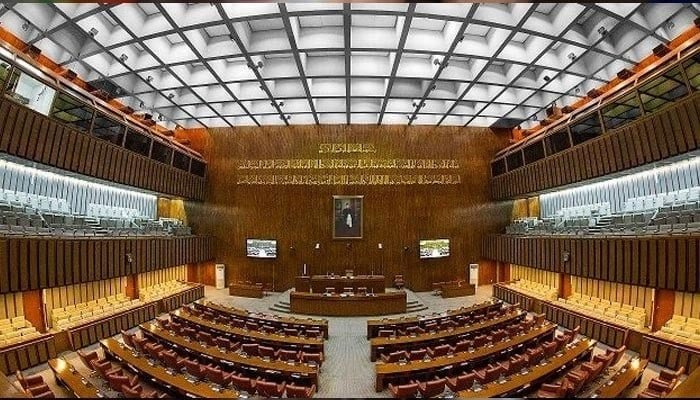
ISLAMABAD — A stormy session unfolded in Pakistan’s Senate on Monday as lawmakers began voting on the 27th Constitutional Amendment Bill, a controversial proposal seeking to reshape the military command and judicial structure. The bill, presented by Law Minister Azam Nazeer Tarar, drew intense opposition, with lawmakers tearing up copies of the document and chanting slogans inside the chamber.
Despite the uproar, some non-treasury senators — including PTI-backed Saifullah Abro and JUI-F’s Ahmed Khan — voted in favor of the bill. Tarar defended the legislation, saying it had been drafted after consultations with political parties and bar councils, and that it aimed to establish a Federal Constitutional Court (FCC) to handle constitutional petitions.
“The Supreme Court has been overburdened with constitutional cases, delaying justice in other matters,” Tarar explained. “The FCC will ensure specialized adjudication while allowing the Supreme Court to focus on appeals.” He added that the proposed court would consist of judges with expertise in constitutional law.
The amendment also introduces changes to Article 243, aiming to clarify the administrative structure of the armed forces and establish the new position of Chief of Defence Forces, to be assumed by the current Chief of Army Staff from November 27, 2025.
Political Reactions and Concerns Over Constitutional Integrity
Earlier in the session, PPP Senator Farooq H. Naek presented the joint parliamentary committee’s report, confirming that several modifications had been made to the bill approved by the cabinet. Naek explained that the Constitutional Court would include representation from all provinces, including judges from the High Courts.
He also noted that suo motu powers would be limited, as the new court would only take up such cases when an application is formally filed. The report further proposed that judges refusing transfer between High Courts could face a reference before the Supreme Judicial Council.
However, the opposition accused the government of “tampering with the spirit of the Constitution.” ANP Senator Aimal Wali Khan cautioned that “if the majority weakens the foundations of the Constitution, democracy will lose its soul.”
Outside the chamber, Defence Minister Khawaja Asif expressed confidence that the government had the numbers to pass the bill, saying, “God willing, the 27th Amendment will be passed by the Senate today.”
Opposition Pushes Back, Labels Amendment Unconstitutional
Opposition parties, led by PTI Senator Ali Zafar, vowed to block the amendment, calling it unconstitutional and warning that it grants excessive powers to certain offices. “No one — not even the president — should be above the law,” Zafar insisted.
Meanwhile, the Tehreek Tahafuz Ayeen-e-Pakistan (TTAP), led by Mahmood Khan Achakzai, issued a joint statement declaring the amendment “against the spirit of the Constitution” and “a violation of parliamentary balance.” The group announced it would boycott the vote, warning that any participation in such legislation would undermine constitutional supremacy.
As tensions flared both inside and outside Parliament, many senators called for reflection rather than haste, emphasizing that any constitutional change must carry national consensus — not division.
