

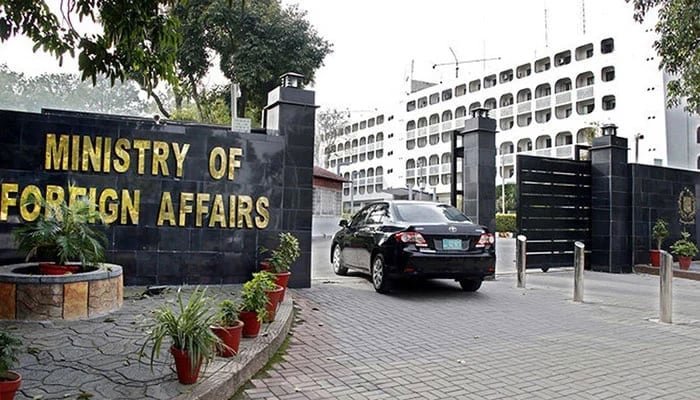

Pakistan has reaffirmed its commitment to the Indus Waters Treaty (IWT) arbitration process, declaring it will continue to participate in the Neutral Expert proceedings despite India’s withdrawal. The decision underscores Pakistan’s stance on engaging in the treaty’s dispute resolution mechanisms in good faith and maintaining the spirit of cooperation outlined in the agreement.
According to the official statement issued in Islamabad, the next phase of the Neutral Expert proceedings will be held in Vienna from November 17 to 21. These proceedings were initially launched at India’s own request, highlighting a complex diplomatic turn as New Delhi has now chosen to halt its participation.
Neutral Expert to Proceed Despite India’s Non-Participation
The Foreign Office Spokesperson, Tahir Andrabi, confirmed that the Neutral Expert had clarified India’s withdrawal would not halt the process. He stated that India’s non-participation could not act as a barrier to the ongoing proceedings under the treaty’s established framework.
Pakistan’s continued engagement reflects its commitment to upholding international agreements and ensuring that technical and legal concerns under the IWT are addressed through established mechanisms. The Neutral Expert’s proceedings focus on issues of water use and project design, which have long been points of contention between the two countries.
Pakistan Notes Key Developments in Arbitration Process
In addition to the Neutral Expert process, Pakistan has also taken note of the recent decision by the Court of Arbitration (CoA) regarding its Award on Issues of General Interpretation of the Indus Waters Treaty. The decision, published on August 8, provides important clarifications on the Court’s interpretation of key treaty provisions.
Tahir Andrabi stated that Pakistan acknowledges the Procedural Order issued alongside the decision. This order affirms that the Court of Arbitration will continue its work in a phased manner while taking into account the developments in the Neutral Expert proceedings. Both tracks — arbitration and technical evaluation — will proceed concurrently, in line with Article IX and Annexure F of the Indus Waters Treaty.
Diplomatic and Legal Significance
Pakistan’s insistence on continuing the Neutral Expert proceedings marks a significant diplomatic position. It demonstrates the country’s intent to resolve disputes peacefully through legal and institutional frameworks rather than unilateral actions. The move also reaffirms Pakistan’s confidence in international water governance and its adherence to the treaty’s dispute resolution clauses.
The Indus Waters Treaty, signed in 1960, remains a cornerstone of water-sharing cooperation between Pakistan and India. Despite political tensions, both countries have generally adhered to its mechanisms for more than six decades. However, recent disagreements over Indian hydropower projects on western rivers have reignited discussions about the treaty’s implementation and interpretation.
Moving Forward: Pakistan’s Consistent Approach
By continuing with the Neutral Expert process, Pakistan aims to ensure that the principles of fairness and transparency are maintained in managing shared water resources. The proceedings in Vienna this month will serve as another crucial step toward clarifying technical and legal differences under the treaty framework.
Pakistan’s approach reflects a balanced commitment to defending its rights under international law while maintaining constructive engagement with its regional counterpart. As the Neutral Expert and the Court of Arbitration proceed in parallel, their findings are expected to shape the future of water diplomacy in South Asia.
