

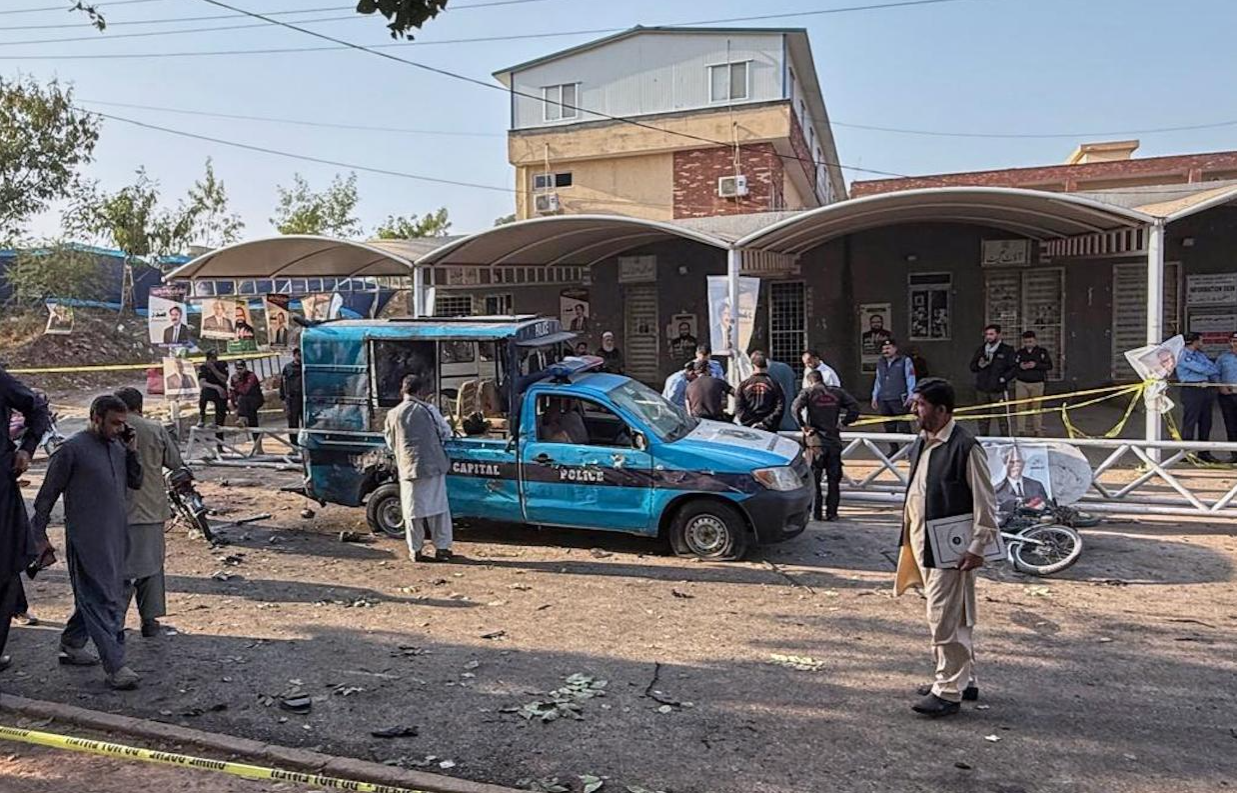

In a significant breakthrough in the Islamabad courthouse blast investigation, police have arrested the man who transported the suicide bomber to the site using a motorcycle ride-hailing service.
According to officials, the attacker booked the ride through an online platform and travelled from Golra to the G-11 courts for a fare of Rs200. Investigators successfully traced and detained the driver, who is now being questioned to uncover further details about the bomber’s movements before the attack.
Investigation Focuses on Facilitators Behind the Attack
Authorities revealed that the ongoing investigation aims to identify those who helped the bomber reach Golra before he booked the ride. Security agencies are also working to establish whether any organized network assisted in planning or facilitating the attack.
Preliminary reports indicate that the bomber acted alone at the final stage but may have received logistical support earlier. Officials have intensified efforts to trace potential accomplices and communication links that could provide insight into the broader plot.
Initial Findings Reveal Bomber’s Movements and Identity
Investigators have completed an initial probe, confirming that the attacker was a resident of Bajaur district in Khyber Pakhtunkhwa. He arrived in Islamabad last Friday and later travelled from Pirwadhai to the G-11 courthouse on a motorcycle before detonating the explosives.
The suicide bomber reportedly wrapped himself in a shawl to conceal the explosive device, which weighed between seven and eight kilograms. Law enforcement agencies have conducted forensic analysis and geo-fencing operations to determine the bomber’s exact route and possible contact points.
Forensic Analysis and Suspicious Vehicles Identified
A comprehensive forensic investigation has been completed, confirming the nature and composition of the explosives. During the process, police identified one car and a motorcycle as suspicious and have moved them for further examination.
Security officials are now reviewing digital and physical evidence to establish whether these vehicles were linked to the transportation or storage of explosives used in the attack.
Human Toll and Medical Response
The tragic explosion claimed the lives of 12 people, including security personnel and civilians. A spokesperson from the Pakistan Institute of Medical Sciences (PIMS) confirmed that 10 victims have been identified, while efforts are ongoing to confirm the identities of the remaining two.
Out of the 36 individuals injured, 18 have been discharged after receiving medical treatment. However, four patients remain in critical condition and are under intensive care. Medical teams continue to monitor their progress while ensuring all victims’ families receive necessary assistance.
Police Strengthen Security Across Islamabad
In the aftermath of the attack, authorities have increased surveillance at key entry and exit points across Islamabad. Checkpoints have been reinforced, and special teams are conducting random inspections of public and private vehicles to ensure safety.
Officials emphasized that the investigation remains ongoing and that further arrests are expected as security agencies piece together the bomber’s network and motive.
The arrest of the ride-hailing driver marks a crucial step forward in understanding the chain of events leading to the courthouse bombing. Investigators believe this development could reveal valuable information about how the attacker reached the target area and who may have facilitated his movements.
