

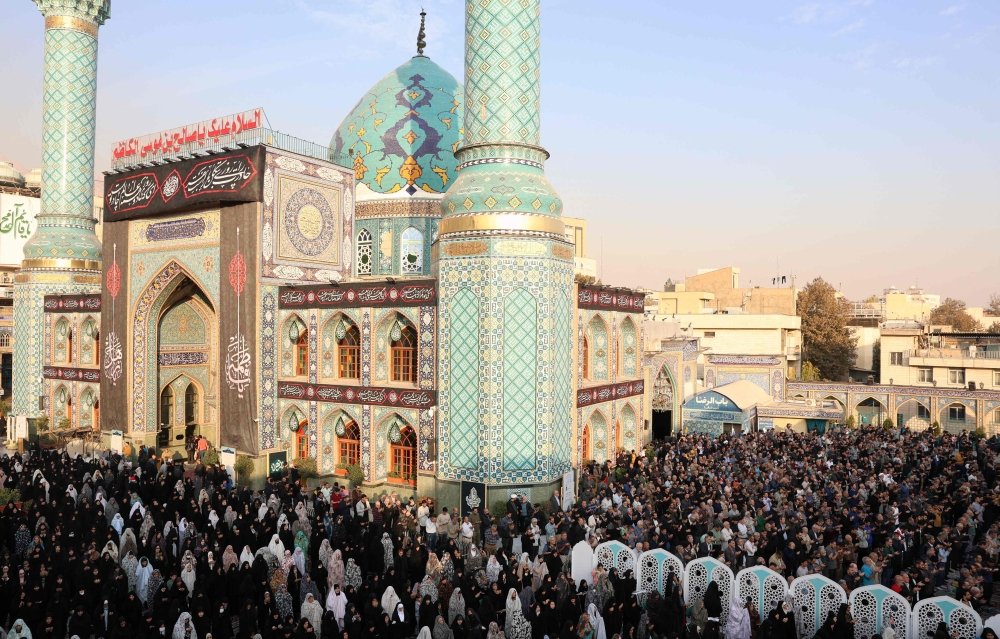

Hundreds of residents gathered at a mosque in northern Tehran on Friday to pray for rain, as Iran struggles through one of its most severe droughts in decades. Local officials report that rainfall in the capital has fallen to its lowest level in a century, while nearly half of Iran’s provinces have gone months without a single drop.
Water Shortages Trigger Rationing in Capital
As water scarcity worsens, the government has begun periodic water supply cuts across Tehran, home to nearly 10 million people, in an attempt to curb consumption. The crisis has become so alarming that President Masoud Pezeshkian recently warned that without rainfall before winter sets in, the capital could face possible evacuation — a statement later clarified by the government as a cautionary alert rather than an active plan.
On Friday, men and women gathered at the Emamzadeh Saleh mosque, offering special prayers to ask for divine intervention. Located on the southern slopes of the Alborz mountains, Tehran traditionally relies on autumn rains and winter snowfall to replenish its water reserves. However, this year, the mountain peaks remain bare and dry.
Dams Depleted, National Situation Also Dire
Officials say that of the five major dams supplying drinking water to the capital, one has completely dried up, while another is operating at less than 8% capacity. Tehran’s residents consume around three million cubic metres of water daily, putting additional pressure on dwindling reserves.
The drought is not limited to the capital. According to local media, Iran’s nationwide precipitation has dropped to 152 millimetres this year, marking a 40% decrease compared to the 57-year average. The dramatic shortfall has raised widespread concern about agriculture, water security, and the overall impact on communities throughout the country.
With no significant rainfall forecasted, Iran’s leadership and citizens alike are turning to both emergency measures and spiritual appeals, hoping relief arrives before the situation becomes even more critical.
