

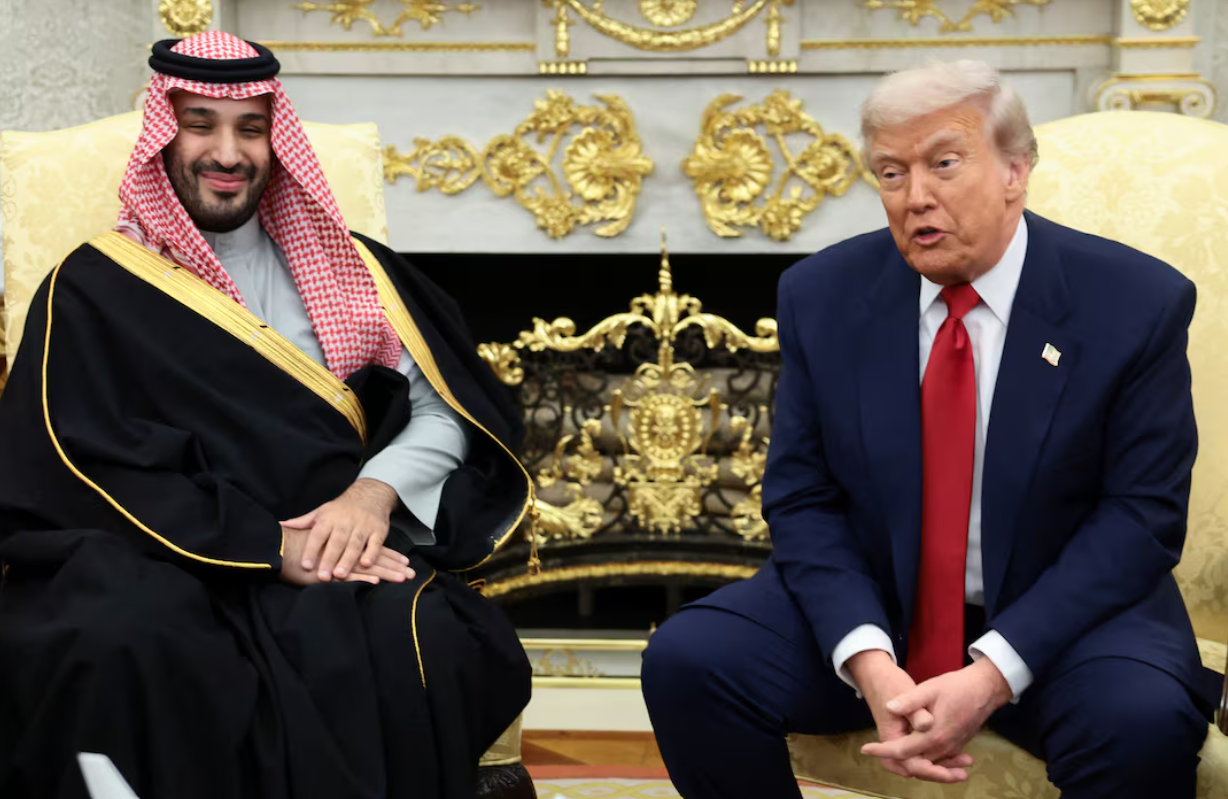

President Donald Trump welcomed Saudi Crown Prince and Prime Minister Mohammed bin Salman to the White House for a high-profile visit marked by ceremony, strategic dialogue, and major deal-making. This visit is the crown prince’s first return to the White House in more than seven years. It also highlights how both nations aim to deepen cooperation across defence, technology, nuclear energy, and long-term investment.
The crown prince arrived at the South Lawn, where Trump received him with full ceremonial honours. The atmosphere reflected a renewed warmth between Washington and Riyadh. Both leaders have signalled their intent to strengthen ties that had previously experienced periods of tension.
During the visit, the two leaders planned several engagements. They were set to meet in the Oval Office, hold a working lunch, and attend a formal black-tie dinner. These events showed the significance Trump assigned to the relationship. US and Saudi flags lined the area around the White House, adding to the symbolism.
Trump aims to build on a major Saudi investment pledge worth $600 billion that was announced during his previous trip to the kingdom. This investment includes targeted projects expected to span technology, infrastructure, and other key sectors. According to senior officials, both sides are ready to move forward with agreements on defence sales, civil nuclear cooperation, and large-scale investments in US artificial intelligence infrastructure.
The US president said he intends to sell F-35 fighter jets to Saudi Arabia. The kingdom has already requested 48 of these advanced aircraft. If approved, this would mark the first sale of F-35s to Saudi Arabia. The move could also shift the military balance in the Middle East. Until now, Israel has been the only country in the region operating the aircraft. As a result, the potential deal raises questions about how Washington will maintain Israel’s long-established “qualitative military edge.”
While defence and investment deals were central to the agenda, the visit also focused on security guarantees. The Saudi leadership wants stronger assurances from Washington. Experts believe Trump may issue an executive order offering a new form of defence pact, similar to one recently granted to Qatar. However, such an agreement would remain short of a formal treaty that requires congressional approval.
Despite the packed agenda, one major breakthrough appears unlikely. Normalisation of ties between Saudi Arabia and Israel remains uncertain. Trump has pushed for progress on this issue, yet current regional dynamics suggest that no immediate agreement is expected.
Nevertheless, the overall visit reflects a strategic shift. The engagement shows how both nations seek to recalibrate their partnership. It also highlights the role defence cooperation, advanced technology, and long-term economic commitments will play in shaping their future ties.
