

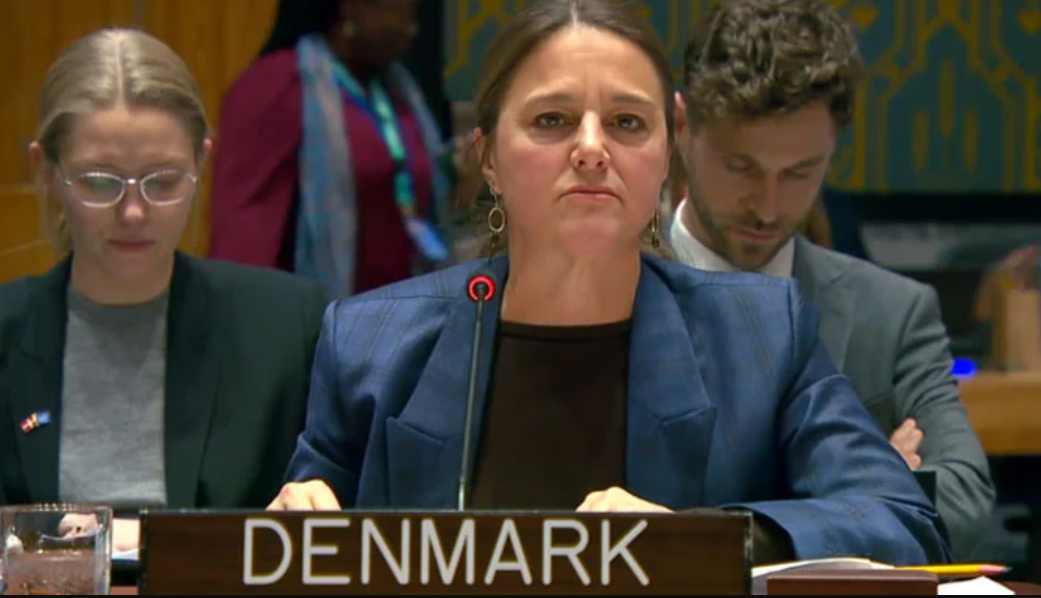

The UN Security Council’s (UNSC) Daesh and Al-Qaeda Sanctions Committee has officially recognized the Tehreek-e-Taliban Pakistan (TTP) as a serious threat to Pakistan’s security. Denmark’s Deputy Permanent Representative to the UN, Sandra Jensen Landi, who chairs the committee, emphasized that Afghan territory is being used to launch terrorist attacks inside Pakistan.
TTP’s Growing Threat
According to the UNSC report, the TTP, with an estimated 6,000 fighters, has conducted numerous high-profile attacks targeting Pakistani civilians and security forces. The group receives substantial logistical support from Afghan authorities, intensifying cross-border terrorism and destabilizing the region.
Landi stressed that the evolving terrorist threat also impacts broader global security, particularly in Africa, where extremist networks are exploiting new technologies.
Pakistan’s Sacrifices in Counter-Terrorism
Pakistan’s Deputy Permanent Representative to the UN, Usman Jadoon, highlighted that the country has endured over 80,000 casualties and billions in economic losses while fighting terrorism. He noted that Pakistan’s efforts have significantly weakened Al-Qaeda and other extremist networks.
Jadoon called on the UN’s counter-terrorism mechanisms to adopt zero-tolerance policies against violent extremist, far-right, xenophobic, and ultranationalist groups. He emphasized that sanctions and listings must reflect ground realities and be handled transparently, without political bias.
China Supports BLA Sanctions
China backed the UN listing of the Balochistan Liberation Army (BLA) and its Majeed Brigade, reinforcing a message of international zero-tolerance for terrorism. The move aligns with Pakistan’s long-standing call for stronger global action against cross-border extremist networks.
Escalating Islamabad-Kabul Tensions
Tensions between Pakistan and Afghanistan escalated following an October 12 attack by Taliban forces and TTP militants. Pakistan’s Armed Forces responded decisively, killing over 200 militants in self-defense. The clashes also resulted in 23 Pakistani soldiers martyred.
Security forces carried out precision strikes in Afghanistan’s Kandahar, Kabul, and North and South Waziristan border areas, successfully targeting terrorist strongholds. Despite temporary ceasefires agreed during Doha talks on October 19 and several Istanbul meetings, Afghan authorities reportedly failed to address Pakistan’s core security concerns.
Call for Stronger Measures
The UNSC report reinforces Pakistan’s position that cross-border terrorism remains a pressing threat. It highlights the need for international cooperation to curb extremist networks, strengthen counter-terrorism frameworks, and ensure global security.
The panel’s endorsement marks a crucial step in acknowledging the TTP as a major threat emanating from Afghan soil. Strengthened sanctions and collaborative efforts are essential to prevent further attacks and stabilize the region. Pakistan continues to advocate for transparent and effective international counter-terrorism measures to address persistent security challenges.
