

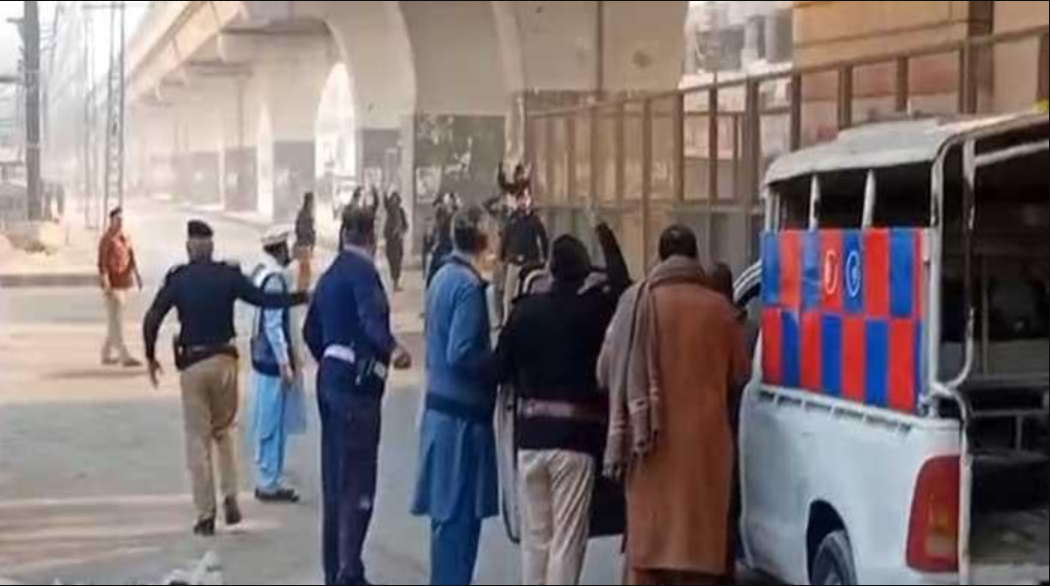

The Federal Constabulary headquarters in Peshawar faced a serious attack on Monday. The assault created a sudden wave of concern across the city. Security forces reacted quickly and moved to secure the entire zone. The situation remains tense, as officials confirm the presence of multiple attackers.
This incident highlights a growing trend in the region. Terror strikes have increased across Khyber Pakhtunkhwa and parts of Balochistan. The rise began soon after a major militant group ended its ceasefire in 2022. Since then, law enforcement has remained a key target. The latest attack adds to that troubling pattern.
Initial Attack and Immediate Response
The assault began with two loud blasts near the Federal Constabulary headquarters. People in nearby areas reported hearing powerful explosions. The sound created panic, and movement around the location stopped at once.
Security teams reached the site within minutes. They began cordoning off the roads leading to the headquarters. Their first priority was to isolate the attackers. This helped prevent further damage. The response also ensured that rescue teams could enter the area without delay.
Police officials confirmed that the attackers were still present during the early phase of the operation. The threat level remained high. Yet, the security response stayed coordinated and firm. The aim was to secure the compound as fast as possible.
Rising Terror Incidents in the Region
Terror-related activities have surged during the past few years. Khyber Pakhtunkhwa has faced repeated strikes on security installations. Balochistan has also seen similar waves of violence. These incidents continue to test the capacity of law enforcement.
The rise began when a banned militant group ended its ceasefire agreement with the government in late 2022. Soon after, the group publicly vowed fresh attacks. Its targets included security personnel, police forces, and other law enforcement agencies. Since then, the region has seen multiple attacks on sensitive locations.
Because of these developments, security forces have stayed on high alert. They continue to adjust strategies to match evolving threats. The attack on the Federal Constabulary headquarters shows how persistent the danger remains.
Earlier Attack on an FC Facility
The incident in Peshawar follows another significant clash earlier this year. Six soldiers lost their lives in that previous attack. Security forces, however, succeeded in stopping the assault before the attackers could enter deeper into the facility. Five militants were killed during that encounter.
That earlier attack took place at another FC installation in the Bannu district. It reflected a growing trend of targeting security hubs. These strikes attempt to weaken morale and disrupt operations. Therefore, every such incident becomes part of a wider pattern of violence.
Officials later linked that assault to a foreign-backed militant network. The militants were associated with a group branded as an external proxy. Authorities use a specific term for this network, which includes elements aligned with the banned group responsible for many recent attacks.
Motives Behind the Peshawar Assault
The attackers appear to have selected the Federal Constabulary headquarters for symbolic reasons. The institution plays a critical role in maintaining internal security. Targeting such a facility sends a message. It attempts to undermine confidence in state institutions. Moreover, it also aims to create fear among security personnel.
However, the swift defensive response showed strong readiness. Security units secured large areas within a short time. Their action slowed the attackers and limited immediate damage. Although the situation remains sensitive, the operation showed the preparedness of the forces involved.
Impact on Local Security and Daily Life
The attack caused brief disruption in parts of Peshawar. Roads near the headquarters were sealed. Traffic movement stopped for several hours. This created challenges for commuters. Many locals reported feeling anxious as the news spread.
Yet, the response by security agencies reassured the public. Their rapid presence and strict measures helped control fears. The attack also reminded residents of the importance of vigilance. Many expressed hope that stronger measures would prevent future incidents.
Why Attacks Are Increasing
Militant groups are trying to regain influence in the region. Their strategy focuses on high-profile targets. Security installations remain their primary choice. These groups seek to create headlines. They also aim to damage the operational capability of the state.
The end of the ceasefire in 2022 gave them more space to act. Since then, there has been a steady rise in assassination attempts, roadside attacks, and assaults on police outposts. The situation demands continuous monitoring and adaptation by security teams.
Despite the challenges, law enforcement agencies continue to push back. They have overcome several major attacks. They have also eliminated many group leaders. This pressure limits militant expansion. Yet, isolated attacks still occur due to changing militant tactics.
Security Forces Continue Their Operation
As the situation in Peshawar unfolds, security forces remain active at the site. Their focus is to neutralize the remaining threat. They must also sweep the area to ensure that no explosives remain. Rescue teams are on standby to support victims if required.
Although the full details are still emerging, early reports show that the response has been firm and organized. Security teams are working in coordination with multiple units. Their aim is to restore normal movement around the headquarters as soon as possible.
The attack on the Federal Constabulary headquarters in Peshawar marks another alarming moment in the region’s security landscape. Rising militancy continues to challenge state institutions. Yet, the quick response from security forces shows resilience and readiness.
This incident also highlights the need for stronger preventive measures. Improved intelligence, better coordination, and enhanced surveillance can help reduce future threats. As the situation develops, authorities will likely announce further updates.
Still, the current response has controlled a dangerous situation. It also sends a message that security institutions remain vigilant against all threats.
