


Investigating Human Rights Cost
Pakistan was hit by the ‘storm of the century’. What occurred as a climate-change-related event became an imminent climate disaster.
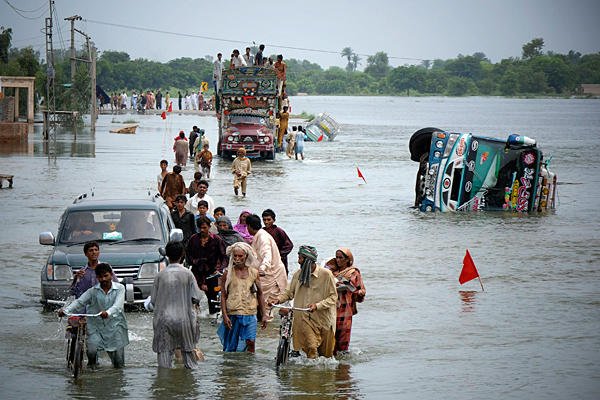
The nightmare began last year in 2022 during the spring season. According to NDMA (National Disaster Management Authority), Pakistan floods claimed over 1800 lives, injuring over 13000 people, destroying over 1.7 million houses, and impacting over 33 million in the biggest GLOF event in history.
The havoc that raged in the Indus River and its tributaries due to heavy torrential rains and flash floods left one-third of the country submerged under water, unleashing a massive energy crisis, food insecurity, and a major health emergency in the country that continues today. GLOF (Glacier Lake outburst floods) is a calamity event and a nature crisis is a climate crisis that always leads to human rights being violated.
In April 2022, the South Asian Monsoon Forecasting Forum predicted the climate crisis, after the GLOF event shook the country in the Gilgit Baltistan Province. GLOF is a climate emergency event where melting glaciers release millions of cubic meters of water and debris, from the mountain down to the land, leading to the loss of property, homes, shelter routes, and human lives in the impoverished remote of the KP Khyber Pakhtunkhwa Province, Sindh, and Baluchistan where subsequent flooding lead to 40% of the population below the poverty line and under the blade.
On July 22, the shift in monsoons resulted in two separate weather systems- the monsoon rains from Eastern and Southeastern regions during the summer and the changing weather pattern in the Mediterranean Sea during the winter over the non-monsoon mountain regions of Baluchistan province mountain regions. This resulted resulting in a catastrophic climate crisis.
In short, the GLOF event laced with multiple tracks of monsoon depression, hitting Sindh and Baluchistan province on August 22, battered over 94 districts of the country, blowing away houses, roads, bridges, dams, rivers, schools, hospitals, and fields displacing millions of people. All previous Pakistan MET department records were broken in the aftermath of this natural disaster event.
Overall, Pakistan witnessed an intense ‘heat wave’, skipping spring after winter in the vents that followed on mid-June 22. In September 2022, United Nations took notice of the event, after discovering the horrific extent and scale of the disaster. The UN Secretary-General Antonio Guterres visited the country the same month. He defined the event as a ‘Monsoon on Steroids’. It is important to note that Pakistan being on top of the climate-risk index, was cooking up a potential climate crisis many years back.
Rapid industrialization without protocols in place, reckless energy use, poor agricultural practices, increasing deforestation, bad consumer practices, weak implementation of protection laws, inefficient transportation, higher fuel and diesel prices, and heavy land and sea pollution had already resulted in rising temperatures, higher sea levels, increase in extreme weather conditions, combined with high land degradation, loss of wildlife and declining bio-diversity. The flash floods were bound to hit Pakistan.
When did it all become a ‘Human Right Cost ‘to the nation? A climate event in itself is a major cost to human beings living in that province, where an environmental crisis is bound to result in a major health crisis. The floods of 2022 merely exposed the brewing human crisis already existing in the system, thereby compromising people’s ‘basic rights to life’.
The geography of the region that is Pakistan today, exacerbated the situation as water of the increased flash floods added rain to the already existing water system accumulated in the deep pockets of the province of Sindh, leading people into heavy chest-deep water with no high ground to move to from low lying areas, with major routes cut off, further decreasing ‘access to shelter-zones’.
Post-UN Intervention, it was identified that the initial rescue response by the government of Pakistan was slow. The UN cluster along with UNFPA (United Nations Population Fund, the World Food Program (WFP), the International Organization of Migration (IOM), and UNICEF, moved into action to provide oversight thereafter. According to a study by World Weather Attribution, Pakistan National Disaster Management Commission did not lay out effective preparedness and delivery system protocols, as NDMA (National Disaster Management Association) – the executive arm of the commission was not prepared to handle the scale of damage that hit the country.
“Pakistan’s disaster risk paradigm is deeply centralized with limited avenues for hazard or vulnerability mapping at the local provincial level”: was the assessment. When the damage became apparently out of control, the government called for support from other nations, donors, and relief agencies.
A national emergency was eventually declared by the government on August 22.
Hereon, it became apparent that this climate event had actually resulted in one of the biggest ‘human rights costs’ in recorded history. The Rights to Health were compromised. Accumulated flood water resulted in an outbreak of various illnesses. With high temperatures, lack of hygiene, and rotting corpses of dead livestock, the flood victims faced a terrifying ordeal. A lot of people contracted various skin diseases from constantly swimming and wading underwater and also due to close proximity to each other while seeking shelter. This increased the risk of communicable diseases.
Stagnant water week on week further leads to the spread of Malaria and Dengue. Primary and tertiary care health infrastructure was damaged beyond limits. The death toll began to rise. Waterborne diseases began to threaten the flood victims, due to water filled with contaminants such as animal and human excreta. In the absence of adequate water purification tablets or filters or any means to boil water, gastroenteritis hit the people on a major scale in some heavily populated water pockets with cases of cholera also reported in many provinces.
Another major threat identified was the ‘limited access to reproductive health’.
Out of 33 million people, over 1.6 million women of reproductive age were impacted. An estimated 128,000 of these women, aged 15-50 were pregnant with 42,000 births expected in the next three months (July to Sep 22).
Despite emergency clinical arrangements made by the government with the support of relief agencies, many women were deprived of access to basic emergency care, feeling an acute sense of loss of dignity, given the unavoidable proximity to strangers, when needing to access reproductive healthcare.
A disproportionate impact on the health of the women was witnessed during this event, due to ‘period poverty’ and lack of access to menstrual hygiene products. Shockingly, female hygiene products were not made a part of the relief packages, offered to flood victims. This was a major finding, with resistance to the inclusion of hygiene kits in relief kits and packages sent by civil society members.
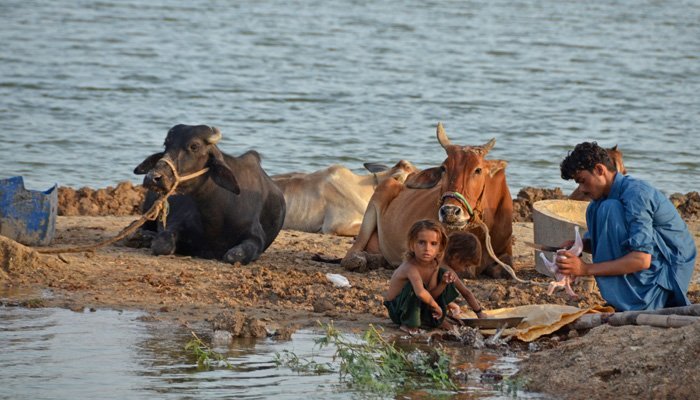
In the overall analysis of the event, the major setback faced by the population was the ‘mental and emotional health of the flood victims. It was ‘the trauma’- seeing their homes destroyed, their animals and livestock dying and their life savings washed away’. The social networks of all these people were destroyed, due to their loved ones migrating from their hometowns.
Combined with the inability to process their shock and grief, many aid workers further reported a sense of ‘fear’ in the women and children over the constant gush of water and living out in the open in tents and sometimes without any means of shelter over their heads, under the open sky.
The Rights to Food were also compromised. According to WFP’s October 2022 report, the number of flood victims facing an expected food emergency would reach 14.6 million from December 2022 to March 2023.
The Right to livelihood was deeply impacted as well due to the breakdown and law and order, raising fears of ‘asset security’: with assets, fixtures, livestock, and cash being reported stolen after the damage to houses. This was another reason for the rising death toll as a lot of people stayed behind in their crumbling homes, for fear of losing their assets if they left. Many victims were unable to be rescued.
Being an ‘agricultural economy’, a huge chunk of the standing agro-crop was wiped away by ‘Hydro-Floods’. The earlier severe shifts in weather patterns had already compromised the yield and quality of wheat, with the country then facing a major wheat shortfall due to shortfalls or inequalities in water distribution to various districts.
Water from the dams was apparently not allowed to flow in the Southern part of the province on April 22, when the wheat cycle was completed and the land was being prepared for the next crop. The fact that there was an ideal opportunity for these dams to be filled by the forecasted glacial melt (GLOF) and increased amount of rainfall, was overlooked.
Farmers suffered losses that further increased fears of food and economic insecurity. In Sindh province, over 3 major districts suffered a massive emergency with over 40% of the province under water. Receding flood waters revealed a massive emergency, as most farmers were not offered adequate loans to replenish their losses. Others feared a massive debt trap, with relief packages receiving criticism from the agriculture community regarding disparity in terms of loan facilities being offered at the time.
The Rights to Education were massively compromised. Over 27000 schools were damaged permanently affecting the already disrupted educational infrastructure. Schools left standing were converted to shelter homes, which prevented children from resuming their education after the waters receded. Poor alternative learning facilities were put in place in campsite areas, there was no long-term solution as displaced people having migrated their children to safer grounds, had no way to seek admissions to schools there, failing to submit proper registration documents, that were all lost in the floods and during the migrations. Sports and recreational facilities for the youth and children were also destroyed, along with access to formal education. Due to safety at risk, the children became the most vulnerable and ignored segment of the population affected by the floods.
Finally, the Rights to Housing were severely compromised as well. Restoration of damaged infrastructure is always the most difficult of all tasks when it comes to rehabilitation. There were over 780,000 houses destroyed and 1.27 million houses partially damaged, with Sind province being the worst affected with over 83%of total housing damages.
Overall, the country faced PKR 1200 billion in damages to houses and PKR 137 billion in house losses- the biggest loss in recent decades. This was where the impacts were ‘climate risk’ were visibly seen. Loss of access to water and sanitation, health hazards, and the wipeout of pure drinking water due to heavy contamination was the actual impact of the flood of 2022.
As we have seen in disaster management worldwide, the re-construction phase comes much later down in the list of priorities, the same was the case in Pakistan. Grappling from ‘donor fatigue’, the assessment and damage control estimates targeted were not fully attained. Even after six months of the floods on July 22, there were millions of people left under the skies, without any of their food and shelter needs met. Winter brought other challenges, such as the severe need to seek shelter from the cold, with no heating and electricity arrangements in place for the majority of the flood victims.
Post 2022, high-profile meetings took place with policymakers, disaster management authorities, climate activists, environmental experts, public health authorities, and civil society organizations on ‘climate-induced disasters, to formulate a ‘climate mitigation strategy’ that could result in ‘effective climate justice’ before the next monsoon arrives in July 2023.
Summing up, the agenda was finalized over the following key points on the ‘way forward plan’ on attaining ‘climate justice’. 1) Effective Evacuation and Rescue Plans to be in place during climate disasters, ensuring the safety, privacy, and dignity of the people. 2) Equitable provision of emergency relief and medical aid for affected flood victims, especially pregnant women and children. 3) Mitigating dangers to public health and food and water scarcity arising from climate emergencies such as flash floods, smog, and droughts. 4) Development of climate-friendly policy to ensure control of carbon emissions and focusing to ‘Go Green’ and protection of blue-carbon habitats and such mangroves and other natural ecosystems.
What was lost in the past must be regained in the near future.
As we enter yet another dangerous monsoon phase this July, lessons must be learned fast and policies must be adopted for implementation sooner than later. The institutions put in place after the 2005 earthquake 2005, and the 2010 floods, must be made functional immediately without delay, accordingly to the purpose for which they were formed in the first place. Here, local disaster management bodies like PDMA-Provincial Disaster Management Association- the provincial executive arm of NDMA must be given resources and decision-making power to independently work without political intervention, with budgets allocated to them in advance. More focus needs to be done on ‘Disaster Risk Reduction-DRR ‘, by seeking proactive solutions to prevent the mass migrations, that we saw in the past.
The readiness response now needs to be in line with the level of potential climate threat assessed. Mapping of vulnerability zones, with implementation and monitoring. Geologists with professional expertise need to be recruited by the Ministry of Climate Change and NDMA to increase the preparedness of the government, to be seen as taking this matter seriously.
Pakistan has one of the highest ‘teledensity‘ rates in the world, with millions of people having access to radio coverage and mobile access. Media must be engaged now to come up with informative documentaries and programs using mainstream and social media to further reach millions of people in language-friendly transmissions, by launching a ‘massive awareness drive’ on climate risk, and climate resilience for eventual ‘climate justice’ to be seen all across the country.
The next monsoon is upon us. In the face of in-coming danger, resilient nations survive and Pakistan is a survivor nation. It is up to our policymakers now to take this agenda on priority, to avoid further ‘human costs’ to the nation.
Rights to life cannot be compromised anymore.
We pray for God Almighty to save our people from the onset of GLOF- flash flood events in the coming year. With economic activity at its lowest ebb with less than 1% GDP growth and billions of dollars of debt repayment, we need to engage the global community to secure climate funding beforehand, otherwise, we will be facing the biggest storm of the century and irreversible damage to our human populations leading to an all-time ‘Human Rights Costs’ to Pakistan.
