

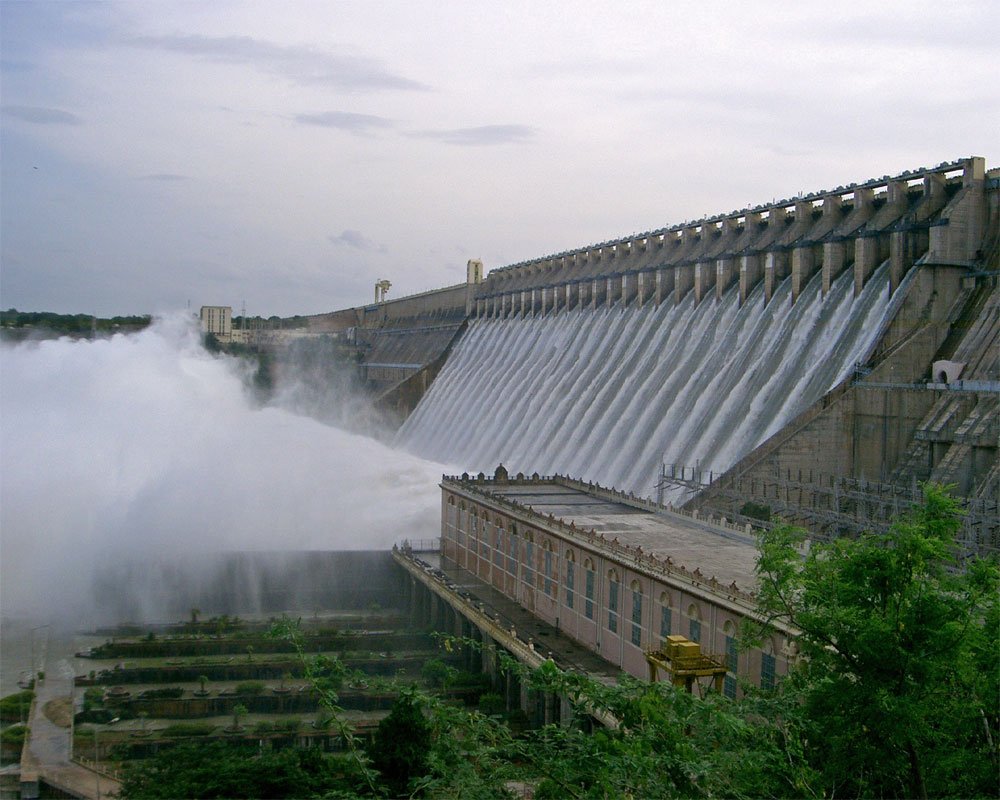

Kishanganga
ISLAMABAD: In a significant legal triumph for Pakistan in its longstanding rivalry with India, the Court of Arbitration has dismissed India’s objection to the jurisdiction of the global justice body over the Kishanganga Hydroelectric Project.
The Permanent Court of Arbitration (PCA), an intergovernmental organization located in The Hague, independent of the United Nations, made the decision to reject India’s objection and deemed Pakistan’s case admissible.
The court will now proceed with hearing the case on its merits.
In 2007, Islamabad filed a case with the court after its water supply was affected due to India’s commencement of work on the Kishanganga project.
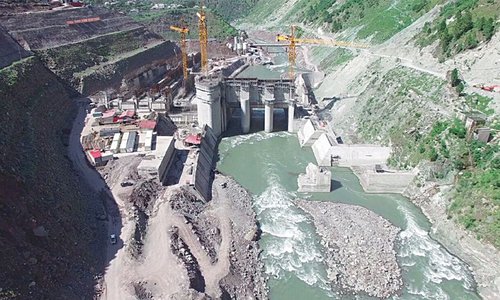
Picture of Kishanganga hydroelectric project of India.
The International Court of Arbitration had previously permitted India to make conditional changes to the project’s design in 2013.
India had sought to remove the case from the jurisdiction of the international court, but its petition was unsuccessful. Pakistan had raised three objections to the design of the Kishanganga project, arguing that the project’s pondage, currently at 7.5 million cubic meters, was excessive and should be reduced to one million cubic meters.
Pakistan also insisted that India increase the intake by 1-4 meters and raise the spillways to a height of nine meters.
This legal battle between the two nations commenced in January, aiming to address Pakistan’s concerns regarding the contentious designs of two hydropower projects being constructed on the Jhelum and Chenab rivers.
The initial two-day hearing in January focused on the 330 MW Kishanganga and 850 MW Ratle Hydropower projects.
Pakistan’s delegation, led by the Secretary of the Water Resources Ministry and including the country’s Indus Waters commissioner, senior officials from the Attorney General’s Office, and a team of international lawyers retained by the Government of Pakistan, will advocate for the country’s case seeking justice.
In response to Pakistan’s demand, the World Bank had established the Court of Arbitration and appointed Sean Murphy as its chairman and Michel Lino as the neutral expert on October 17. Similarly, India’s request for a one-man neutral expert was also fulfilled by the World Bank.
