

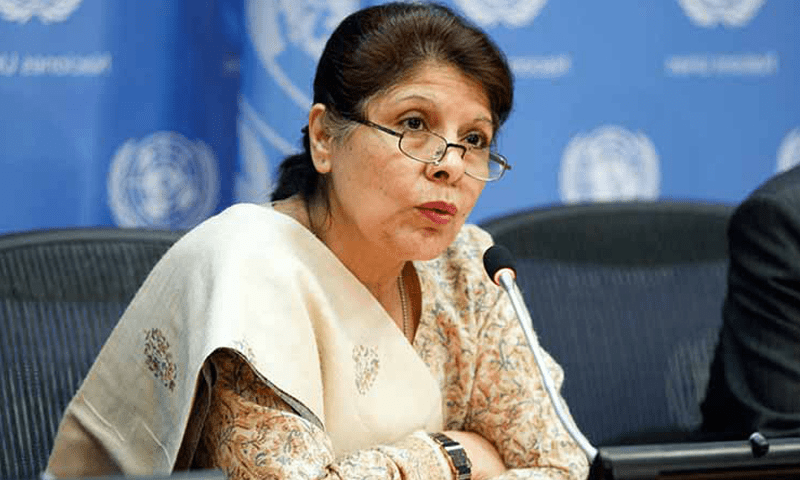

Caretaker finance minister
ISLAMABAD: The caretaker finance minister Dr. Shamshad Akhtar assumed the role of position a day after taking oath at the Presidency.
Upon her arrival at the Finance Ministry, the finance secretary and senior officials of the ministry extended a warm welcome to her.
Subsequently, the finance secretary and his team gave a briefing to the minister on the nation’s economic status. They also updated her about the trends of significant financial and economic indicators.
In her new capacity, Dr. Shamshad Akhtar conveyed her commitment to enforcing fiscal discipline and fostering investment. She also vowed to undertake endeavors to tackle income inequality.
The US dollar adopts wait and see strategy after oath taking of finance minister
Meanwhile, the US dollar did not make any forward move after the oath taking of the caretaker finance minister Dr. Shamshad Akhtar.
On Thursday and Friday, the dollar-rupee exchange rate remained almost the same, around 295 in the interbank trading.
Earlier, the dollar strongly on the way to crush economy and consumers in Pakistan. It appears evident from an unbridled and hasty flight of the US dollar against the Pakistani rupee soon after the appointment of the caretaker prime minister posing a threat to the economy and the inflation-hit consumers.
On Wednesday, the dollar-rupee exchange rate further widened to 295 rupees in the interbank trading and 303 rupees in open market trading.
After the appointment of the caretaker premier, the US dollar has gained more than six rupees value in the inter-bank and open market trading in just two working days (August 15 and 16).
The way the US dollar is dredging the value of rupee, it appears that the economy and the consumers will get into serious trouble in the days ahead.
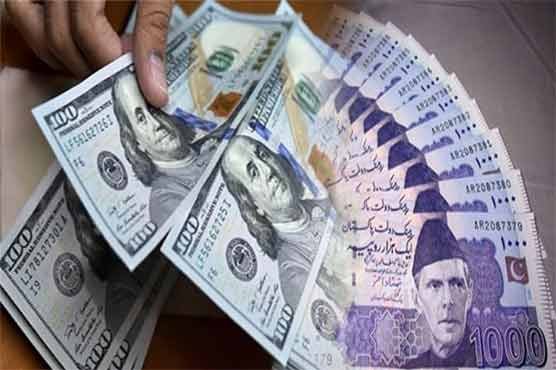
Meanwhile, on Wednesday (Aug 16), at the commencement of morning’s trading session, the US currency experienced a surge of Rs2 in the interbank market. The value of the dollar against the Pakistani rupee reached Rs294 in interbank trade.
Notably, this consistent ascent in the dollar’s value follows the dissolution of the National Assembly and the assumption of power by the caretaker prime minister.
Furthermore, the lifting of import restrictions has spurred an uptick in the demand for the dollar. Additionally, the IMF’s disbursement of the first tranche exceeding Rs1 billion has bolstered the strength of the greenback.
In recent weeks, the rupee has faced mounting pressure due to various factors, including escalating inflation, political instability, and an expanding current account deficit.
After a deal with IMF, Sri Lankan rupee recovers while Pakistani rupee sinks further
Meanwhile, Pakistan’s bailout package deal with the International Monetary Fund proved more fatal for the local currency in comparison with Sri Lankan currency.
On Wednesday, the Pakistani Rupee (PKR) fell to 303 rupees in the open market trading. In inter-bank trading, the dollar-rupee exchange rate widened to 293 rupees.
In sharp contrast to this, the Sri Lankan rupee posted a significant gain after the IMF’s loan approval for the country. When Sri Lanka declared default, its currency depreciated to 364 rupees to a dollar.
However, when the IMF approved a bailout package for Sri Lanka in March this year, Sri Lankan currency started regaining value.
Consequently, by Tuesday (August 10), the Sri Lankan rupee has improved to 323 rupees to a dollar.
Notably, the IMF has given 48 months arrangement to Sri Lanka involving $3 billion. However, in the case of Pakistan, the IMF approved only a 9-month stand-by arrangement worth $3.2 billion.
For Pakistan, the IMF has demanded a market-based exchange rate _ opening the way for further devaluation of the rupee amid multiple factors.
